Categories
Book Reviews Non-Fiction

Jerusalem: The Biography By Simon Sebag Montefiore

A biography on Jerusalem from 160 BC till modern day.

I did not think that I could finish reading Jerusalem: The Biography – a history book thick as a dictionary.  But I did.  All thanks to the author’s entertaining writing style in presenting the history of Jerusalem from 160 BC to present time.  For majority part of the book, it reads like George R. R. Martin’s A Game of Thrones.  History is so full of blood and gore, scandalous sex and money, politics and betrayal, and bribery of all sorts.  It is hard to imagine that within a tiny city called Jerusalem, so many times she has fallen to different rulers, her people have been massacred for so many centuries.  At times I wonder: What would God think of all these?  Religions can be such a torment to our human race.

I have always been intrigued by the history of the three monotheistic religions namely Judaism, Christianity, and Islam, as well as the history of Israel and her people.  I have read books written by Karen Armstrong.  My immense interest to this topic perhaps leads to my UK blogger friend Jo’s personal recommendation of this book to me.  Her review of Jerusalem: The Biography can be found in here.  As always, her write-up is not to be missed.

Reading Montefiore’s Jerusalem, in parts, very much like reading Armstrong’s Holy War.  In Karen Armstrong’s Holy War, she wrote about the crusades and their impact on today’s world.  It is a book with a history encompassing the three religions stretches from 1095 AD to present time.  From the historical viewpoint, these two books overlap.  Armstrong tackles the topic in a much greater depth and analysis while Montefiore’s ‘page-turner’ easy-to-read approach makes it more accessible to mortal readers like me.  Maybe that is the reason why I manage to finish reading Montefiore’s Jerusalem and not Armstrong’s Holy War.  Now that I have a better grasp of the history of Jerusalem, I may give Holy War another go.

Montefiore divides his book into nine parts, with a prologue and an epilogue.  On average, each chapter is no more than 10 pages in length.  There are page-turner worthy hooks built onto each chapter that lead the readers onto the following chapters.  The book starts with Judaism and Paganism that leads to Christianity and Islam – two-fifth of the book’s volume covering a time period of 160 BC to 1099.  Then the Crusade, Mamluk, Ottoman, and Empire – another two-fifth of the book until the year 1905.  The rest of the book is devoted to Zionism.

The challenge of reading a history book – to me – is that it is hard to relate to a character born and died so many years ago.  I may have a mental recollection of what Yasser Arafat or Ariel Sharon’s behavior like.  But not for most of the pivoted figures in the history of Jerusalem.  To that extend, Montefiore has done a meticulous job in supplying the readers a physical description of a character if possible – from paintings or literature – as well as juicy gossips from the past.  On top of that, the author often adds his share of opinions especially when he speculates that the written history or documentations may have been distorted or exaggerated.

Here lies the challenge.  Shall we – the readers – take in all that the author writes and accept this book as the biography of Jerusalem?  Should a biography be challenged, especially when it touches onto the materials from the Holy Books such as The Bible?

My background is only limited to Christianity.  The following excerpt intrigues me.

Pilate toyed with releasing one of these prisoners.  Some of the crowd called for Barabbas.  According to the Gospels, Barabbas was released.  The story sounds unlikely: the Romans usually executed murderous rebels.  Jesus was sentenced to crucifixion while, according to Matthew, Pilate ‘took water and washed his hands before the multitude, saying, I am innocent of the blood of this just person’.

‘His blood be upon us and our children,’ replied the crowd.

Far from being a mealy-mouthed vacillator, the violent and obstinate Pilate had never previously felt the need to wash his hands before his blood-letting.

I am unsure if my friends of the Islam faith would too find similar debates within the book.  Fortunately, I am pretty open-minded about my religion.  I read some of these debates as alternative views with only slight discomfort at times.  All in all, Montefiore has stayed out of many sensitive topics such as the resurrection of Jesus with a simple sentence: For those who do not share this faith, the facts are impossible to verify.

The last part of the book – Zionism – that takes up one-fifth of the book’s volume is pretty dry to read.  A similar dryness that prompted me to stop reading Karen Armstrong’s Holy War.  It appears to me that as we have more means to record history, history becomes less colorful.  Or perhaps, the way of life in the past is always intriguing to look at while modern day history is more like the current affair that we read everyday.

Entertainment value aside, Jerusalem has depicted a complex background that opens up my eyes.  I enjoy reading the epilogue’s This Morning the most.  It is a vivid recount of how each of the three monotheistic religions start the day in Jerusalem.  The rabbi and the Wall, Nusseibeh and the opening of the Church of the Holy Sepulchre, Ansari and the gates of the Haram, and Qazaz and al-Aqsa.  It is this complex heritage that shapes Jerusalem – and by and large the world – today.  If there is one thing that I have learned from the history of this Holy City, there will be no peace till the end of time and our religious beliefs will continue to fragment drawing out more conflicts as our civilization progresses. The fact that Jerusalem is a physical location with historical sites shared by the three monotheistic religions (as well as the sects fragmented within) forces us to come face-to-face with this seemingly impossible task of reconciliation.

It is now one hour before dawn on a day in Jerusalem.  The Dome of the Rock is open: Muslims are praying.  The Wall is always open: the Jews are praying.  The Church of the Holy Sepulchre is open: the Christians are praying in several languages.  The sun is rising over Jerusalem, its rays marking the light Herodian stones of the Wall almost snowy – just as Josephus described it two thousand years ago – and then catching the glorious gold of the Dome of the Rock that glints back at the sun.  The divine esplanade where Heaven and Earth meet, where God meets man, is still in a realm beyond human cartography.  Only the rays of the sun can do it and finally the light falls on the most exquisite and mysterious edifice in Jerusalem.  Bathing in glowing in the sunlight, it earns it auric name.  But The Gold Gate remains locked, until the coming of the Last Days.

Publisher: Vintage
ISBN-10: 0307280500
ISBN-13: 978-0307280503

*     *     *     *     *

The following excerpts have left a strong impression to me and I wish to share them with you here.  Maybe too much Shakespeare I have read in the past.  Also, these excerpts I hope can illustrate the writing style of the author.

The first excerpt is a colorful prelude of Antony and Cleopatra and the war for the world.

The Egyptian queen progressed home to Alexandria.  There Antony, in a spectacular ceremony, raised Cleopatra to ‘Queen of Kings’.  Caesarion, her son by Caesar, now thirteen years old, became her co-pharaoh, while her three children by Antony became kings of Armenia, Phoenicia and Cyrene.  In Rome, this Oriental posing appeared unRoman, unmanly and unwise.  Antony tried to justify his Eastern wassails by writing his only known work of literature titled ‘On His Drinking’ – and he wrote to Octavian, ‘Why have you changed?  Is it because I’m screwing the queen?  Does it really matter where or in whom you dip your wike?’  But it did matter.  Cleopatra was seen as fatale monstrum.  Octavian was becoming ever stronger as their partnership fell apart.  In 32 BC, the Senate revoked Antony’s imperium.  Next Octavian declared war on Cleopatra.  The two sides met in Greece: Antony and Cleopatra mustered his army and her Egyptian-Phoenician fleet.  It was a war for the world.

The second excerpt recounts the clever politics played by Herod and it has an artistic touch to Antony and Cleopatra’s demises.

Herod again prepared for death, leaving his brother Pheroras in charge and, just to be safe, having old Hyrcanus strangled.  He placed his mother and sister in Masada while Mariamme [his wife] and Alexandra [his wife’s mother] were kept in Alexandrium, another mountain fortress.  If anything happened to him, he again ordered that Mariamme was to die.  Then he sailed for the most important meeting of his life.

Octavian received him in Rhodes.  Herod handled the meeting shrewdly and frankly.  He humbly laid his diadem crown at Octavian’s feet.  Then instead of disowning Antony, he asked Octavian not to consider whose friend he had been but ‘what sort of friend I am’.  Octavian restored his crown.  Herod returned to Jerusalem in triumph, then followed Octavian down to Egypt, arriving in Alexandria just after Antony and Cleopatra had committed suicide, he by blade, she by asp.

The third excerpt Justinian and the Showgirl Empress introduces Theodora, queen to the last Latin-speaking emperor of the east.

[Justinian] did not come to power alone: his mistress Theodora was the daughter of the Blue chariot-racing team’s bear-trainer, raised among the sweaty charioteers, louche bathhouses and bloody bearpits of the Constantinople hippodrome.  Starting as a pre-pubescent burlesque showgirl, she was said to be a gymnastically gifted orgiast whose specialty was to offer all three orifices to her clients simultaneously.  Her nympho-maniacal party piece was to spread-eagle herself on stage while geese pecked grains of barley from ‘the calyx of this passion flower’.  The sexual details were no doubt exaggerated by their court historian, who must secretly have resented the sycophancy of his day job.  Whatever the truth, Justinian found her life-force irresistible and changed the law so that he could marry her.

The last excerpt illustrates one of the many bloody conflicts we have seen in the history of time.  Key words are ‘lamb stew’ and ‘hot dry air’.

Abu al-Abbas declared himself caliph and invited the Umayyads to a banquet to declare his peaceful intentions.  In the midst of the feast, the waiters drew out clubs and swords and butchered the entire family, tossing the bodies into the lamb stew.  The Slaughterer himself died soon afterwards but his brother Mansur, the Victorious, systematically murdered the Alid family and then liquidated the overmighty Abu Muslim too.  His perfumier, Jamra, later told how Mansur kept the keys of a secret storeroom which was to be open only on his death.  There his son later found a vaulted chamber filled with the bodies, each meticulously labelled, of the family of Ali from old men to infants, whom Mansur had killed, all preserved in the hot dry air.

Categories
Diary

Observing Bethany

It is rather challenging to buy fresh food from the local supermarkets during Chinese New Year Eve.  Hence, I prefer to do my grocery shopping two days before.  The challenge to me this year was that work has been hectic.  We are ‘encouraged’ to put in extra hours at work.  It is hard to explain to my non-Chinese colleagues – which is the majority with I being the only Chinese – the gravity of the situation.  Without fresh food, there is no reunion dinner.  How shall I delicately explain the importance of family members getting together for a reunion dinner?  That I am the eldest and hence, dinner would take place at my home?  That I prefer cooking to dinning out?  On Thursday, I simplified the entire tradition for my non-Chinese colleagues with six words: I need to buy chicken tonight.  Most of them got it, though some might have thought that I was joking.

Chinese New Year Eve was on Saturday.  But my sister and I have decided to celebrate it on Friday so that she could celebrate the actual day with her in-laws.  Fine by me.  Except, I have to yet again explain to my non-Chinese colleagues that burning midnight oil on Friday was not an option.  Because: I need to cook chicken tonight.

This is Bethany!

After our reunion dinner, my niece Bethany all of a sudden took my phone and wanted to take some self-portraits.  I tried to explain that this is a Sony phone.  There is no front camera.  She sort of understood and asked me to take pictures of her instead.  So I did.  Picture frame and special effect are added to the picture thanks to Cynthia’s Samsung Note II LTE and her beloved apps Paper Artist and Cool Frames.  Cynthia still loves her phone dearly, after months of having it.

It was less than a month ago when I hang out with my niece Bethany, when she asked me not to eat her family.  Kids are the most wondrous beings on Earth.  She likes to play with my Indonesian drum (which she dropped, and cried, and did not play that evening).  And she likes to play with my guitar.  The first time she played with my guitar, she yanked the strings really hard.  I was more worried about  Bethany being hit by the snapping of a string more than the hassle of replacing a broken one.  A month ago, she would strum it softly knowing that I disapprove such harsh treatment of my beloved guitar.  Last Friday, she would pluck the string with the right force, which is pretty amazing because she picked it up on her own.

Besides guitar playing, she has made slight progress on my F1 2012 video game on PS3.  Mind you, Bethany is only 3-year-old.  Her hands are way too small to handle a controller.  Compare to a month ago, now she seems to understand how the accelerator works.  She definitely knows how to reverse the car because she does it all the time.  Not sure why.  Perhaps she loves to see my shocked reaction.  She also seems to understand steering, although she still can’t quite grasp the technique of acceleration and steering at the same time.  When she is stuck (like hitting the walls), she would pass the controller back to me and ask me to get the car back on track.  Previously, she did not have such awareness.

What is interesting to observe is that she keeps on thinking that pushing the joystick up is to move forward.  And that she would turn the controller in mid-air like a steering wheel hoping that the car turns the same way she does.  I have not tried Nintendo Wii.  Looking at how Bethany intuitively interacts with the game, I think the simplistic design of the Wii motion sensor controller could well be a winner.  Too bad.  When Wii first came out, it was out of stock for like a year or so.  By the time the stock was available, all interest was lost.  Fortunately, I don’t have to wait that long for my Nexus 4 to arrive.  That’s another story for another day.

Oh, one more observation to share.  Bethany loves to play with my phone.  But my Sony phone does not have many interesting apps or games (thanks to the super low memory).  There is a pinball game that she enjoys playing.  A month ago, she would think that the ball falling off the drain was a good thing.  Now, she understands that it may not be such a good idea.  She still has’t quite got the technique yet.  I am sure she will get it in no time.

Categories
Diary

Moon Tower: A Builder, A Girl, And A Mysterious White Rabbit – A Doodle

Once upon a time, I loved to doodle.  That was two years ago.  Surprisingly, the pen I have bought for this very purpose still works.  It is a surprise because these sort of pens do dry out over time.  On that thought, I shall stock up more of this sort the next time I hit town.

One doodle of mine!

The title of this doodle – Moon Tower: A Builder, A Girl, And A Mysterious White Rabbit – is the same as the story I wrote one entry before this one.  If you have read the story, you should be able to interpret this doodle with little difficulty.

Drawing is therapeutic.  This evening, I needed just that.  So exhausted after a long, long day at work, I did not even have the energy for active entertainment like playing video games or socializing through Google+.  I picked up my pen, some sketch papers, and started doodling.

Like how the story was crafting, I was about to give up on the initial concept after the first attempt.  I started with the tower.  It was too structured.  Too boring.  Perhaps my drawing is a reflection of my life, which in my case, is currently dominated by work.  On my second attempt, I have refocused the drawing around the three main characters.  And then developed the rest from the main theme, with an abstract touch.  This doodle was initially drawn in landscape orientation, on a A3 paper.  As I added more contextual materials onto the painting, I feel that it is best to be viewed in portrait.  Of course, now the northern side of the island appears on the bottom and hence, looks like the south instead.  That is rather unfortunate.  But I suppose that is one way to break the structure eh?

Categories
Snippet of My Life

Snippet Of My Life Episode 38 – Moon Tower: A Builder, A Girl, And A Mysterious White Rabbit

“This is insane! It is just not possible!” exclaimed the female journalist on top of a tower that was still work-in-progress.

Dooku the builder gasped, quickly put a finger on his mouth and said, “Shhhh!  That is treason!”, as though someone would hear them talking.  But in this evening, there were only Dooku and the girl, an interview that took place in this tall, tall tower.

No one in this isolated island remembered how long the war had lasted.  Or for what course.  The north and the south had fought.  One day, they stopped.  Instead, they agreed to build a high wall from east to west dividing the island into two.  Tired of the war, they had become.  Coexistence was a bitter compromise.  It was tolerable so long as they did not see each other.

The wall was so high that the people from either side called it Cliff of Impenetrable.  For years, no one knew how the other side was doing.  But that did not fool Dooku.  At night, Dooku could see an orange hue of light from the south painted onto the sky encroaching onto his northern part of the pitch black atmosphere   The buzzing of music, the laughter, and the noise.  The southern noise!  Dooku and his fellow northern inhabitants hardly had the time to think of anything else other than their basic needs.  Such as food, work, water, and more work.

“You honestly think that we can build a tower and reach the Moon from Earth?  On this very land we stand?” asked the girl.

Dooku pondered.  The question was not whether or not this was the best space exploration program the government had come up with in order to compete with the south.  The question was, without this tower, a lot of people including Dooku would have to find another job.  So what if it was the stupidest idea to build the lousiest tower that would absolutely be useless?  People were kept productive.  Their lives became meaningful.  Routines tended to numb people’s mind brainwashing all sorts of ideals down the drain.  People needed routines.

Dooku also knew that the girl had a story to write, one that might inspire.  So he replied, “You see the full moon over there?”  The girl nodded.

“I have been working here for quite some time.  Each night before I call it a day, I spend some time admiring the skyline, admiring the progress from the south.  I don’t think people in the south really want to leave their homes and the good life they have.  But life in the north is different.  We hardly have enough to eat!  This is an island.  We have nowhere else to go.  We hang our hope onto the moon and wish for a better future.

You know.  At times I feel as though the moon is getting bigger and bigger.  Maybe she is coming closer to us.  Or maybe our tower strategy is really working.”

The mood was lightened.  The girl giggled and added, “Or perhaps all our combined hope weights the moon down just a little.  And she dips down just a little?”

As the night fell, the air was chilly.  It was an hour long descend for the journalist, or more.  As for Dooku the builder, his temporary shelter had always been one level below the top of the tower.  There was used to be plenty of builders.  But as the tower gradually raised from the ground, its circumference became smaller and smaller.  Now, it could only fit one.

*     *     *     *     *

A month later, the female journalist revisited the tower at night.  She spoke the first question that came into her mind.

“If you are the only builder working on this tower, what do the rest of the people do?”

Dooku replied almost immediately, “We invent new tasks!  Some are looking for cracks to repair.  Some are reinforcing the tower.  Some are even decorating the tower!  Many are pretending to work.  But right now, that is not a question of importance.”

“It is not?”

“No.  Come.  You see the full moon over there?”

“Yes?”

“What do you see?”

“A … moon?”

“Yes.  But what else?” asked Dooku with an infectious enthusiasm.

“A full moon?”

“Look how close the moon is this time round!”

The girl took and deep breath and exhaled, “It does look bigger than last month!  Much bigger!”

“… which means closer!  A lot closer!  Come back next month, would you?” proposed Dooku.

*     *     *     *     *

Another month had passed and the female journalist returned to the top of an even taller tower as promised.  Something was not right in this very evening.  The wind was exceptionally strong.  The sound was almost deafening.  Underneath them, Dooku and the girl could sense the rage of the ocean.  As though something was upsetting the sea and it pounded the shore relentlessly with bigger and bigger wave.  Panic was felt across the people from either side of the wall.  The island might be divided.  But fear united them all.

“You see the full moon over there?” Dooku shouted through the wind.

The girl shouted back, “Yes, the moon is hanging low, really low!  And she is coming to our direction!”

The chaos on the ground intensified as the moon approached the island.  The water broke free and flooded the ground.  To the south, all hope was lost.  It was a doomsday scenario.  To the north, everyone was looking upon the tower as a beacon of hope.  Out of nowhere, a mysterious white rabbit made a dash to the tower and started the climb.  That little sign amassed the northerners.  Soon, everyone from the north headed to the tower as the water level raised higher and higher.

The mysterious white rabbit did not stop.  It went up and up and just when the rabbit reached the top of the tower, the gigantic moon swung by low, almost came in contact with the tower.  A deep humming sound emitted from the orbiting moon.  The sight was mesmerizing to look at.  The rabbit made a leap and landed onto the moon!  The girl delighted by what she saw too made a leap and landed safely.  The northerners needed no further encouragement.  Life was lousy from where they stayed.  One by one, they made a leap of hope believing that whatever lied ahead could not be worse.

“Jump!  Come to us!” exclaimed the girl frantically waving one hand with another holding the mysterious white rabbit close to her chest.

Dooku waited till the last northerner landed onto the moon making sure that no one was left behind.  He took a last look at his island below that was no longer divided for the wall was brought down by the force of nature.  Dooku thought to himself, “Should I stay or should I go?  Would the moon come that close ever again?  Would I have a second chance?”

If Dooku was a risk taker, he would not have chosen to be a builder.  Dooku took a deep breath and joined his people on the moon.  The female journalist smiled and exclaimed, “This is insane!  It is just not possible!”

Categories
Drama Foreign Movie Reviews

The Grandmaster – A Film On The Life Stories Of Yip Man And Gong Er

An art house type of movie

To fully appreciate this Chinese movie, you probably need to understand the language, the culture, as well as the martial arts within.  It is not unusual for the olden day Chinese to speak in metaphors.  My dad still does too.  The English subtitles can be quite misleading at times.  What if you don’t understand Chinese but you are curious about The Grandmaster?  I suppose even if you can only get the essence of it, it may still be worthwhile provided that you enjoy watching art house type of movies or you are a fan of the leading actor and actress.

The backdrop is enticing.  A story told from Yip Man’s perspective (he who was Bruce Lee’s teacher).  From Yip Man’s age of 40 till his old age.  Upon the then-grandmaster’s retirement, while the northern China’s grandmaster title was given to Ma San, it was of the old grandmaster’s wish to pass the southern China title to a southerner.  Hence the introduction of Yip Man.

Tony Leung is quite possible one of the best actors I have seen.  He truly can act with just his eyes.  That heighten alertness in face of a real challenge, confidence with a hint of playfulness during a friendly duet, that moment of being mesmerized by the opposite sex, pain and despair, heartache and resignation, or simply that pair of weary eyes having seen too much in life.  It is a real treat to see him act as Yip Man.  This movie has provided him much opportunity to shine.

Zhang Ziyi plays the role of Gong Er, the daughter of the then-grandmaster.  While the range of emotion given is not as wide as Yip Man’s role, Zhang Ziyi has certainly chilled me with her coldness, pained me with her rare tenderness.  Her acting too is convincing.

The martial art scenes are pretty impressive.  With modern technology and the extreme slow motion close-up playback, the action is exciting to watch.  But here lies the problem.  The director Wong Kar-wai has cast this film in an art house setting (like his last movie My Blueberry Nights).  Take away the breathtaking action and the engaging acting is a series of artistic shots such as water peddles and street scenery, Buddha statues and candles.  The gaps can be extremely slow.  I found myself wanting to see the next action or acting scene and skip the excessive artistic frames.

One good example is the character Yixiantian “The Razor”.  The film has devoted quite a bit of airtime to develop The Rezor.  He has absolutely zero contribution to the main story except that one interaction he has with Gong Er on a train.  Even that does not materialize into anything.  The story goes on telling more about The Razor – humorous I must say – whereby taking all in, I wouldn’t miss a thing if the director has decided to cut this character away.  Maybe I am missing something significant here.  I don’t know.

Also, the resolution between Yip Man and his wife (played by a Korean actress Song Hye-kyo) appears to be fuzzy.  Is it because there is a lack of real life documentation of his marriage?  Or is it the director’s intention to have us thinking?  I thought for a bit.  Then I gave up.

Another of his movie that is low in entertainment but probably high in artistic value.

Categories
Diary

Spending Time With Elders At Bishan Ang Mo Kio Park

I have always enjoyed participating in the corporate volunteering programs.  It gives a little extra meaning to what I do for a living.  Year 2011, I have done weeding in one of the islands.  Boy, that was laborious.  Year 2012, I have done art crafting with the children in a hospital.  I hope by now, they have fully recovered and who knows, I might have tickled the kids’ artistic bones a little.  This year, I have signed up for a learning trail excursion with the elders from a senior citizen center.  A walk in the newly renovated Bishan Ang Mo Kio Park

I am pretty surprised how well the mobile app Snapseed works on this picture.

I have been driving pass Bishan AMK Park for years as it is located quite near to my home.  It was not until a 2010 blogger event that brought me to this park.  Soon after, the park was closed for years.  What was used to be a canal has now been transformed into a 2.7 km long meandering river integrated with the park.  The park looks clean and beautiful, sustaining a healthy mixed of flora and fauna.  During my visit, the water level was low.  Besides a few gardeners working along the river, there were large white birds “playing” in the water.

The elderly group has a good mix of different cultural background.  And the eldest was a 104 years old lady.  Initially I was concerned if my lack of Mandarin speaking skill would be a burden.  Fortunately, my Cantonese sufficed.  Some of my colleagues do not speak the local languages.  So they helped out with photograph taking, or carrying of umbrellas.

There is a fast food restaurant in the middle of the park.  Probably not the healthiest choice for the elders.  But it is a convenient location.  There is a patio and I got to serve food, together with my colleagues.  Quite possibly the most relaxing and enjoyable volunteering event I have participated thus far.  The elders appeared to be happy.  I took some pictures in the park with my wireless phone.  The one above has surprised me a little.  Snapseed application has done a great job in making the picture pops.  But what delights me most is how well the perspective holds.  It could only be a tinny miracle.

Categories
Fantasy & Sci-fi Movie Reviews

Hansel and Gretel: Witch Hunters – It Gets Better Towards The End

A much better role for the leading female actress.

For the record, Cynthia and I did not pick this one.  Our friend TK did.  Because he wanted to see his “flower vase” a.k.a. Gemma Arterton – his words, not mine.  If TK was not impressed with her performance in Clash of the Titans and Prince of Persia: The Sands of Time, why would he pick Hansel and Gretel?  I suppose there are female qualities that not even a mortal man can resist.

Again, I have not read the original fairy tale.  Cynthia tried hard to give me a quick run down of the original story on our way to the theater.  All I got was that Hansel and Gretel were siblings.  They got lost, entered a house made by biscuits.  And the boy was going to be eaten by the witch.

In a way, Cynthia is right.  Witch Hunters is unique because the main characters are siblings.  Though, I must say, since both characters are attractive in their own ways and there aren’t many character development opportunities in the beginning, it took me quite some time not to look at them as romantically linked.

In this alternative dark fantasy, Hansel and Gretel are witch hunters.  And the witches in this movie look monstrous, like straight out from a horror movies.  In fact, there is enough blood and gore that would qualify Hansel and Gretel as a part-horror-part-fantasy movie.  Heads explode.  Bodies torn into pieces.  If this film was to be infused with a good sense of humor, that would have suited me better.  The plot is by and large predictable.  I was pretty bored in the beginning.  But it does get more entertaining towards the end.  Cynthia seems to really like this one.  TK thinks it is so-so.  Anything – be it as movies or video games – with girls kicking butts wins my heart.  Gemma Arterton just have that something I want to see.

Categories
Book Reviews Fiction

Carry The One By Carol Anshaw

Having read a beautifully written review by one of my blogger friends, I had been keeping a look out at my local libraries to see when a copy would be available.  I was in joy when I finally borrowed Carry the One by Carol Anshaw, from a library outlet that I had not visited before, saved a buck or so of reservation fee while I was at it.

I took a picture of the book right outside the library.

The plot is tantalizing.  It was the wedding night of Carmen the bride who was pregnant with Matt’s child.  Carmen’s sister Jean was a musician, who was blindly in love with Tom the married man – also a musician.  Nick was Carmen’s brother.  A smart graduate with one bad habit – drug usage.  Nick has a girlfriend called Olivia who worked in a mail room and like Nick, Olivia too was into drug.  Alice – sister of Carmen, Jean, and Nick – was a gifted painter, as well as a lesbian.  She fell in love with Matt’s sister Maude who studied nursing while doing part-time job as a model.

The night was getting late so Matt and Carmen sent the last of their guests to the road.  Jean and Tom, Alice and Maude got into one car with Nick in the front and Olivia at the driver’s seat.  Both Nick and Olivia were high in drug.  The car had no light, saved for the fog light.  In such wee hours, who would have thought a little girl would cross the road?  It was almost an instant death.  The girl had no chance to survive.  Carry the One documents those who have to live through this painful memory for the next decade and more, how their lives were impacted by this incident.

Each blames himself or herself on what could have been, should have been.  Carmen should have asked the guests to stay, because it was getting real late.  Alice should have volunteered to drive, but she was so into Maude and wanted to get into the backseat with Maude.  Maude should have paid more attention to her nursery course.  At least she might have a better chance to save the little girl.  Olivia was at the driver seat, clearly the guilty one.  But it was Nick who saw the little girl, thinking that she was magical, surreal.  Nick could move the wheel and the little girl would not have died.

As what I have expected, Carry the One is about forgiveness and atonement.  Each character finds his or her own way to atone to the mistake.  Some are constructive.  Others are more destructive.  Through jail time, divorce, heartbreak, career breakthroughs, facing hope and despair, death and more death, Carol Anshaw draws me into her haunted story of what makes flaw characters so attractive to read: realism.  These are real life dramas come alive.  People with real emotions, likes and dislikes, strengths and weaknesses.  It is one successful story that makes you fall in love with all the main characters, despite how flawed they are.

While reading this book, I could not help but to hope that Carry the One would tackle the question of: Why do bad things happen to innocent people?  Indeed, the plot does seem to head to that direction when Nick was trying to solve where this ‘equation’ led.  Through the routines that the characters lived and breath, I too was looking for the answer.  Unsatisfied as it may sound, God works in a mysterious way.  Whether or not there is an answer, the characters bounded by this accident would have to carry the little girl with them.  In a way, the deceased still lived through them decades down the road.

“Here’s what I hate.  I hate that it doesn’t matter if we see each other.  There’s still this connection, between me and him because we were both in the car.  Like in arithmetic.  Because of the accident, we’re not just separate numbers.  When you add us up, you always have to carry the one.”

“I think we altered what was supposed to happen.  And we can’t go back and make it happen right.  So we’re stuck in some kind of endless loop, trying to improve the past.  Which, as you might notice, is resistant to revision.”

Engaging plot aside, Carol Anshaw has an unique way of telling a story.  It does not read linear.  Timeline may jump ahead.  Crucial part of the plot may be casually revealed through one person’s conversation, or one simple sentence.  The emotional distance between the characters can be easily felt.  It always put a smile to my face when I read how two siblings love each other while putting up with one another’s nuisances.  When it comes to romance, the wordings are intense.  Below is one of my favorite parts that so vividly describes the disappointment and frustration of searching for love.

Whatever element causes romance to flare was simply not present in the air between [Alice and Charlotte].  This was a huge relief to Alice.  Romance no longer looked like so much fun, more like a repetitive stress injury – beginning with Maude, but by now including all the failed and pathetic attempts to replicate that constellation of emotion with someone else.  She could measure this past effort in all the underwear she had left behind in apartments, all the bottles of pricey wine she had brought to dinner, all the recitations of bad childhoods and adult disappointments she had earnestly listened to.  The first list was, of course, all the women she had by now slept with.  Taken individually, they seemed, at their various times, to hold the possibility of lasting love.  As opposed to now, so far down the line, when they could only be looked at in accumulation, as one then another fool’s errand.  An offshoot list to this was the figure for how far she had gone for sex.  (Thirteen hours on a flight from Chicago to Tokyo then back to Chicago the next day has held the top spot for quite a while; she might never better this.)  Books she had to read to get into somebody or other’s bed.  (The Four-Gated City.  The Fountainhead.  Linda Goodman’s Sun Signs.  Women Who Run With the Wolves.)  Terrible music she had listened to because it was someone’s idea of a mood enhancer.  (Hall & Oates.  Holly Near.  George Winston.  The Carpenters.  Celine Dion.)  Topics in which she had feigned an interest during the short term. (Juice fasts.  Rugby.  Celtic dancing.  Bikram yoga.)  The longest list was the kinds of tea she had drunk in moments structured around the pretense that tea drinking was the reason for being in this or that café (Pergolesi.  Kopi.  Café Boost) or kitchen, or side by side on this or that futon sofa or daybed, sipping.  (Earl Grey.  Lapsang Suchoung.  Gunpowder.  Rooibos.  Sleepytime.  Morning Thunder.  Seren-i-tea.  Every possible peppermint and berry.  Plain Lipton.)  There was a stretch of time when tea became fetishized for her being so linked with sex and romance, so reliable a harbinger of one or the other.

Different readers interpret a story differently.  Here may come as a major spoiler.  The centerpiece of Carry the One appears to be the little girl who was killed in a road accident.  Rightly so that is an obvious theme.  To me, a hidden centerpiece could be Nick the drug addict instead.  Throughout the story, Nick’s condition was deteriorating.  Olivia – his wife – left him the moment Nick returned to his old habit.  His sister Jean was never close to him.  Carmen – the sister who was organized and strict – in the end gave up on him.  Only Alice, his lesbian sister, still made an effort to take care of him when he crashed, but did not seem to do enough to get him off the drug.  Like the little girl’s accident decades ago, these character could have done something to avert Nike’s eventual and premature death.  Ironically, while Nick has played a major role in causing the little girl’s death at the beginning of the book, it could be the little girl’s mother who played a major role in causing Nick’s death two decades later.

Forgiven, but not forgotten.

Not only did Nick need to carry the little girl in his memory, but also the very physical clothes that the little girl wore that night, handed by her dying mother to him more than twenty years later: I couldn’t part with these.  Couldn’t even wash them, so it’s all still there, the blood and dirt.  Anyway I want you to have them.  I just wanted you to know how much it’s meant to me.  That you never forgot.

“You’re high as a kite, aren’t you?” [said Shanna Redman, the little girl’s mother.]

“Sorry.” [said Nick]

“No, it’s all right.  I know you’re a junkie.  And I know you’ve lied to me, so we could keep talking, so I wouldn’t blame you.  But the thing is, I’ve moved beyond blaming anyone.  And she’s beyond it too.  I got that from her.  What happened that night was what was going to happen.  It’s done.  You’re forgiven.  She’s forgiven all of us.  She’s let us go.”

Categories
Action & Thriller Movie Reviews

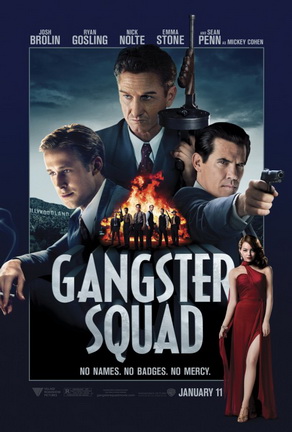
Gangster Squad – Pretty Gruesome, But Funny Too

I watched this for Emma Stone

Cynthia and I at times can be pretty business-like with each other, when it comes to movie outing.  After crawling through the usual Orchard Saturday traffic – which TK and us always forget and regret not watching a movie on a Sunday instead – at the basement car park lift lobby, I turned to Cynthia and asked, “Give me run through of what we are going to watch, would you?”

Her immediate response was, “No idea.  You like the girl and I like the guy.  That’s about it.”

True.  She picked Gangster Squad because of Ryan Gosling.  And I Emma Stone.  TK too insisted that he wouldn’t want to give this a miss because of Emma Stone.

I did not know what to expect.  This film is inspired by a true story set in the ’40s and ’50s.  LA was run by gangsters, many police officers were bribed, and the residents seemed cool with it.  It was a way of life until Sergeant John O’Mara (played by Josh Brolin) came into the picture.  As a WWII veteran and a war hero, he has no plan to yield to the gangster boss Mickey Cohen played by Sean Penn.  Unable to strike the gang as a police officer, John – secretly supported by the Chief – recruited a squad to deal with the gang.  The approach was controversial and the results could at times be hilarious.  Mickey Cohen was ruthless.  You have got to have a strong stomach for the crime he did against others.

Gangster Squad feels authentic, as though I was transported back in time.  Those hairstyles, and costumes.  Cynthia and I cracked every time when John took out a gigantic wireless phone radio (edit: Thanks to TK for the correction).  Sean Penn has acted exceptionally well in this movie.  There were moments when he appeared as spaced out, and uninterested; there were moments when he was as sharp as a fighter, so full of energy – verbally and physically.  Josh Brolin is perfect for the role, as an honest and no-nonsense officer.  Emma Stone and Ryan Gosling are charming, despite having a rather small role in Gangster Squad.

For some strange reasons, this film reminds me of Al Pacino’s 1983 film Scarface.  Sean Penn and Emma Stone would be a good fit for Al Pacino and Michelle Pfeiffer’s roles.  One particular line struck me as quite quote worthy:

To lose everything and win the war, that is a hero.  To lose everything but lose the war, that’s a fool.

Categories
I See I Write

“Don’t Eat My Family”

Kids say the funniest things.  Out of nowhere, my 3-year-old niece led me out of my living room – where my sister Lora and my brother-in-law Benny were seated – and into my bedroom.  She said in a calm and composed manner, “Don’t eat my family.”

My niece and I

She then closed the door on her way out, effectively ‘locking’ me into my bedroom.  Just not too long ago, she led me into the common bedroom – which is now her room – and we have started our drawing ritual.  Bethany does not draw much.  But she enjoys watching others to draw.  So I asked her, “What shall we draw today?”  She replied, “A monster”.  I did just that.  Perhaps too realistic in my ever burning enthusiasm in everything I do.  Bethany was frightened and in one quick reflex, I tore the page out, collapsed it into a ball, and passed it to my wife Cynthia literally erased the monster from our drawing history.

“Wonder Pets!” Bethany requested.

What on earth are Wonder Pets?!  I called out to her parents for help.  Still unable to visualize how a turtle, a duck, and a guinea pig look like in a wonder pets setting, I quickly asked for my phone and Google it.  How I love technology.

With a kid around, it is impossible – just not possible – to sit and do something for, say, 10 seconds.  The moment I stepped away, Bethany would call me back.  I said to Cynthia, “Could you please keep her occupied for a minute?”  Nope.  Just not possible.

I love watching Bethany playing pinball game on my phone.  There is no such notion as losing a game.  Bethany got excited and she cheered every time the ball fell off the drain and reappeared at the spring launcher.  It is as though she has made it happens (which in a way she has).  It is good to see the world through kids’ eyes at times.  Participation is a win by itself.

Benny has taken some photographs using his Nikon D90.  I am happy to share them here.

  • Click here to view the photo album (7 photographs)