Categories
Book Reviews Fiction

Dan Brown’s The Lost Symbol – A Page Turner With Puzzles After Puzzles

Dan Brown's Latest Work

I can’t say that I am a fan of the thriller genre but I do enjoy Dan Brown’s style of puzzles mixing facts and fictions with a healthy or unhealthy – depends on how you see it – dose of spiritual reflection.  Besides, once in a while, it is good to read a page-turner for a change and get entertained.  When I learned from Amazon.com that Dan Brown has kept “The Lost Symbol” under wraps by allowing only a handful of people to have access to the manuscript, I was intrigued.  I hit our national library website 3 times a day to see when this book was open for reservation.  Singapore’s National Library Board has brought in 70 copies of “The Lost Symbol” and I was queue number 3.  Not bad at all compares to how I did for that Kinsella Book (queue number seventy odd of I think forty odd books in total).

I have read almost all his books (except “Deception Point”, I think).  I don’t think I can recall any of the storyline.  What I recall though is that I have always enjoyed how Dan Brown rapidly switches plots, delaying the key story revelation, and keeping us engaged with puzzles after puzzles.  “The Lost Symbol” is no exception.  For maximum enjoyment, I strongly encourage you to refer to the online materials for reference as your read the book.  For example, the painting “Melecolia I” is used as one of the puzzles.  You could read how Dan Brown describes the painting in words.  But nothing beats seeing the painting with your own eyes.

I would not dive too deep into the plot because it is not fun for those who are planning to read this book.  Robert Langdon, a character from “Angels & Demons” and “The Da Vinci Code”, is back for “The Lost Symbol”.  I do not think there is a significant connection with the previous novels  so you do not need to read them in sequence.  And like his previous works, I am often amused by how his characters can sustain such emotional tremor and physical wounds and still able to run around, solve puzzles, and intellectually discuss matters in such a lengthy manner.  Personally, I think his opinion on Christianity is – as always – very thin especially after I have freshly finished reading Karen Armstrong’s latest work.  I would not take his religious view too seriously.  But I suspect his opinion will stir another round of controversy – perhaps lesser in magnitude compares to “The Da Vinci Code” – nonetheless.

Categories
Book Reviews Non-Fiction

Your Next Move by Michael Watkins – A Good Resource For Your Major Career Transitions

A new book by Michael Watkins
I have read Michael Watkins’s “The First 90 Days” quite a number of years ago.  Arguably one of the must-have books for the corporate executives.  In fact, the initial reception was so successful that the author has released a similar book targeting at the public sector.

6 years have passed since the author talked about critical success strategies for new leaders at all levels, what you should do and tackle on the first 90 days in your new role.  Like many I suppose (half a million English copies sold and translated to 26 languages), I have a high anticipation for “Your Next Move”.  Perhaps because I have gone through a few major career transitions in the past, or perhaps I may be anticipating a new move (don’t we all?), “Your Next Move” is an engaging read.  I find myself constantly reflecting on my past transitions as well as reflecting upon what some of my colleagues – my bosses included – have done right or wrong when they first stepped onto their new roles.

While it may take a C-level to fully benefit “Your Next Move” (i.e. CEO, COO, CFO, and etc.), executives in any form of leadership capacity should find the first 5 chapters (out of eight) useful.  Namely, the followings:

  • A promotion up the career ladder.
  • A promotion amongst your peers and now, you are the boss. 
  • A move from the position of authority to the position of influence.
  • Joining a new organization with a new corporate culture.
  • Relocating to a new geographic location and faced with a new culture.

Unless you have freshly graduated from school, you should have experienced at least one of the above transitions.  The author uses real life examples to kick start each chapter (masked by fictitious names of course) and present the unique challenges faced.  Guidelines to overcome the challenges are then presented in concise points that come with graphs, tables, and supported tools.  The materials are practical, down to earth.  One tip off my head is for those who are posted overseas to put family matters as the first priority and perhaps to start a blog to continue having family and friends’ support (!).  It is evident that they are a result of years of dialogue between the author and the leaders.  In several occasions, the author brings in different analogies to illustrate his points.  Such as the organizational resistance to change as compares to the immune system of our human body (that has its merit for being resistance to potentially bad changes).  Or to apply engineer’s thermodynamics concept to an organization environment.

The last three chapters are more for those who are in the position to turnaround an organization in trouble and to realign an organization in dire need for change.  To accomplish that, the author introduces the STARS model – start-up, turnaround, accelerated growth, realignment, and sustaining success.  And for those who are in the field of human resource or organizational excellence, there is also a concluding chapter on the design of “companywide transition-acceleration systems”.  A list of what company can do to help new leaders in transition.

As a final note, “Your Next Move” covers a wide range of topics on career transition that also includes organization politics, which I find valuable as it is not a topic that can be easily dealt with.  Useful tools aside, it is certainly a good set of checklists and tips (or guidelines) based on the lessons learned of many.  Some of which I wish I had a chance to read during my past career transitions.

Hardcover: 256 pages
Suggested Retail Price: S$43.50 (US$26.95)
Publisher: Harvard Business School Press (October 6, 2009)
ISBN-10: 1422147630
ISBN-13: 978-1422147634

You may wish to get this book from Amazon.com.

Categories
Book Reviews Non-Fiction

The Case For God By Karen Armstrong – What Religion Really Means?

A new book from Karen Armstrong

Karen Armstrong is right.  Any book about God is not going to be an easy read.  At least she put it upfront via one of her readers’ feedback.  Compare “The Case For God” to her shorter books I have read “Islam” and “The Bible”, this book is an intense read for two reasons.  One, the variety of topics.  Not only is she well versed in the three monotheism, but also the ancient religions too.  Theology aside, Karen Armstrong ventures deep into philosophy and science supported by historical events that spans a vast timeline of 30,000 BCE to the present.  Two, “The Case For God” requires the readers to think deep into the unfamiliar grounds (unless you are of the author’s caliber) as the author builds up the case that only becomes clear at the second half of the very last chapter: Death of God?

We live in a perplexing time, according to the author.  For the first time in history, many of us (especially in the West I suppose) do not want anything to do with God.  New atheists insist that all the modern world’s problems are entirely due to religion.  At the same time, religious fundamentalists also develop an exaggerated view of their enemy as the epitome of evil.  As for the faithfully devoted, do we have the right concept of what religion really means?  The good news is, as observed by the author, we are currently experiencing a religious revival.  But the question remains: Where shall we go from here?  In what form?

On that end, Karen Armstrong aims to bring something new to the table, in this perplexing time of ours.  Her aim of this book is not to give an exhaustive account of religion in any given period – her other books have taken care of that I believe – but to highlight the trend of the apophatic (of the belief that God can only be known to us as what He is not, i.e. God is unknowable).  This trend speaks highly of our current religion perplexity.

To understand this trend, Karen Armstrong brings us back to the caves of 30,000 BCE where religion was first practiced.  Back in the old days, religion is an attempt to construct meaning in the face of relentless pain and injustice of life.  For our ancestors, to experience religion is like to experience ekstasis (a Greek word ecstasy, literally ‘stepping out’, to go beyond the self and to transcend normal experience).  It is to step out of the prism of ego and experience the divine.  In the beginning, no one knows what God is, set aside God’s existence (more correctly, in the beginning, there was no concept of one God).  When Buddha’s disciple asked was there a God, had the world created in time or had it always existed, Buddha’s reply was: What difference would it make to discover that a god had created the world?  Pain, hatred, grief and sorrow would still exist.  And in the beginning, the two aspects of the religion – logos (reason) and mythos (myth) – coexists.  Mythos is an important aspect as a living religion needs to be practiced upon, via rituals and the various forms of meditation.

Pre-modern religion according to the author has three principles that are of importance to our trend.  First, the nature of the ultimate reality (later called God).  Second, religious discourse was not intended to be understood literally.  And third, the truth of religion are accessible only when you are prepared to get rid of the selfishness, greed and self-preoccupation that, perhaps inevitably, are engrained in our thoughts and behaviour but are also the source of so much of our pain.  Besides exploring in detail of Aryan’s Brahman as an illustration to pre-modern religion, the author also highlighted that religion as defined by the great sages of India, China, and the Middle East was not a notional activity but a practical one.

With the story of Eden came the concept of one God, of which Judaism – and later Christianity and Islam – was born.  As we progressed, we entered the age of reasoning.  Socrates, Plato, Aristotle, and other fellow philosophers all played an important part in shaping our religious trend.  To Socrates, an unexamined life is not worth living.  According to Plato’s The Laws, there are three articles of faith: that gods existed, that they care for human beings, and that they could not be influenced by sacrifice and worship.  And to Aristotle, the life according to reason is best and pleasantest since reason, more than anything else, is man.

Towards the end of 1500 CE, the influx of the new knowledge – of religion and philosophy – sparkled an intellectual renaissance.  We created faith (it was purely a matter of commitment and practical living), doctrines, and we elevated theology to a state of arid theoretic.  What happened to the old mystical theology that had been accessible all the faithful?  As we were reasoning with the unknown, without the discipline of the apophatic, we were in danger of becoming idolatrous.  And with that, Karen Armstrong has ended part one – The Unknown God – and moved onto the era of The Modern God starting 1500 CE.

In modern time, we see a constant conflict between science and religion that it ought not to be.  The two are not supposed to be merged.  According to Augustine’s principle of accommodation, a scriptural text should be reinterpreted if it clashed with science.  Early science was rooted in faith.  Scientists often linked their discoveries to the divinity.  Kepler mentioned that the study of geometry was the study of God, and by studying the mathematical laws that inform all natural phenomena, we communicate with the divine mind.  Similarly, Galileo, Isaac Newton, and many others during that period of time. 

16th century sees the acceleration of Secularisation due to three crucial and formative movements: the Renaissance, the Reformation, and the Scientific Revolution.  And in the mist of all the conflicts of that time, philosopher Descartes attempted to find a truth on which everybody could agree – Catholics, Protestants, Muslims, deists, and ‘atheists’ – so that all people of goodwill could live together in peace.  His most famous phase, I believe, is cogito ergo sum – ‘ I think therefore I am’ – making the experience of doubt the foundation of certainty.

Back then (probably even now), science, and not religion, was the path to the truth.  We examined things of the smallest scale through the microscopes to the things of the largest scale through the telescopes and we could not find God.  Religions in reaction to the attack by science have become more and more rigid.  We have moved into the age of Atheism led by the ideas and discoveries by Karl Max, Charles Darwin, and Sigmund Freud.  God did not exist (Max), God had certainly not created the world exactly as we knew it (Darwin), and God was indeed dead (Freud).

To make things worst, advance in military strength led us to the world wars.  Holocaust survivor and Nobel Price winner Elie Wiesel believed that God died in Auschwitz after witnessing the slow death of a child hanged by a Gestapo in front of all the prisoners.  Where is God in our modern world?

The last chapter of the book “Death of God?” is perhaps the climax of the entire book.  In that chapter, Karen Armstrong highlighted the flaws of the new atheism and pledged for an open dialogue between the theologists and the new atheists.  She also highlighted the origin of fundamentalism, with Islam as the last of the three monotheism to develop a fundamentalist strain.  In this challenging time of ours, not all hopes are lost.  We have advanced science to such a state whereby we know there is always an unknown and whatever we have proved today may not be correct in the future.  We too should stress the importance of the apophatic.  God is unknowable and religion is to be practiced upon, for that ekstasis.  I in especially enjoy reading the epilogue and the following paragraph has much impact on me, a good example of mytho.

One day a Brahmin priest came across the Buddha sitting in a contemplation under a tree and was astonished by his serenity, stillness and self-discipline.  The impression of immense strength channelled creatively into an extraordinary peace reminded him of a great tusker elephant.  ‘Are you a god, sir?’ the priest asked.  ‘Are you an angel … or a spirit?’  No, the Buddha replied.  He explained that he had simply revealed a new potential in human nature.  It was possible to living this world of conflict and pain at peace and in harmony with one’s fellow creatures.  There was no point in merely believing it; you would only discover its truth if you practised his method, systematically cutting off egotism at the root.  You would then live at he peak of your capacity, activate parts of the psyche that normally lie dormant, and become fully enlightened human beings.  ‘Remember me,’ the Buddha told the curious priest, ‘as one who is awake.’

Afterthought: “The Case For God” is certainly no easy read for me.  It took me a long time to read, re-read, make notes, and to get to the bottom of what some of the words mean for this is not a familiar topic of mine.  This book mostly focuses on the theology, science, and the philosophy of the West.  I don’t think it really matters which religion you are from (I am a Catholic).  We live in an extremely connected world today.  And hence, this trend affects you and I, no matter how far apart we physically are.

Categories
Book Reviews Fiction

Twenties Girl by Sophie Kinsella – Similar Formula, But Connecting In A Different Dimension

Yes, it is the new Sophie Kinsella book - Twenties Girl

Personally, I don’t think there is anything wrong per se for a dude like me to read books like “Twenties Girl”, though many friends often get a little shock when they learn that I am a fan of Sophie Kinsella.  Her books are fun read.  And I have read them all.  The only complain I have … erm … if I could put it that way, would be the book cover.  I mean, yes these are chick-lits.  But must the covers look so, girlie?  One time, I was carrying a complete stack of the Shopaholic series to the Times Bookstore counter, and there were people l-o-o-k-i-n-g.  Or at least that was how I imagined so.  The moment “Twenties Girl” was out, I was hitting our National Library’s website everyday trying to be amongst the first to place a reservation.  Bad news was, I was at queue number seventy-something.  Good news was, our library in Singapore has stocked up sixty over “Twenties Girl” in anticipation of the demand.  Well done NLB!

I remember vividly the day I collected the book from the library.  We had a Spanish examination in the afternoon.  During our late lunch celebration with some of the classmates, I have received an email on my N97 (the text message reminder came much later, while we were watching a movie at night).  Yes, the book was ready for collection.  Hooray!  The library was just opposite to where we had our lunch.  When I reached the counter, it was empty.  I secretly let out a sigh of relief.  But you know what life is like.  Just when you think everything is going OK, I saw a queue starting to form, as the librarian was trying to locate the book.  With a crisp clear, relatively loud voice given the fact that we were inside a library, she showed me the book cover and asked, “Is this the book you are looking for?”.  I swear I saw the queue of library visitors looked at me, then the book, then at me again.  Gosh!

The legendary Shopaholic series aside, I enjoy reading Sophie Kinsella’s standalone novels a lot.  Like “The Undomestic Goddess”, “Can You Keep A Secret”, and “Remember Me?”.  As for “Twenties Girl”, it is still a fun read.  I laughed-out-loud while reading the book in Starbucks, and at home.  The formula is similar: lots of dramas, centered to a girl.  And the lack of character development for the male species is still prevalence.  Maybe this is how girls see the world; maybe such is the genre of chick-lit.  What is different though is that the center character, Lara, is not as flawed as the rest of Sophie Kinsella’s heroines.  Also, the concept of the constant interaction with Lara’s great aunt’s ghost adds a new dimension to the story development.  “Twenties Girl” touches at the emotional level too.  It is less so on the triumph at the personal level, but rather a shift in a focus onto the linkage and importance of the family heritage.  It is also less as a predictable happy ending, but one that leaves a melancholy kind of after taste.

Certainly an entertaining book to read.  Could the storyline be tighter and tidier?  Perhaps.  But if you are already a fan, what are you waiting for?

Categories
Book Reviews Fiction

World of Warcraft: Arthas, Rise of the Lich King by Christie Golden – A Book Review & More

ARTHAS !!

“Our party has defeated the waves of undeads, in the city of Stratholme.  Aiding Prince Arthas Menethil for his goal to defeat the powerful demon Mal’Ganis, we entered the town hall, greeted by groups of dragons in human form.  We hacked our way deep into Stratholme, blood and sweat and fallen bodies of the undeads, and of the dragons.  Colors of magic engulfed our party, of offense to our enemies, and of healing to us.

Then the unthinkable happened.  One of the dragons took its eyes off our warrior and attacked our undead warlock, with full force.  Didn’t stand a chance, our companion fell.  Dead.  Maybe our undead priest tried too desperately to reverse the inevitable of our party’s first death, our orc warrior did not get the healing in time, and he too fell onto the ground, dead.

Without our warrior, it looked as though our mission was doomed.  Our blood elf warlock metamorphosed into his demon form, attempted to hold off the dragons for as long as he could, but did not last long.  And soon, our healer was dead too.  I snapped into action, with heightened reflex.  I was a blood elf rogue, carrying a poisonous mace on my right hand and a dagger on my left.  My party in ghost spirit watching, as I fought side by side with Arthas.  Just me, and him.  Don’t let Arthas die, they all screamed.  I was in killing spree, ditching out as much damage as possible.  At the very crucial moment, we won.  Arthas continued moving forward as I quickly rested and bandaged myself.  We only had time to resurrect three of us, hardly had time to get prepared, and the big demon Chrono-Lord Epoch spawned out of nowhere, charging towards us.  A voice ascended from hell and said: Prince Arthas Menethil, on this day, a powerful darkness has taken hold of your soul.  The death you are destined to visit upon others will this day be your own.” – My personal journal of one of our visits to the heroic dungeon Culling of Stratholme.

Many friends ask: How can you play an online game for more than four years?  It is hard to explain.  In fact, I have given up explaining long time ago.  The analogy as such: Regularly, you and your friend arrive at a court, spend an hour or two to play a game bounded by a certain set of rules.  And in every other days, you do something else, other than basketball.  How can you play basketball or football for years?  Same type of courts, some set of rules, and at times, same group of friends.  The answer could be as simple as what has been illustrated in the first three paragraphs of this entry.  It is not the rules of the game that makes a game special.  It is those memorable moments you take part to create within a game that makes you want to do it again, and again.  I did not write the above story.  It was a journal of one of our venture into a dungeon (in heroic mode) with five online players.  Some days, we blast through the dungeon.  Some days, the same reward is much hard earned.

Of all the many game aspects, I respect the role-playing gamers the most.  Not only do they act in character while playing the online game, they write too.  Check out the role-playing forum if you have time, for an eye-opening experience.  These people are skilled writers, brilliant storytellers.  Of the thousands of fan-based lore writers, some have made it to publish books that are endorsed by the brand World of Warcraft.  No easy feat indeed.  At the back of “Arthas: Rise of the Lich King” for instance, there is a long section of “Further Reading” listing the relevant publications out there.  There is as though an unwritten rule that all the storytellers have to create stories that not only gel with the overall lore laid down by Blizzard (the creator of the Warcraft franchise), but also gel with what have been published in the past.

This book – written by Christie Golden – accounts for the story of Prince Arthas Menethil from young, his romance with Lady Jaina Proudmoore, the trial he faced, and into the dark power he turned his back away from his alliance and has become the Lich King.  It is a familiar story for those who have been soaked in the lore of Warcraft for years.  Familiar names, familiar places, even some of the dialogues – a faithful account of events.  This book is timely as “Rise of the Lich King” is our current game expansion.  For those who may be new to the lore (like Cynthia and to some extend, I, as for some reasons, I have not started on the Warcraft III Expansion pack), “Arthas” is a good book to read.  Christie Golden has portrayed Arthas’s transformation well, a character whom I have developed feelings towards.

In a way, I agree with some of the readers that the later part of the book may appear to be too much of a rush (containing too many events) in contrary to the initial part that focuses more onto the character development.  Maybe an expanded section to account for the epic battles would be welcome by many.  Cynthia has read it and calls it a children book (what happens to all the killing and the implied sex?!).  As for me, for days, I was locked inside this world of Arthas, even as I was on the plane returning from my previous holiday location.

Categories
Book Reviews Fiction

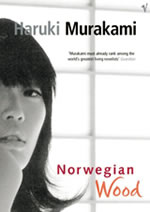
Norwegian Wood by Haruki Murakami – A Structured Love Story So Dark, So Beautiful

A noval by H. Murakami

“Norwegian Wood” is the second book I have randomly picked up from Kinokuniya prior to my holiday in June.  Substantially thicker than “South of the Border, West of the Sun” – considering how thin that book is – the two stories are strikingly similar.  Read almost like another one of his ‘autobiographical fictions’, which the translator Jay Rubin insisted in his note that it is not.  “Norwegian Wood” is a myriad of love and friendship through the eyes of Watanabe, from his age of 18 to 37.  A story that anchors between this first love Naoko and another girl Midori.  One that ends with a choice of the past and the future Watanabe has to make.

“Norwegian Wood” is one of Murakami’s earlier works.  Hence, less surreal than “South of the Border”, almost read like a straightforward love story.  By no means make “Norwegian Wood” a lesser work but rather, a different kind of work.  The most striking feature that stands out from the rest of his novels is the structure within.  I notice that each sub-plot involves three persons.  Something would happen to one party, change the entire dynamic, and the sub-plot dissolves, replaced by another sub-plot of three persons.  It is read like a continuation of one sub-plot riding onto the next one.  All the way till the end of the novel, the same structure is maintained.  I personally find this way of story writing original.

A lot of details have gone into the texture of the story.  Hence, I wouldn’t be surprised that some readers have identified “Norwegian Wood” as an autobiographical fiction.  Beyond the detail description of the school compound down to how the buildings are laid out, the characters are distinctly alive.  Down to the tone each character uses, and to the change in tone as the same character face different characters of varied personalities.  It is this level of details I appreciate deeply as I read this book during my holiday.

This book was released in 1987.  I believe it was the same book that elevated Murakami to an International status with the readership grown to millions that year.  Hence, in a way, “Norwegian Wood” could well be one of his most accessible work.  Even as a die hard fan who is in love with Murakami’s special surreal treatment to his stories, “Norwegian Wood” having little of that surrealism still ranks high in my book.  For a simple love story though can be dark, can still be beautiful.

After my holiday, I have visited Kinokuniya again and have randomly picked another two of Murakami’s books.  So, stay tuned for more book summaries.

Categories
Book Reviews Non-Fiction

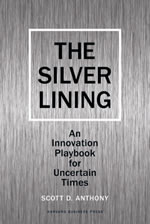
The Silver Lining by Scott D. Anthony – Now It’s the Time to Innovate

The Silver Lining

“The Silver Lining” is a timely read.  Great Disruption is here, today.  Just about half a year or so ago, companies were further revising down their targets, cutting cost, and have stayed cautious for the uncertain times.  The economic downturn affects both the multinational corporations and the local companies.  I have had a chat with some of the local business owners and all of them have experienced some level of hardship with their business, have made or at the verge of making some difficult decisions.  As for myself, an employee of a MNC, I too am frustrated with the disruption to the funding that is much needed to continue fueling some of the key initiatives.

The bad news is: resource has become scarce.  The good news is: constraint is the enabler of innovation as pointed out by the author of “Silver Lining”.  It is the time to transform and leave the old market.  Because for many, not to transform is the way to extinction.  Scott Anthony uses case studies from Cisco, Google, Nintendo, Wal-Mart, McDonald’s, Procter & Gamble, and more to illustrate what they have done differently from others, in making them successful through the challenging times.

What strikes me as the most interesting idea from this book is that innovation is not necessarily a random encounter.  Instead, it is a discipline that can be structured for success.  In his book, Scott Anthony shares with us a toolkit to audit the organization’s innovation capabilities.  He takes us through the pruning and diversification of the innovation portfolio, how we can ‘refeature’ our offerings in order to cut cost, and how we can effectively innovate.

Some of you may ask: how exactly can we innovate besides gathering a group of people with diverse disciplines and hope for some big ideas to spark off?  The organization and the internal processes have to be structured in a way to make innovation repeatable, hence increases the innovation productivity.  We have to be creative to experiment and test our key assumptions.  Sharing the innovation load can be an option too if we need to lower the expenses and risk.  And in uncertainty times, we may need to look into the ‘low end’ and see what customers value.  All the details can be found inside the book.  “Silver Lining” ends with one chapter on how you can strengthen your personal innovation muscle (which I find it useful) and another one – which is my favorite – on the 10 disruptive developments to watch today according to Scott Anthony.

Excess is a root cause of many innovation struggle.  There are already organizations out there that look at the current time of uncertainty as their silver lining.  New innovation is brewing in the horizon ready to change the game.  The question is: will your organization emerge as a winner?

Hardcover: 145 pages
Publisher: Harvard Business Press (June 1, 2009)
ISBN-10: 1422139018
ISBN-13: 978-1422139011

You may wish to get this from Amazon.com.

Official Site: The Silver Lining Playbook.

Categories
Book Reviews Fiction

South of the Border, West of the Sun by Haruki Murakami – A Simple, Surreal, and Genuine Romance Like No Other

South of the Border, West of the Sun

Everytime when I travel, I bring along books to read and a notepad to write.  For I don’t stop reading or writing, especially not during my holiday.  I had almost finished reading the new book by Paulo Coelho before I boarded the plane so I reckon, I probably needed at least three books to last the two weeks trip.

One thing I really enjoy writing a book summary is the occasion comments I read – both here and in Facebook – from other passionate readers who may or may not see the book the way I do.  And we exchange thoughts.  Prior to my holiday trip, I have read Haruki Murakami’s new non-fiction book.  As always, I shared my thoughts online.  That sparked off an online dialogue with another fan of Murakami which in turn inspired me to pick two random books of his from Kinokuniya.  “South of the Border, West of the Sun” is the fourth Murakami book I have read.  And I enjoy every single page of it – 187 in total.

“South” in essence is a story of romance told from the perspective of a man, from his relationship with his childhood sweetheart, the in-between love affairs, to his marriage.  A typical story that almost all men who have fallen in love can relate.  An ordinary love template.  The details – both physical and emotional – are so vivid that I was brought back in time as a young boy, to the beginning of my fascination to the opposite sex, to the silly things I did driven by my then raging hormone.  However simple the idea is, a story told by Haruki Murakami is never going to be a typical story.  “South” is original; it is genuine; it touches my heart.  I reflect upon my own love relationship, from my mid-teen (I mature late) till today.  It is one book that I would read again.  That’s why I bought the Spanish version during our holiday in Spain.  And I am looking forward to reading both versions side-by-side.

I am probably slightly ahead of time to compare “South” with another earlier work of his “Norwegian Wood” – as that will be my upcoming book summary.  Both novels are of a similar topic, with a center character that strongly resembles the author himself (I make that observation based on his semi-autobiography “Running”).  His later works certainly get more and more surreal and abstract.  A good example is his recent work “After Work”.  On that note, “South” to me, has a subtle surreal after taste.  It makes me ponder upon what is real, and what is not.

Below is a short quote of what I feel as a beautiful way to put forth something so close to reality, something that appears so real to me today.

“No one will weave dreams for me – it is my turn to weave dreams for others.  That’s what I have to do.  Such dreams may have no power, but if my own life is to have any meaning at all, that is what I have to do.” – South of the Border, West of the Sun by Haruki Murakami (translated by Philip Gabriel)

Categories
Book Reviews Fiction

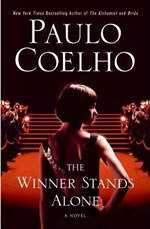
The Winner Stands Alone by Paulo Coelho – A Dark Piece Of Work That Inspires, Not Entertains

Paulo Coelho's New Novel

I have read almost all of Paulo Coelho‘s English translated novels (except “Like the Flowing River”).  “Winner”, to me, is by far his darkest piece of work.  Still inspirational, like all his previous works.  But it delivers blow after blow to the readers and make us think: What have we been doing to our lives?

The story centers around a Russian millionaire who believes in killing is acceptable if for a good course, his ex-wife, and her current husband who is a fashion magnate.  Upfront, at the preface, Paulo Coelho has already warned the readers that “this is not a thriller, but a stark portrait of where we are now.”  To read “Winner” as a thriller is certainly not the right way.  This novel – more so than others – has a concocted tone of sharing facts and insights mixed with his personal opinions (which can at times be eye-opening), long dialogues from one character or multiple characters that sound like coming from the same person (which is least of my favorite although they can be inspirational), parables and inspirational quotes (which I love), and story development.  I admit that at times, the tone is not as cohesive as I wish to be.  However, if indeed not reading “Winner” as a thriller, there are tons of inspirational messages and truth to chew onto.

Paulo Coelho, in his new book, shares details of the fashion and filming industries and the associated celebrity businesses.  Some are rather repulsive to read, especially when he illustrates how much we are into vanity these days.  Such as “A diamond is the supreme manifestation of human vanity” accompanied with pages of write-up on the diamond industry – from the violence it causes to a piece of jewelery we wear.  Most observations are not new to us.  Just that we don’t often articulate them that way.  Like film scripts to him are mostly man loves woman, man loses woman, and man gets woman back.  If the script is anything but, make sure there is enough violence or special effect to make up for it.  And his list of 46 random items on what ‘being normal’ means also got me thinking on how we accept the our environment or behavior as normal, in which if you think deeper, you may question why.  Such as criticizing anyone who tries to be different, swearing in heavy traffic, or studying at an university for years only finds that you’re unemployable at the end of it, and more.

These are just warm up items.  There are harder messages he delivers.  In the old days, we make pilgrimages to be close to something spiritual that is unattainable and mysterious that can bring blessings.   These days, people visit pop concerts more than religious meetings and we worship celebrities in different ways.  He also talks about the celebrity syndrome some may have – abandoning what we believe in for fame, ego, and money.  We are suffocated by lies, encouraged to put our faith in science instead of spiritual values, and we feed our souls with what society tells us are important.  As a result, we are unable to give up all these for true happiness – that is family, nature, and love.

You really could feel a bit depressed by self-reflecting on what he says.  Fortunately, there are interesting observations he shares as well as what we could do better.  For example, the author mentioned that there are four forces that guide us to purify our souls: love, death, power, and time.  In short, we must love because we are loved by God while conscious of death, struggle to grow but not trapped by the power gained.   And our soul is bounded by the web of time with all opportunities as well as limitations.  On our current environmental crisis, he highlights that we are not saving the planet, but rather, saving ourselves from not being destroyed by the planet.  Because the planet is stronger than us.  He also raises my doubt on our “fittest survives” mentality in our day-to-day life when we, human beings, need care and protection especially from young as compared to other species (and hence, I gather, we shall continue to do so in our daily life).

The author also touches onto the topic of workaholic that I enjoy reading as I am a firm believer of the need of work life balance.  First he says all workaholics think they are happy doing what they are doing.  And it is not something society wants to fix because it helps human progression in the expense of the obvious.  Total power – as you advance in career – means total slavery.  You find it harder to let go as you gain power and you can’t even do the simple things in life.  To combat it, use work as a source of happiness but not compulsion.  I guess what he says (and what I practice) is by all means, be happy with work but know when to let go and enjoy the simple things in life.  Seek for true happiness in family, nature, and love – something work does not provide you with.

There is one parable that I very much enjoy reading, got me into thinking.  This is what I have internalized: One day a sea gull saw a mouse on the ground.  Not able to communicate as they spoke in different languages, the sea gull took pity on the creature that has lost its wings.  So the sea gull took the mouse onto its back, took flight to the sky thinking that the mouse must have been missing what it was like flying in the air.  The mouse had a time of its life and when it was brought back to the ground, as it saw the sea gull took off and disappeared, the mouse began to feel sad, not to be able to experienced that form of freedom again.  As days went by, the mouse looked into this miracle thinking that it was just a dream instead.

I think, we often fail to acknowledge the little miracles in life.  I can relate to that parable.

To round up this book summary without giving out the plot, there is one constant theme that appears as I read the book.  It is the voice of the Devil.  In our daily lives, we have encountered many decision points.  And at each juncture, there is a little voice in our head to help us decide.  Is that the voice of the Angel?  Or indeed the voice of the Devil that conditions us in believing that all that we do is for the better even if it comes with a price, knowing something is wrong but yet we create justifications, and failing to see through the obvious or normalcy when everyone is doing it.

You won’t like it when you read “The Winner Stands Alone”.  But you will certainly benefit from it and may become or wanting to become a better person.  That’s what an inspiration book, not a thriller, is for – for “Winner” does not entertain.  Be warned.

PS. Finished this book on a plane heading to Barcelona.

Categories
Book Reviews Non-Fiction

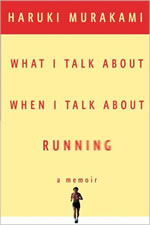
What I Talk About When I Talk About Running by Haruki Murakami – An Inspirational Read

Haruki Murakami's Running

Recently, I have started reading the Japanese writer Haruki Murakami’s works and I love them immensely.  The rather long short stories collection “Blind Willow, Sleeping Woman” and the rather short full length novel “After Dark”.  When I saw his [rather short] memoir on the book shelf using running as a central theme, as someone who enjoys jogging once in a blue moon, I bought the book thinking that I may like it.  In fact, more than so, I love “What I Talk About When I Talk About Running”.

I often wonder who this person Haruki Murakami is behind the books that are written with such mystery, dreamy abstraction, darkness, and loneliness.  The shocking revelation is that Murakami is someone whom I can relate to.  In his memoir, he talks about him being a workhorse and not a racehorse; on why he prefers sports and activities that he can set his own goals; on the good things derives from “life is not fair”; and amongst other life philosophy of his.  Besides a glimpse of what kind of music he listens to, what products he uses – all in relationship to jogging of course – at the age of 60 (which he did not even mention in his memoir), he has run and completed more marathons and triathlons than most people I know.  Majority of the contents evolve around how he prepares for all these races, mantras that he has derived, and some of the jogging journals – success or failure, official or unofficial (such as running from the Greece town Marathon to Athens – the original marathon in reverse direction as well as an ultramarathon) – all of which are inspirational even if you are not a runner.

“Running” is not your typical page turner.  Some parts on how much pain he suffered and overcame are rather painful to read.  In fact, reading “Running” reminds me of my own rather painful experience back in Mount Kinabalu trip whereby some are touched by my personal journal.  If you enjoy running and or writing, “Running” is a strong recommendation.  In his book, Murakami shares the quality and attributes a novelist should possess.  A humbly written memoir, this book certainly touches me.  I especially admire how he would like his gravestone to say.  And I won’t spoil your reading pleasant by sharing it here.