Categories
Concert

Tiffany Alvord Live In Singapore – A Strange But Interesting Aftertaste

Poster of Tiffany Alvord live in Singapore.

Frankly speaking, I had no idea what to expect.  Tiffany Alvord‘s music lives inside YouTube.  The production quality of her music videos is professional.  I don’t YouTube often.  But I enjoy celebrity artists like Tiffany who push out good stuffs regularly.  Close to 1.3 million subscribers is quite a milestone.  Bear in mind that she does not seem to have the backing of the traditional music industry.  So, viewers stay onto her – I would suppose – because her cover music interpretation is good, and she has a personality to back it up.

But what about a Tiffany Alvord concert?

After I bought a pair of tickets, my brother-in-law Eric who is also into YouTube music artists asked a very valid question, “Can she sing live?”

I had no idea.  Unlike another YouTube artist Bri or Kina Grannis whom I have heard them recorded live, I don’t recall Tiffany demonstrating her vocal ability without all the fancy processing tools.  Also, I was thinking.  Just how many of us in a tiny country like Singapore have heard of Tiffany Alvord, willing to fork out some money and time and watch her concert?

Turns out she has amassed quite a sizable fan base here.  Amazing.

Tiffany's concert was held in Singapore Conference Hall.

I took a picture of the stage before the show started.

The venue was Singapore Conference Hall.  Quite an unusual place for a pop concert.  More like an auditorium and it is located in the heart of central business district.  By my calculation, there is a seating capacity of 1,000.  Mostly filled.  Mostly teenagers.  The sound system is okay.  A young girl named Natalie Hiong opened the show.  Previously worked as an investment banker in UK, she is now pursuing her music career in Singapore.  She has the look, not too sure about the voice.  Or perhaps the monitor speakers setup was not right and she couldn’t hear herself.  In any case, it is hard to stand in between the audience and the main artist.  I lost focus after her first song.

When Tiffany emerged from the backstage, the crowd was somewhat lukewarm.  There was no live band.  She sang using a prerecorded music track, which was like a karaoke.  Very strange.  She sang OK, a bit of pitch problem here and there.  As the crowd got warmer, she got more relaxed.  The concert came alive when finally, a band arrived at the stage.  By the look of it, these were young local session artists.  The band was OK, certainly much better than having the soundtrack played in the beginning.  It is quite obvious that the 20 years old Tiffany is new to performance.  The band is new to her music too.  Together, they played a mix of her original music and her cover ones.  I didn’t see much connection between Tiffany and the band though.  Maybe the band was added in the last minute.  No idea.

At one point of her concert, Tiffany has invited someone called Marcus onto the stage for one song.  Apparently, he flew in from Europe, has helped in the design of her tour T-shirts.  That was neat.  The things she does to her fans with her singing and him sitting at a stool.  After Marcus returned to his seat, Tiffany realized that she has lost her guitar pick and she did not carry any extra.  So she asked the guitarist behind for a spare one.  One guy at the front row offered her a guitar pick and she has decided to use the one from her fan instead.  That was sweet.

And there was an intermission!  Amazing.  An intermission for a pop concert is definitely a first for Cynthia and I.  According to Tiffany, last evening was the longest performance for her.  Almost a two-hour show, that is pretty respectable.  Quite a few Western International stars only perform a one-hour long concert.  Then more singing using a prerecorded soundtrack.  One time, the sound engineer played the wrong track  that came with the vocal.  Oops.  She stopped and restarted.  Still the wrong one.  Uh oh.  Awkward.  She asked the crowd if it was OK for her to sing acoustic with her playing the guitar.  Of course that was OK.  Take 3 here we went.  Tiffany is not a guitar player.  But personally, I enjoy her singing with her acoustic guitar (not exactly hers as she has left her guitar in California, strangely so).  Much livelier that way.  Her song “Possibility” could have been a disaster, with the stop’s-and-go’s due to technical problems.  She managed to turn that around.  That impromptu acoustic version could easily be my favorite performance of the evening.

Then the band came out.  And then midway Tiffany switched back to karaoke mode with the band still on stage.  That was odd.  After a few more songs, she has finally dropped the karaoke for the remaining show.  The entire concert was filled with a lot of I-love-you’s from the audience.  A lot of I-love-you-too’s from Tiffany.  Her cover version of Taylor Swift’s We Are Never Ever Getting Back Together is probably the highlight of the concert.  Glad You Came was the last song of the set.  Or so she said.

But you know how concerts are like.  The audience are supposed to scream for encore.  And then the artist would return to the stage and perform another number or two.  When Tiffany and the band dived into the backstage, the venue was still dimmed signalling a high possibility that there was more.  All of a sudden, the few feeble scream of encore was drown by a series of loud stomping sound from left to right, towards the exit.  Singaporean audience was storming out of the venue like packs of zebras in Africa sensing a tiger nearby.  These people were in such an urgency as though they were running for their lives!  What’s up?!

Cynthia caught the band peeping from the backstage to see if they should make a return.  By then, more than three-quarter of the crowd has gone or were making a hasty exit.  The organizer has then decided to turn up the light and announce the end of the concert.  That was really odd, especially when you are new to Singapore.

Here in Singapore, we are known for two things.  Impatience and queue loving.  The whole crowd has migrated from the concert hall to the main lobby within minutes, queuing up and waiting for – I suppose – meet the artist session.  That got me thinking. Do the majority care about the music?  Or more about meeting the person behind YouTube?  Now, I would never know if my favorite Tiffany’s cover of Payphone – the video that got me subscribed to her – was indeed on the encore list.

Boy, don't we love to queue or what?

Very uniquely Singapore, people rather queue up to meet Tiffany after the show than to wait for an encore.

An interesting experience no doubt.  I am hoping that artists promoting their works without the music industry support can make it in this business.  Clearly, the music industry plays a role in promoting the music and making the live performance more polished and professional.  As I was watching Tiffany Alvord on stage, I could not help but to think of all the cover bands in the region that play in local pubs and even Hard Rock Cafe.  They can do cover songs so much better.  If only they have entered into the game of YouTube as well.

Maybe that was why I was wishing for a glass of beer as I watched Tiffany Alvord on stage.

Categories
Diary

Confession!

As the priest placed his hand over my head and said the Prayer of Absolution, I felt an intense sense of warmth from my lower back and up.  A feeling different from the heat and anxiety I have experienced prior and during my Confession.  There was something soothing and peaceful about that warmth originated from my lower back gradually spread across my body, as though I was engulfed in a divine fire.

A photograph taken from the entrance of Church of the Holy Spirit.

I was not born as a Catholic.  It could have been any religion.  I was brought up in a Catholic school, my wife Cynthia is a Catholic, so naturally, that is the path I have taken since the day of our marriage.  Of all the Catholic traditions, I have always tried to run away from Confession.  You may say: Look, Wilfrid, since you are a public blogger, confession should be in your DNA!

Well, it is not the same.

Easter is on its way.  To cater for the sudden surge in demand for confession, once a week from now till Easter, there are mass confession sessions held across the island.  I have not attended a mass confession session before.  Cynthia only gave me two options: this week or next.  I picked this week out of the two.

We have not visited Church of the Holy Spirit for years, although we frequent the mall from opposite the street.  In my mind, thanks to all the Hollywood movies, I thought confession always involves I entering a booth whereby the priest cannot see me.  I can pour my heart out on the sins I have committed in total privacy.  In a mass confession session like today’s, it is nothing like that.

The interior light was dimmed.  There was a quietness inside the Church except for the humming sound of the air conditioners (thank God for that as you will see why later).  Instead of confession booths, four priests were seated at the far corners of the Church.  Two priests were seated near the alter.  And another two inside the two brightly lit rooms.  Confession was to be done in the open!  I was in shock.  We were supposed to queue up and take turn to sit close to the priests and whisper clearly and briefly the sins we have committed against God.  As I was queuing to one of the priests near the alter, I was thinking: Shall I make a generic confession like I should have attended Mass every week but I didn’t?  Or shall I make an honest confession?

At the last minute, I have decided to make an honest confession.

Of course I was in shame, feeling an uncomfortable heat on my face as I was hit by anxiety and remorse.  The priest asked a few questions and offered some pointers, which I am thankful for.  As he rested his hand above my head and granted me the absolution, this divine warmth I have mentioned in the beginning of this post was nothing I have felt before.  Such comfort and peace and a touch of divinity – I am glad that I did not skip the session, like I did many times in the past.

As we were leaving the Church feeling happy and lifted, I could not help but to ponder: Is there a better way to prepare for my next confession?  There are many answers to this question, I am sure.  But this one is mine, and I am happy to give it a try.

Confession to me is a checkpoint to evaluate how far I have deviated from God and the Church’s teaching.  If I am unable to think of something substantial and concrete to confess, that could mean either I am a saint or I have no clear visibility on where my reference path should be.  I am inclined to think that it is the latter rather than the former.

Hence, the key to making a good confession regularly is to be clear on our right path and to constantly evaluate ourselves against that reference point.  There are many ways to get there, such as through prayers and Bible reading.  A more effective way could be to attend Mass regularly.  During the moment of silence after each reading, reflect upon the passage.  Pay attention to the priest’s sermon.  Internalize the teaching and reflect upon what we have failed to do, how we can do better.  Once we are aware of the deviations and our trespasses, that should make our next confession more fruitful and substantial.

Act of Contrition: Oh my God, I am sorry and beg pardon for all my sins, and detest them above all things, because they deserve your dreadful punishments, because they have crucified my loving Savior Jesus Christ, and, most of all, because they offend your infinite goodness; and I firmly resolve, by the help of your grace, never to offend you again, and carefully to avoid the occasions of sin.  Amen.

Categories
Book Reviews Non-Fiction

Neon Angel, A Memoir Of A Runaway By Cherie Currie – A Reread

I read this book ... again.

Very recently, I have imported a new Kindle from Amazon.  I looked through the Kindle eBooks on sales (I always love a good discount be it as video games via Steam or books).  I saw Neon Angel selling at a very reasonable price.  Somehow, I have a feeling that this is going to be a good book.  So I bought it online in a heartbeat.

Of course it is a good book.  I have read it three years ago.  A library copy it was.  I should have checked my website first before buying any books.  Since I have already started rereading it, why not finish the book and see how I feel about it without reading what I wrote three years ago?  Our perception is often affected by our maturity and experiences.  Would I read this any differently?

You may have watched the movie The Runaways.  If you haven’t, here is a quick introduction.

The Runaways was an American all-girl rock band formed in the 70’s.  In 1975, Cherie Curries was recruited into the band at the age of 15 as the lead vocalist.  While Cherie’s involvement with The Runaways lasted only 2 years, it would appear that she has played an important role in the band’s breakthrough and success.  Upon Cherie’s departure, guitarist Joan Jett continued to be the driving force behind the band, together with Sandy West the drummer and Lita Ford the lead guitarist.  But by 1979, the band was officially dissolved.  All four core members continued their solo careers with Sandy died of cancer in 2005.

Neon Angel is a self-biography written by Cherie Currie.  Like most autobiographies, it is hard to tell facts from fictions.  However, the emotion as described in the book appears to be genuine.  There is no bar held on the high’s and low’s that Cherie has experienced in her two years with The Runaways and the decade thereafter, dealing with the aftermath of stardom.

Raped at the age of 15 by her twin sister’s ex-boyfriend, Cherie was acted as an outcast in school, brought up in a dysfunctional family with her beloved daddy moving to another state, and later, her mother remarried and migrated to Indonesia.  Just imagine taking all these in as a 15 years old.  It would not have been easy.  Back in the 70’s – in the era of sex, drug, and rock & roll – David Bowie was Cherie’s idol.  His music was her salvation.  There was so much angst inside so much so that she was the perfect fit for a all-girl rock band as the embodiment of rage and rebellion.  She was the Cherie Bomb, the sex symbol.

The drama escalated after Cherie has joined the band.  There was constantly in-fighting within the band.  The tension between Cherie and her twin sister Marie was getting higher and higher.  Their alcoholic father did not help the situation.  There were early signs of drug use and substance abused.  And then another rape, which was much brutal than the previous one.  It seems to me that throughout her 2 years career with The Runaways and the few years after, Cherie has suffered much as a teenager.  Here are some excerpts from the book.

Something turned off inside of me that day.  Something inside of me snapped, and I stopped caring.  I never wanted to feel like that again, and so I began to learn how to shove those feeling deep, deep down inside of myself to a place where they could not hurt me anymore.  ~ After Cherie’s mother left the country refused to turn around and say goodbye.  Cherie was pinned down by a guard in the airport trying to cross the gate and catch up with her mother for one last time.

Last night I’d discovered what it felt like to be a rock star.  This morning I knew what it felt like to be a whore.  ~ Cherie’s band manager pimped her to a famous teenage idol for sex after her first big concert so as to generate publicity.  She was having a period that night.

Maybe [the doctor] was trying to be kind.  Maybe he didn’t want me to know [the sex of the unborn baby].  I knew for certain that a part of me was gone along with my unborn child.  I’d lost some vital part of myself in that hospital, and I felt instinctively that I would never get it back.  ~ This was after her abortion.  She was three months into her pregnancy while recording her album without even knowing it.

Funny, isn’t it?  After all the things that went on in the band, one of my strongest memories was such a small, quiet moment.  ~ The band was full of internal drama.  In one rare moment, lead guitarist Lita Ford complemented Cherie’s vocal performance during a recording session.

This nightmare went on for six hours.  I can’t even begin to explain what I went through.  It’s hard to tell another person some of the things that man did to me.  What I will say is that the terror, the horror, and the humiliation that he inflicted upon me were even worse than what I imagine hell to be like.  He hurt me with his fists, and with his body.  he did it again, and again, and again.  He thought nothing of hurting me.  Every time I screamed, and I cried, and I begged for mercy, and I bled or I passed out, he seemed to grow stronger, more hateful, more crazed by the lust and the sadism that fueled him.  As the night dragged on and my hellish ordeal continued into the breaking dawn, I came to the realization that this man was going to murder me as soon as he was finished torturing me.  ~ Cherie was kidnapped and brutally assaulted and raped by a man for six hours.  Eventually, the rapist was caught, trialed, and sentenced for one year in jail.

While most of the external events were out of Cherie’s control, the biggest demon turns out to be the one living within her – drug and alcohol abuse.  It has slowly destroyed her, destroyed everything that she has.  Majority of the book is a tragic recollection of a once upon a time rock & roll star and the price she has paid to get there.

Neon Angel is not without a moment of triumph.  Eventually, through persistence, Cherie Currie has emerged clean from drug.  She has constantly reinvent herself from a rock star to an actress, drug counselor for addicted teens and as a personal fitness trainer, and now a chainsaw craving artist who has her art gallery.  Looking back, would she want to change a thing?  This is answered in her afterword written years after the book was published.

Looking back on my life since that fateful day with my niece Cristina, I really see how truly blessed I am.  Many years have passed, we have orbited the sun more than 7,500 times and I have seen such extraordinary things, and had so many profound experiences that I could easily fill the pages of another book.  In the years since the Runaways I have lost some of my dearest friends, and I have reinvented myself time and time again.  But through it all, the wonderment and personal triumph that emerges from the emotional depths I have experienced leave me knowing I wouldn’t have changed a thing.

*     *     *     *     *

Now that you have read the book summary written in 2013, you may wish to click here to read the one that was written in 2010.

Categories
Animation Foreign Movie Reviews

One Piece Film: Z

A film originated from manga.

I have not heard of the manga One Piece until I watched a movie adaptation of the manga.  Naturally, I love anything that is Japanese.  When I first saw the gigantic promotional poster displayed at one of our beloved cinemas, I said to our buddy TK, “Let’s watch this!”  To that he replied, “On!”

Apparently, One Piece is a very popular manga series in Japan, for a very long time.  In this particular movie One Piece Film: Z, there are pirates the supposedly protagonists (I think).  There are the marines who hunt down the pirates.  And there is Commander Z who was a marine, went rogue, and now rages war against the pirates as well as the marines that get into his way.  Each pirate, meanwhile, seems to possess at least one unique power (think X-Men).  As you can imagine, there are tons of combat scenes between the characters.  More or less like a video game.

Unlike other more artistic Japanese animations Cynthia and I have seen, One Piece Film: Z does not require too much thinking.  Just sit back and enjoy the humor and the action.  I am not entirely convinced that the English subtitles convey the original essence well.  I wish there were Chinese subtitles as well.  Usually, for Japanese animation, Chinese subtitles work better than the English ones.

One Piece Film: Z is not a story exploring the abstractness of nature or the emotional vulnerability of character.  It is a film with a decent amount of humor and action that entertains.

Categories
Book Reviews Fiction

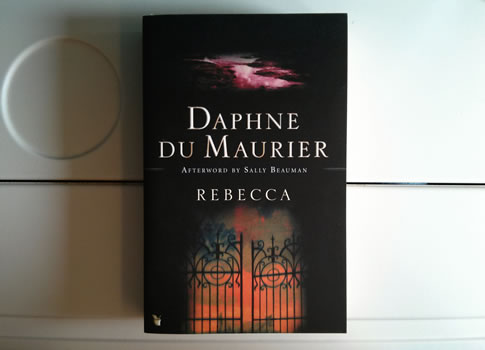
Rebecca By Daphne Du Maurier – An Exceptional Read

What an exceptional read.  Reading Rebecca is like reading My Cousin Rachel all over again.  Because I know Du Maurier’s writing style, that she was capable in destroying or even killing off main characters that readers grow to love, it was quite a nerve wrecking experience reading Rebecca.  On top of that, Du Maurier was gifted in writing suspense novels as well as breathing life to her characters.  This makes Rebecca a thrilling read, from start to finish.

I read Rebecca on our trip to Hong Kong

One year ago, after reading the library copy of My Cousin Rachel, I love the book so much that I bought a copy for my keeping.  While I was at it, I bought a copy of Rebecca too.  I have been wanting to read Rebecca for quite some time.  Haven’t got around to.  On our recent trip to Hong Kong, I brought it along as my reading companion.

Although Rebecca was first published in 1938, I found it as entertaining as some of the modern literature published today.  There are four major components in this book.  Manderley, which is an estate dominating the entire story, with a west wing facing the sea and an east wing facing a rose garden.  Max de Winter, who owns and lives in Manderley.  Rebecca – Max’s first wife and is dead.  The narrator – Max’s current wife and remains nameless throughout the book.

Rebecca is intriguing in a couple of ways.  Rebecca is dead, since the beginning of the book.  Yet, under the hands of Du Maurier, this character has come alive through the recollections of others, the metaphors that represent her, the legacy Rebecca has left behind, even the drama that still continues.  It is as though her presence and physical dominance is felt strongly throughout the book, as a dead character.  It is only fitting that the book is titled as such.

The narrator – also presence throughout the book – on the other hand, is very different from the Rebecca character.  She is shy and young.  Coming from a humble background, the narrator is socially awkward and unsophisticated.  She is the opposite of Rebecca, and without a name.  She is the living Mrs de Winter but with an identity slowly dissolved away, what good is her existence?  The dualism of Rebecca and the narrator is striking, best to be explained by Sally Beauman in her afterword.

Shy, and socially reclusive, [Daphne Du Maurier] detested the small talk and the endless receptions she was expected to attend and give, in her capacity of commanding officer’s wife [in Egypt].  This homesickness and her resentment of wifely duties, together with the guilty sense of her own ineptitude when performing them, were to surface in Rebecca: they cluster around the two famale antagonists of the novel, the living and obedient second wife, Mrs de Winter, and the dead, rebellious and indestructible first wife Rebecca.  Both women reflect aspects of du Maurier’s own complex personality: she divided herself between them, and the splitting, doubling, and mirroring devices she uses throughout the text destabilise it but give it resonance.  With Rebecca we enter a world of dreams and daydreams, but they always threaten to tip over into nightmare.

The way this story is narrated is worth a mention too.  It starts with a dream by the narrator, on the house Manderley.  It then transits to a present day narration that gives hints to what the ending of the story may be.  The narrator reading a story aloud to a nameless partner that brought her back in time years ago when she was the paid companion for a Mrs Van Hopper doing similar things.  What a full circle.  The flow in time is so smooth that it took me several repeated reading of those pages in order to fully appreciate it.  The story ends with a dream – the only two true dreams in Rebecca – that wraps it back to the beginning.  The ending is so abrupt that left me speechless.

I am torn between My Cousin Rachel and Rebecca.  Till now, I am still unable to decide which one is my favorite.

*     *     *     *     *

An excerpt below demonstrates how Du Maurier brings Rebecca to life literally through the narrator.

[Maxim] did not look at me, he went on reading his paper, contented, comfortable, having assumed his way of living, the master of his house.  And as I sat there, brooding, my chin in my hands, fondling the soft ears of one of the spaniels, it came to me that I was not the first one to lounge there in possession of the chair; someone had been before me, and surely left an imprint of her person on the cushions, and on the arm where her hand had rested.  Another one had poured the coffee from that same silver coffee pot, and placed the cup to her lips, had bent down to the dog, even as I was doing.

Unconsciously, I shivered as though someone had opened the door behind me and let a draught into the room.  I was sitting in Rebecca’s chair, I was leaning against Rebecca’s cushion, and the dog had come to me and laid his head upon my knee because that had been his custom, and he remembered, in the past, she had given sugar to him there.

And as in her previous book My Cousin Rachel, there is some interesting observations that may still ring truth today.

‘You have qualities that are just as important, far more so, in fact.  […]  … but I should say that kindness, and sincerity, and – if I may say so – modesty are worth far more to a man, to a husband, than all the wit and beauty in the world.’

Categories
Fragments of My Dreams

Fragments Of My Dreams Episode 17 – Bouncing Car Across a Yellow Field

Author’s note: Classifying this entry as Fragments of My Dreams is not entirely legitimate.  Unlike other entries of this category, the element that is derived from my dream is minimal.  Having said that, I have this story stuck inside my head for a long time.  One recent dream of mine has inspired on how to wrap it up with a hook that may work better than my original plot.  For that, I don’t mind relaxing the rule of the classification a little bit.

Like photography, in this story, I intend to create a ‘depth of field’ whereby the most recent story in focus is described in accurate details while the events that happened in the past get more vague, broken, and abstract as we traverse down the timeline.  Memory plays trick on us at times.  This is a work of fiction.  Any resemblance to people alive or dead is purely coincidental.

1. Prologue

Claire Anna Walker.  Whenever I think of her name, I feel as though I could hear a dull bang inside my heart.  Time has washed down memory, deconstructed the familiarity.  New routines overwrite the old ones, slowly and surely wear away the little that has left behind.  Distorted and made abstract.  Gaps are fused with imagination, yearning, and dreams that make the tracing of the true flow of events almost impossible.  Only a dull bang remains.  My heart does not feel anything nowadays like it used to, which is depressing.  I do not want to forget.  But having a choice seems like a luxury I cannot afford in a time like this.

Claire Anna Walker.  Sometimes when I think of her name, I wonder where she is, what she is doing.  Does she still walk the streets and the countryside with her easel and her oil painting toolbox looking for her next inspiration?  Her next vintage point?  Or her next muse?  Not knowing is like having an itch that I cannot scratch.  Worse still, this itch resides inside my head, which I cannot reach.

2. The Bitter Cry of Heartache and of Emotions of Other Sorts

September

Though Claire and I have recently reconciled, things were never quite the same as it was.  Courtesy masked away our eccentricity but what was left behind seemed bland and less interesting.  We seldom met.  Nor could we find a compelling reason to.  Our reformed friendship did not quite work the way we have intended.  Or the way I had wished.  It was like having a virtual policeman lurking in the shadow only to appear when the boundary of physical and emotional intimacy was challenged.  Things that we would have talked about but did not.  Things that we would have done but did not.  I bit my tongue so many times.  And I knew that she did too.  I was surprised when Claire suddenly wanted to meet up.

It must have been a month or two since we last met.  I still remember this scene vividly.  From across the street, Claire was dressed in pastel walking towards me.  A lacy long dress that flowed well onto her tall slender body.  In the past, I have always tried to tell her that she looked good in a long dress.  But her preference was T-shirt and jeans.  “In all practicality”, she used to say to me, “oil painting is my hobby”.

“But writing is mine!  And I need a muse.  A muse in long dress,” I would jokingly reply.

She would laugh, roll her eyes, and say, “That is your problem.  Go find someone else as your muse!”

That day, there was no smile on Claire’s face.  As she was walking towards me, her body gesture showed awkward signs of hesitation.  Her face was paler than usual, without makeup as usual.  Her lips – which in any other given days looked full and kissable – now squeezed into a quivering thin line.  Those eyes of despair they slowly swelled up as she stood two steps in front of me.  Stopped right there she held her distance.  At that moment, as though she was the Gaia and I was the moon.  My gravitational pull might have triggered the free flow of her tears, which was only a matter of time before she dived into my embrace, collapsed into a long bitter cry.

I was not sure how to react, except to give her a warm albeit friendly hug.  A little squeeze as I breathed in the moment.  The invisible policeman was watching.  I was certain of it.  I could smell the shampoo of her long hair, feel the shaking of her body, hear the erratic beating of her heart – and mine – and the faint sobbing sound of her almost silence bitter cry.  Something must have gone wrong but I did not know what.  Relationship problem with men, or women?  Her oil paining hit a road block like my novel writing?  Her parents got a divorce?  Her cat died?  She ran out of money?  Someone bullied her?  She only had a few months to live?  Or weeks?

Everything leading up to this moment was clear and vivid.  And then, my memory suffered an involuntary lapse.  It went blank, almost like a self defense.  I was confused by the whole scene, of course.  I was unable to accept what was to come.  There was this touch of gratitude and the surrendering of logic and reasoning.  I had a strong hunch that someone must have broken her heart.  Someone else.  It had to be, for this was a bitter cry of a heartache, in an enormous scale.

After what appeared as an eternity, Claire looked up.  Her lips broke into a soft smile and she said, “Thank you.  And goodbye.”  She then turned and disappeared into an alley.  I was immobilized.

That was the last time I saw Claire.

3. A Courteous Reconciliation

Early August

A month or so before our final encounter, Claire and I had a fight.  We seldom argued.  But we did.  I was not sure if I should call her after the act.  But she did not call me either.  The past one week of not seeing each other had been a torture.  I found myself missing her.  Should I be expecting a call?  Was she expecting my call?  Would she want to be left alone?  I did not action.  Neither did she.  Nothing was happening.  The days went by dully.  On the other end of my routine spectrum, my work-in-progress novel was going nowhere.  Last night I had a dream.  But that did not inspire.  Something was missing.  Where was Claire?

Where?

One fine morning, I woke up with bright sunlight flooding into my apartment on the ground floor.  My windows were closed but I could hear the birds chirping outside.  I saw one.  And then two.  I took it as a sign, got out of the bed, picked up my phone, and dialed Claire’s number.

I was about to give up on the third ring when someone answered.

“Good morning,” I said.

There was a short pause and then Claire’s voice came through the line, “Good morning.”

“How are you?”  Almost sounded like a whisper as I was holding my breath not knowing what to expect.

“I am okay,” replied Claire.

“Did I wake you up?”

“No you did not.  The birds did.”

Ah, the birds.

“Would you like to catch up for breakfast at our usual cafe?”  I wasn’t too sure what to say and I muttered the first thing that came to my mind.  My stomach was growling.

“Hmm.”

“It’ll be pancake.  On me,” I offered.

“Sure.”

“Great.  Be there in half an hour?”

“Sure.”

Over our pancake breakfast, we stayed out of the landmine territories and instead, talked about what we were up to in the past one week.  There was nothing spectacular to report, or talk about.  The magic had disappeared.  I wanted to talk about my writer’s block.  But that sounded impotence.  She did not talk about her painting progress either.  I did not ask.  At some point though, I thought she was studying me like how she studied her painting subjects.  The way her eyes traced my profile sent shivers down my spine.   I felt as though the creases on my face – and on my clothing – were being analyzed, drawn onto her – or my – imaginary easel.  Her eyes lingered in areas that needed more details, decomposing the whole of me into dabs of wet paint, layered on top of each other.  I was going crazy.  She was driving me crazy.

That breakfast encounter left me with a weird aftertaste.

 4. The Great Fight

Late July

“You suck as a friend!” yelled Claire.

“I what?” retorted I.

It went on and on.  I was more annoyed than furious.  Sure I had missed her call a few times.  But I was busy with my novel.  Writing is a lonely journey.  Inspiration comes and goes.  Like any argument between two individuals, the topic is often trivial but at times fundamental.  Claire’s brain was governed by logic and discipline.  She painted in realism.  Perspective had to be faithfully replicated onto a painting.  So were the different shades of colors.  My brain, on the other hand, was not governed by any universal laws.  It thrived on being abstract.  Lines were meant to be bent.  Shapes were meant to be morphed.  Ideas were meant to be spontaneous.

The truth was, I was unable to define our relationship.  She was as hot-and-cold to me as I was to her.  We walked out from that fighting scene feeling bruised and hurt.  Words that should not have spoken but we did.  Feelings that should not have bared but we did.  Both of us lost something deep inside that day.  In retrospect, I felt I was at the losing end.  As though I was being dumped.  How the wind of change had descended upon us.  A couple of days ago, inside a pub, under a more friendly environment, we were reminiscing on how we first met.  A bizarre event that we had encountered around half a year ago.  Those are happy moments.

5. A Bizarre Recollection

Mid July

“Remember that day we first met?” asked Claire.

“How could I forget?  That was half a year ago,” I laughed.

“Me neither.  The thing is, I can never quite figure out what has happened.”

“Or what we saw.”

She nodded and continued, “Do you think the driver survive those falls?”

“It’s hard to say.  I thought I saw a little girl sitting inside the car.  Maybe another adult too.”

“Come on.  Logically speaking, no one can survive something like that.”

“True.  But history also tells us that extraordinary events do happen.”

“So you are saying that there could be a miracle?” she quizzed.

I paused, took another sip of the beer, and said, “Quite honestly, I don’t remember having seen the whole scene.  Nor do I remember all the details that come out from it”

“Like half of the scene was being blacked out.”

“Like half of the scene was being blacked out,” I repeated; “Or edited.  Censored.”

Claire took a big gulp of beer and asked, “By who?  For what purpose?”

“I don’t know.  We went downstairs from the rooftop as soon as the car went out of sight, didn’t we?  We ran as far as the main junction down the road.  The air was hazy.  Dusk was upon us.  To our left and our right were the main streets dotted with numerous shops.  Ahead of us was a street that led to a shopping mall.  There was no abnormality in proximity.”

Claire frowned and asked, “Why didn’t we return to the yellow field in front of your apartment?”

“Because the car disappeared from the yellow field and not into?  Perhaps that was why?”

“Hey, that is logic!  Logic is my department.  Thou shalt not pass!”

I laughed, “Jokes aside.  Maybe we will never find out why.  Unless you could speak with the ghosts from the past.”

We fell into silence and drank our beers.

“We shouldn’t drink so much tonight,” Claire whispered into her glass of beer without looking at me.

“And why not?”

“Remember the last time we got totally wasted?”

“Oh.  That.”

“Ya.  That.”

“It wasn’t that long ago,” I said, pressing my fingers hard onto my temples trying to recall when.

“No it wasn’t,” said Claire.

“How does that masterpiece of your go?”  I changed the topic.

“My painting?”

“Yes, the one you titled as ‘By My Sofa You Slept With A Peaceful Smile’?”

“Oh.  That.”

“Ya.  That.”

“I am still working on it.  Pretty much like the progress of your novel.”

“I hope your painting is doing much better than my novel,” I laughed.

“And why’s that?” asked Claire.

I shrugged, “Because it is going nowhere.”

6 Did We or Did We Not?

Early July

One morning I woke up at Claire’s sofa looking stupefied.  How in the world did I end up in Claire’s apartment, sleeping on a sofa right next to her bed?  Claire was too awakened roughly at the same time as me.  Rubbing her face with her hands, the first thing she said was: Uh oh.

I scanned the surrounding and found empty beer bottles everywhere.  This looked bad.  We were totally wasted last night.  Smashed beyond recognition.

“Uh oh.  Did we?” asked I.

“No we didn’t.  You must be dreaming,” replied Claire quickly.

“You sure?”

“Not really.”

Claire collapsed back onto her bed, pulled a blanket partially covering her body.  I thought she had gone back to sleep but out of nowhere, she spoke, “Do you want pancakes?”

Reluctantly, I got out of the sofa and said, “Great idea.  Let’s go.”  I needed some strong coffee to beat my hangover, badly.

7. On the Topic of Art

May

When Claire and I first became friends, I was drawn to her skill painting in realism while she was drawn to my talent of writing in an abstract style.  Our common topic was art.  Museums and libraries were our sacred playgrounds.

We had debates too.  Ironically on the very things that drawn us together.

“Have you tried writing in realism?”  Out of the blue, Claire posted this question to me as we were touring inside a museum.

“As in describing each table and mug in detail?  The shape of the house, the cracks on the wall, the fabric of the clothing, and the quality of light?  Knowing the name of different shades of colors by heart, like you do?”

Claire paused and replied, “Something like that.”

“That doesn’t excite me.”

“Why’s that?  Is it because of your lack of vocabulary in describing your subjects in details?”

Unsure if I should take offense on her last remark, I continued, “Perhaps.  Or more so, when I am not passionate on that something, I don’t feel the need to expand my repository for the sake of it.”

“But it’s a good skill, don’t you think?”

“How about this.  Let me turn around and ask you this instead: Have you tried painting abstract art?”

“Nope.”

“And why not?”

“It is a whole new technique and discipline.  And it is not my forte.”

“Is it because of your lack of imagination?  Or you are afraid to distort reality and to deviate from it?”

Claire let out a reluctant laughter and said slowly, “So what are you trying to say?”

My eye dashed around just a little searching for a cafe nearby before answering, “What I am trying to say, is that I am tired and hungry and thirsty, and I am sure you are too.  So why not rest our feet over at the cafe … there?”

Over the counter, Claire picked her choice of refreshment, and so did I.  At the table, she persisted on our previous topic and asked, “Don’t you think every artist should start from working with realism, master the basic technique, and then branch out to other disciplines of art?”

“I don’t see why that has to be the path every artist must take.”

“Take Picasso as an example.  His works from his early life are not as abstract as his later works.”

“True.  I can see the progression.”

“Uh huh.”

“But think on it.  Does it mean that being able to create art in abstract style is the pinnacle of the pursuit of art?”

“Hey!” Claire mockingly protested with a smile.

“Exactly,” I smiled.

“So what are you trying to say?”

“Just be ourselves.  Follow our passions.  And not necessarily the footsteps of others.”

7. Ghosts of the Carnival

March

Claire had a special ability.  Not only could she see ghosts, but also interact with them.  I was baffled initially.  This went beyond faith and belief.  Looking back, maybe Claire was a hypnotist who was capable to bend reality making people to see what she wanted them to see.  I was a believer.  And we have barely known each other.  Merely for a couple of months.

One day, she said she wanted to visit a carnival in the evening.  Asked if I wanted to join, I said why not?  The last time I have visited a carnival was eons ago.  Maybe she planned to paint a Ferris Wheel.  Maybe she needed a companion to relive her childhood memory.  I was free that evening, still suffered from my writer’s block.  Some fresh air under the moonlight might do me good.

There was a tent.  Underneath lied a couple of benches.  No one was there except Claire and I.

“Do you see her?”

Dumbfounded by her question, I asked, “See what?”

“Her,” and she pointed at an arbitrary direction.  Claire told me in the past that she could see ghosts.  I did not believe in paranormal activities so I often bypassed the topic with another topic of my favorite: food.  That evening at the carnival, Claire looked serious.  I could see the sparkles in her eyes.  An invitation.  A challenge.  The air was sweet.  Some sorts of circus music was playing from another tent not too far away from ours.  I was truly enjoying the evening, enjoying Claire’s company.  Until this moment when she pointed at some random directions and asked, “Do you see her, now?”

It was as though the word ‘now’ was the final ingredient of this magic, or voodoo.  All of a sudden, the air was thicken with mystery.  The music appeared to have fainted away. Not too far from me where Claire had pointed, I began to see  the dancing of a yellow neon light source rapidly swirling around forming a figure of a little girl.

I gasped and said softly, “Yes”.

Sitting across from the opposite benches, I was seeing another figure in a red neon light.  And another one in a green neon light.

“Are these …”

“Yes,” spoke Claire softly.

8. Bouncing Car Across a Yellow Field

January

The first time I met Claire went something like this.

I was taking a walk near my apartment that day.  It was not hard to spot Claire.  Carrying her easel and a toolbox, she dressed in T-shirt and jeans.  And she seemed lost.  So I walked up to her and asked, “Hi.  You look lost.  Looking for something?”

“Hi!  I am looking for a vintage point.”

“A vintage point?  For your painting?”

“Yes, for my painting.”

I looked around searching for a vintage point.  “What about the rooftop of my apartment over there?  You can see the skyline of the town from there,” I suggested as I pointed skyward.

The young girl whom I did not know the name brightened up with a thankful smile and said, “That would do!”

At the rooftop of my 14-story apartment, she set her easel up started to paint while I took a seat nearby and read a book.  She looked serious when she was working on her painting.  We chatted a bit.  But most of the time, I left her alone.  She looked young and charming.  She had this meticulous painting style.  Her work of art looked like something coming straight from a photograph.  While I was equally intrigued by her beauty and talent, this oil painting of the town’s skyline looked promising.  As she progressed through her painting using wet-on-wet technique, I was drawn to the ever changing landscape created under her skillful hands.

I was in love, with her painting.

“It’s done!” exclaimed she.

“Wow.  This is pretty!  How do you know when it is finished?” I asked.

“You’d know.  Just like how you know a story is finished.”

While both of us were admiring the painting on the rooftop of my apartment, we heard a loud engine sound coming from the front of my building.  Two cars were racing down a wide yellow field in a great speed, leaving behind a long trail of dust and cloud.  The terrain was not even.  As the two cars sped down a slope, the car behind lost control, overturned, and bounced across the yellow field.  Each time the car bounced, it reached a greater height.  Until it bounced to seven stories high, hit the side of my apartment hard, and fell back onto the yellow field.

I was shocked.  So was the painter.  This bizarre incident was tragic, in a comical way.

As the car hit the yellow field, it bounced back even higher, flew across our building, and vanished out of our sight.

“Where did it go?” I screamed.

“I don’t know!  Let’s go down!”

“Go, go, go!”

This was how I remember meeting Claire under the most extraordinary circumstances of my life.

9. Epilogue

We build walls around us to protect our feeling.  We hide inside a fortress in order to feel safe.  Because we have convinced ourselves that there are demons lurking outside.  For years, my subconsciousness must have been blanking out the details, distorting the facts.  Through this lens of abstraction, I can no long infer what has happened, what has not.

I can never be sure how my final encounter with Claire went.  What I have tried to forget in the day, my recurring dreams at night tried to undo my effort, reinstate and reassemble the fragments of reality using the debris resulting from the destruction by my subconsciousness.  One of my recent dreams goes something like this.

In our final encounter, Claire was crying and she fell into my embrace.  When her emotion subsided, she pulled her head away from my shoulder, and looked into my eyes.  I was confused.  She was in such a mess.  There was tears all over her face.  Her nose was wet.  I did not know what I was thinking.  So we kissed.

It was salty and sweet, bitter and sad.  When we finally broke away, Claire said, “It’s time for us to move on.”

I bit my lower lip, not entirely shocked by her request.  I only managed to ask, “So soon?”

“Yes.”

“You’ve finished your masterpiece?”

“Which one?”

“By My Sofa You Slept With A Peaceful Smile.”

“Yes.”

“I see.”

Claire shook her head and said, “It’s not like that.”

A sense of bitterness clouded my mind.  And I asked, “What have I got from this then?”

Claire stopped, looked away.  When we reestablished our eye contact, she said, “A story.  You now have a story.”

“A story?”

“Yes.  A cure to your writer’s block.”

I was stunned, not sure what to say.

“Promise you won’t look for me?  So that we can both move on?” Claire asked.

In utter bitterness, I nodded.  She patted my lips with hers and said, “Thank you.  And goodbye.”  She then turned and disappeared into an alley.  I was immobilized by that one promise I have made.

I have not seen Claire since then.  Only in my dreams.

Categories
For the Geeks

Google Nexus 4 – A Hands-On Experience

I have retired from the scene of wireless phone review.  But I could not resist from writing a little entry about my new Nexus 4.  I was not able to procure one last November when the phone was first launched.  Within 30 minutes of release, the phone was sold out.  It appears that this iteration of Nexus is a lot more popular than the previous versions.  Hence, either or both LG and Google have underestimated its demand.  Whichever the story is, Google has started taking orders since end of January.  That was when I bought mine.

I have not been so excited about a phone for a long time!

What is Nexus 4?

It is essentially a Google reference phone, built by LG.  It is a Android phone sold directly via Google Play.  As of today, there are two versions.  The 8GB version is priced at US$299 while the 16GB version US$349.

Let’s Talk About Its Price

It is hard not to start with its price.  Starting from US$299 without contract, it sounds almost like a steal.  Nexus 4 may be affordable, but it is not a cheap phone.  I suppose when you take away heavy marketing budget, the middleman, and the need for inventory (just-in-time manufacturing), a phone does not have to be that expensive.  Nexus’s affordable price is no doubt one of its selling points.

Form Factor

You have to hold a Nexus 4 to truly appreciate its beauty.  A 4.7″ touchscreen built using Corning Gorilla Glass 2 curves nicely towards the edge of the phone.  There is a silver rim wrapped around the phone followed by a non-slip surface that forms the edge of Nexus 4.  At the back is another piece of glass.  Some find the back glass too slippery.  I have applied a non-slip protective film on it (Xtremeguard).  So it feels just right.  Strongly recommend you to do the same!  The phone is slim, relatively light.  It fits well on my palm.  Nexus 4’s touchscreen has a ~318 ppi pixel density.  That is a pretty good resolution.

On the flip side, Nexus 4 does feel fragile.  It wouldn’t survive a drop test.  So, handle with care.  Also, the color of the screen seems a bit off.  For a start, the white doesn’t look that white.    But like all things in life.  After you get used to the color, it should not bother you that much.

Pure Android Platform

One challenge of the Android platform is that most Android phones do have not the latest operating system installed.  It’s a pity.  Getting a Nexus 4 means that you will have the latest OS whenever Google makes an update.  To me, that is one huge advantage.  One of the reasons why I bought the phone.

Stock OS is great, if you accept it the way it is.  It does not come with all the bloatwares that your telco would have installed for you (yay to no Facebook app!).  But it also does not have all the bells and whistles like the apps that Samsung has developed for their phones.  I am still unable to set the ringtone using one of the songs in my phone.  Nor I am able to change the alarm tone to a song.  Besides these, I have no complain.

It is Fast

Nexus 4 comes with a Quad-core 1.5 GHz CPU.  The phone feels responsive.  Only time will tell if it remains so as technology always pushes the boundary.

Card Slot?

Nexus 4 does not have a card slot to extend the storage.  If you manage to buy Nexus 4 directly from Google Play, I would assume that you can upload up to 20,000 songs to Google’s cloud.  I don’t store my music library in my phone.  I stream it online.  Hence, 16GB is sufficient to me.  For now.

What About The Battery?

Nexus 4’s battery life is likely the most discussed topic.  Before we talk about its battery performance, perhaps what we should do is to take a step back and take stock of the things we do with our phones these days.  To date, I stream music over the air.  I play Ingress, which is very demanding on battery life.  With such a pretty screen, I tend to surf the Internet more often.  And there are YouTube, Google+, and Google Now.  The demand on battery is only getting higher and higher.

Just how good or terrible is Nexus 4’s battery performance?

On heavy usage, I managed to squeeze 7 hours out of the phone.  I wouldn’t say that is great.  Nor bad.  It is average, just as expected.

In Summary

Nexus 4 is a decent phone with a decent price.  I am happy with my purchase.

Categories
Fantasy & Sci-fi Movie Reviews

Upside Down – Weirdest, The Most Fascinating Sci-Fi Film Of Late

What a sci-fi movie!

This movie UPSIDE DOWN­ is so weird, in a good way.  If you have decided to watch this at a cinema, it is of vital importance that you don’t miss the beginning of the show.  Otherwise, you would end up clueless all the way till the end.  Before I write more on the movie, here is a little story of how Cynthia and I were nearly late for Upside Down.

Our buddy TK has bought the tickets, on a Sunday morning, while Cynthia and I were doing housework.  Such great friend he is.  The Google+ event invite said 7.20 pm.  4.43 pm, TK messaged us saying that he has parked the car at the cinema.  I replied, “So early?!”  Then he told us that oops, the show was going to start at 5.20 pm instead of 7.20 pm.  No time to argue.  I quickly jumped out of my computer chair, dashed into the toilet, and changed.  By the time I reached our condo lobby, it was 4.58 pm.  We have 22 minutes to run to our car, drive into Orchard – which is 15 km away from our home – find a parking lot, take a lift from basement to level 1, switch to another lift in order to reach level 5, pop into the toilets for a quick release, take the escalator from level 5 to level 6, and run into the movie theater.

We missed it by 1 minute.  It was all good.  The movie was not started.  Certainly the most exciting thing we have done in the entire weekend.  Maybe the entire 2013 thus far.

Now, back to the movie, in case you may miss the first couple of minutes of the show, in this alternative reality of one moon and two worlds, here are the three rules.  Yep.  Like all good sci-fi stories, there are three rules.

  1. All matter is pulled by the gravity of the world that it comes from, and not the other.
  2. An object’s weight can be offset by matter from the opposite world (inverse matter).
  3. After some time in contact, matter in contact with inverse matter burns.

Because the two worlds co-exist in an upside down fashion, the entire movie is – for lack of better word – weird.  People from either world interact in an upside manner.  From the presentation point of view, some clips are shot upside down.  It may sound strangely uncomfortable.  But it works surprisingly well on screen.

The two worlds are not equal.  As an analogy, think of the age of colonization.  The ‘down’ world supplies the resource to the ‘up’ world to value-add and the products are sold back to the ‘down’ world.  Hence, the ‘up’ world is rich while the ‘down’ world is not.  People from either world do not visit the world they do not belong (see rule #1).  They may interact at mid points.  Like the mid-floor of a tall building that connect between the two worlds.

With this setup, it seems impossible for people from different worlds to fall in love.  But, the forbidden love affair is the essence of the story.  Jim Sturgess plays the Adam character who comes from the ‘down’ world while Kristen Dunst plays the ‘up’ world Eden character.  Jim Sturgess, I must say, is very charming on screen.  His narration though, is utterly lifeless to me.  That is my only complain to this movie.  Interestingly, almost too coincidentally, Kristen Dunst has outdone her signature-upside-down-Spiderman-kiss with an … even better upside-down kiss in this movie.

The chemistry between Adam and Eden is convincing.  Such a joy to watch.  I would say, some of the kissing scenes rival those from … Twilight.  And because I was so much drawn by the romance bits, some of the sci-fi bits might have been overlooked until I walked out from the theater.  For example, can two persons from either world be in contact with one another for long?  Wouldn’t they catch fire?  Can a person from the ‘down’ world consume food from the ‘up’ world?  Wouldn’t that person’s stomach burn?  Is it possible that two planets maintain a consistent distance so much so that a building that connects the two planets does not get torn apart?  How do people from different worlds procreate?  Wouldn’t the womb … burn?

Even more strangely, the film starts with a Chinese production company logo and ends with a song in Chinese.  Perhaps I am thinking too much.  There seems to be a sequel though.  We shall see.  I enjoy watching UPSIDE DOWN­ ­.  It is likely to be a sci-fi story that blows your mind away.

Categories
Drama Foreign Movie Reviews

A Royal Affair – A Danish Film Of A Mad King, A Lonely Queen, And A Visionary Physician

A Danish movie

The title says it all.  Set in the 18th century, Danish King Christian VII was mentally unwell.  Caroline Mathilde from Great Britain was married to Christian at the age of 15 and became queen.  German physician Johann Friedrich Struensee had attended the king’s sickness.  In the mist of it, he had become the king’s trusted friend and later on, an affair with the young and lonely queen.  As the king’s close friend, the physician played an essential part in shaping the country’s policies, which until now, had been mostly ruled by the Council due to the king’s sickness.  As the queen’s lover, the physician risked throwing away the political progress he had gained, which was ultimately the progress of the country.

I love watching European films inspired by historical events.  The plot is less formulaic than, say, a Hollywood movie.  European filmmakers tend to take their time in giving the film a treatment it deserves.  A Royal Affair is a 137 minutes long movie.  The story is engaging so much so that I wish the ending could have been expanded in some ways, rather than a paragraph of words or two on the screen.  The cinematography is beautiful.  Each frame’s composition is an art.  The music score is good too.  It goes well with the plot’s development.

Mads Mikkelsen’s role and the fact that he can act is a surprise to me.  He is often seen in Western movies as a villain (like many foreign artists come to think on it).  In A Royal Affair, he could well be a hero of the country.  He has a set of visionary policies based on his freethinking ideals.  Unfortunately, he was ahead of his time.  His policies were  implemented only by the next generation.  This prompted TK and I to reflect upon our local political atmosphere. We joked that the reason why A Royal Affair is being rated M18 in Singapore  is due to its anti-establishment sentiment.  There is very little blood and gore, equally little sex.  The most I would rate is a NC16.

Swedish actress Alicia Vikander looks really young in this movie.  Having read the history, I can understand why.  It is pretty hard to act mentally unstable.  All credit to Mikkel Følsgaard’s boyish performance.  He is funny to watch but not without inducing a sense of pity from the audience.  At times, I could feel the king’s internal struggle as he threaded between the line that separate sanity from insanity.

Royal affair is a messy business.  But at least, for this historical story, there was something good coming out from it.

Categories
Book Reviews Non-Fiction

Jerusalem: The Biography By Simon Sebag Montefiore

A biography on Jerusalem from 160 BC till modern day.

I did not think that I could finish reading Jerusalem: The Biography – a history book thick as a dictionary.  But I did.  All thanks to the author’s entertaining writing style in presenting the history of Jerusalem from 160 BC to present time.  For majority part of the book, it reads like George R. R. Martin’s A Game of Thrones.  History is so full of blood and gore, scandalous sex and money, politics and betrayal, and bribery of all sorts.  It is hard to imagine that within a tiny city called Jerusalem, so many times she has fallen to different rulers, her people have been massacred for so many centuries.  At times I wonder: What would God think of all these?  Religions can be such a torment to our human race.

I have always been intrigued by the history of the three monotheistic religions namely Judaism, Christianity, and Islam, as well as the history of Israel and her people.  I have read books written by Karen Armstrong.  My immense interest to this topic perhaps leads to my UK blogger friend Jo’s personal recommendation of this book to me.  Her review of Jerusalem: The Biography can be found in here.  As always, her write-up is not to be missed.

Reading Montefiore’s Jerusalem, in parts, very much like reading Armstrong’s Holy War.  In Karen Armstrong’s Holy War, she wrote about the crusades and their impact on today’s world.  It is a book with a history encompassing the three religions stretches from 1095 AD to present time.  From the historical viewpoint, these two books overlap.  Armstrong tackles the topic in a much greater depth and analysis while Montefiore’s ‘page-turner’ easy-to-read approach makes it more accessible to mortal readers like me.  Maybe that is the reason why I manage to finish reading Montefiore’s Jerusalem and not Armstrong’s Holy War.  Now that I have a better grasp of the history of Jerusalem, I may give Holy War another go.

Montefiore divides his book into nine parts, with a prologue and an epilogue.  On average, each chapter is no more than 10 pages in length.  There are page-turner worthy hooks built onto each chapter that lead the readers onto the following chapters.  The book starts with Judaism and Paganism that leads to Christianity and Islam – two-fifth of the book’s volume covering a time period of 160 BC to 1099.  Then the Crusade, Mamluk, Ottoman, and Empire – another two-fifth of the book until the year 1905.  The rest of the book is devoted to Zionism.

The challenge of reading a history book – to me – is that it is hard to relate to a character born and died so many years ago.  I may have a mental recollection of what Yasser Arafat or Ariel Sharon’s behavior like.  But not for most of the pivoted figures in the history of Jerusalem.  To that extend, Montefiore has done a meticulous job in supplying the readers a physical description of a character if possible – from paintings or literature – as well as juicy gossips from the past.  On top of that, the author often adds his share of opinions especially when he speculates that the written history or documentations may have been distorted or exaggerated.

Here lies the challenge.  Shall we – the readers – take in all that the author writes and accept this book as the biography of Jerusalem?  Should a biography be challenged, especially when it touches onto the materials from the Holy Books such as The Bible?

My background is only limited to Christianity.  The following excerpt intrigues me.

Pilate toyed with releasing one of these prisoners.  Some of the crowd called for Barabbas.  According to the Gospels, Barabbas was released.  The story sounds unlikely: the Romans usually executed murderous rebels.  Jesus was sentenced to crucifixion while, according to Matthew, Pilate ‘took water and washed his hands before the multitude, saying, I am innocent of the blood of this just person’.

‘His blood be upon us and our children,’ replied the crowd.

Far from being a mealy-mouthed vacillator, the violent and obstinate Pilate had never previously felt the need to wash his hands before his blood-letting.

I am unsure if my friends of the Islam faith would too find similar debates within the book.  Fortunately, I am pretty open-minded about my religion.  I read some of these debates as alternative views with only slight discomfort at times.  All in all, Montefiore has stayed out of many sensitive topics such as the resurrection of Jesus with a simple sentence: For those who do not share this faith, the facts are impossible to verify.

The last part of the book – Zionism – that takes up one-fifth of the book’s volume is pretty dry to read.  A similar dryness that prompted me to stop reading Karen Armstrong’s Holy War.  It appears to me that as we have more means to record history, history becomes less colorful.  Or perhaps, the way of life in the past is always intriguing to look at while modern day history is more like the current affair that we read everyday.

Entertainment value aside, Jerusalem has depicted a complex background that opens up my eyes.  I enjoy reading the epilogue’s This Morning the most.  It is a vivid recount of how each of the three monotheistic religions start the day in Jerusalem.  The rabbi and the Wall, Nusseibeh and the opening of the Church of the Holy Sepulchre, Ansari and the gates of the Haram, and Qazaz and al-Aqsa.  It is this complex heritage that shapes Jerusalem – and by and large the world – today.  If there is one thing that I have learned from the history of this Holy City, there will be no peace till the end of time and our religious beliefs will continue to fragment drawing out more conflicts as our civilization progresses. The fact that Jerusalem is a physical location with historical sites shared by the three monotheistic religions (as well as the sects fragmented within) forces us to come face-to-face with this seemingly impossible task of reconciliation.

It is now one hour before dawn on a day in Jerusalem.  The Dome of the Rock is open: Muslims are praying.  The Wall is always open: the Jews are praying.  The Church of the Holy Sepulchre is open: the Christians are praying in several languages.  The sun is rising over Jerusalem, its rays marking the light Herodian stones of the Wall almost snowy – just as Josephus described it two thousand years ago – and then catching the glorious gold of the Dome of the Rock that glints back at the sun.  The divine esplanade where Heaven and Earth meet, where God meets man, is still in a realm beyond human cartography.  Only the rays of the sun can do it and finally the light falls on the most exquisite and mysterious edifice in Jerusalem.  Bathing in glowing in the sunlight, it earns it auric name.  But The Gold Gate remains locked, until the coming of the Last Days.

Publisher: Vintage
ISBN-10: 0307280500
ISBN-13: 978-0307280503

*     *     *     *     *

The following excerpts have left a strong impression to me and I wish to share them with you here.  Maybe too much Shakespeare I have read in the past.  Also, these excerpts I hope can illustrate the writing style of the author.

The first excerpt is a colorful prelude of Antony and Cleopatra and the war for the world.

The Egyptian queen progressed home to Alexandria.  There Antony, in a spectacular ceremony, raised Cleopatra to ‘Queen of Kings’.  Caesarion, her son by Caesar, now thirteen years old, became her co-pharaoh, while her three children by Antony became kings of Armenia, Phoenicia and Cyrene.  In Rome, this Oriental posing appeared unRoman, unmanly and unwise.  Antony tried to justify his Eastern wassails by writing his only known work of literature titled ‘On His Drinking’ – and he wrote to Octavian, ‘Why have you changed?  Is it because I’m screwing the queen?  Does it really matter where or in whom you dip your wike?’  But it did matter.  Cleopatra was seen as fatale monstrum.  Octavian was becoming ever stronger as their partnership fell apart.  In 32 BC, the Senate revoked Antony’s imperium.  Next Octavian declared war on Cleopatra.  The two sides met in Greece: Antony and Cleopatra mustered his army and her Egyptian-Phoenician fleet.  It was a war for the world.

The second excerpt recounts the clever politics played by Herod and it has an artistic touch to Antony and Cleopatra’s demises.

Herod again prepared for death, leaving his brother Pheroras in charge and, just to be safe, having old Hyrcanus strangled.  He placed his mother and sister in Masada while Mariamme [his wife] and Alexandra [his wife’s mother] were kept in Alexandrium, another mountain fortress.  If anything happened to him, he again ordered that Mariamme was to die.  Then he sailed for the most important meeting of his life.

Octavian received him in Rhodes.  Herod handled the meeting shrewdly and frankly.  He humbly laid his diadem crown at Octavian’s feet.  Then instead of disowning Antony, he asked Octavian not to consider whose friend he had been but ‘what sort of friend I am’.  Octavian restored his crown.  Herod returned to Jerusalem in triumph, then followed Octavian down to Egypt, arriving in Alexandria just after Antony and Cleopatra had committed suicide, he by blade, she by asp.

The third excerpt Justinian and the Showgirl Empress introduces Theodora, queen to the last Latin-speaking emperor of the east.

[Justinian] did not come to power alone: his mistress Theodora was the daughter of the Blue chariot-racing team’s bear-trainer, raised among the sweaty charioteers, louche bathhouses and bloody bearpits of the Constantinople hippodrome.  Starting as a pre-pubescent burlesque showgirl, she was said to be a gymnastically gifted orgiast whose specialty was to offer all three orifices to her clients simultaneously.  Her nympho-maniacal party piece was to spread-eagle herself on stage while geese pecked grains of barley from ‘the calyx of this passion flower’.  The sexual details were no doubt exaggerated by their court historian, who must secretly have resented the sycophancy of his day job.  Whatever the truth, Justinian found her life-force irresistible and changed the law so that he could marry her.

The last excerpt illustrates one of the many bloody conflicts we have seen in the history of time.  Key words are ‘lamb stew’ and ‘hot dry air’.

Abu al-Abbas declared himself caliph and invited the Umayyads to a banquet to declare his peaceful intentions.  In the midst of the feast, the waiters drew out clubs and swords and butchered the entire family, tossing the bodies into the lamb stew.  The Slaughterer himself died soon afterwards but his brother Mansur, the Victorious, systematically murdered the Alid family and then liquidated the overmighty Abu Muslim too.  His perfumier, Jamra, later told how Mansur kept the keys of a secret storeroom which was to be open only on his death.  There his son later found a vaulted chamber filled with the bodies, each meticulously labelled, of the family of Ali from old men to infants, whom Mansur had killed, all preserved in the hot dry air.