Hypothetically, if you knew that you were going to die and you had one last lecture, what would you say to your students? It is an academic tradition of Professor Randy Pausch’s University to give a “last lecture” to the students except it was not just a tradition in his case; he is actually dying from cancer and only has months to live. My friend from work, SF, has forwarded a YouTube video to me and in this Oprah episode, Randy Pausch talked about our childhood dreams, how to achieve them, and in essence, how to live our lives. And he gave the lecture for only three persons in this world (the answer is in the video). If you have 10 minutes to spare, you may wish to follow the link below and be inspired. Below are the summarized points.
It is an easy time to dream when we are young (and happy) and we should never lose that spirit.
Experience is what you get if you don’t get what you wanted.
When people drive you hard, they care about you. They want you to be better. When you are doing a bad job and no one points it out to you, that is when they have given up on you.
Brick walls are there for a reason: they let us prove how badly we want things.
Good parents are instrumental for us to achieve our childhood dreams.
The importance of people versus things (people come first, always!).
Never ever underestimate the importance of having fun. Choose to have fun today, tomorrow, and every day thereafter.
Work and play well with others: (1) tell the truth, (2) apologize (properly), (3) wait, and people will show their good sides.
Tell the truth – integrity.
A good apology has three parts. (a) I am sorry, (b) it was my fault, (c) how do I make it right. Most people neglect the third part and fail to demonstrate sincerity.
Be patience. No one is pure evil.
Show gratitude.
Don’t complain, just work harder.
If you lead your life the right way, if you live properly, the dreams will come to you.
I swear things are getting more expensive in Singapore. Just couldn’t pinpoint the exact figure as I am lousy in numbers until one morning, I was devastated to see my beloved muffin at Coffee Bean is now selling at S$3.50, up from S$2.70. That is a 30% hike over the weekend. That’s it, no more muffin breakfast for the poor me. The staff looked at me in sympathy and sighed, “Only salary doesn’t go up”. I agreed.
So I shall go budget. Cynthia went budget for a totally different reason (last minute flight booking). I enjoy sending Cynthia off to the airport in the morning. A break from the routine travel on the CTE and a chance to see the Singapore Flyer up close and personal, I love the Daytona highway ride in around that area too. We have not been to the Budget Terminal before and joked that we may be able to drive up to where the plane parked. Nothing like that of course. The Budget Terminal, to me, looks pretty much like the Tanah Merah Ferry Terminal from the outside.
Today was the first time I visited the Budget Terminal. Today was also the first time I played Sudoku! I have always been tempted to try it out. The rules are actually a lot simpler than I thought. Sudoku is pretty much like my favorite Minesweeper game – either a direct solve for a cell or a solution by elimination. It is therapeutic and while I was playing it on Today (the free newspaper), I was more fascinated in how I can create a Sudoku puzzle and how I can write a program to solve a Sudoku puzzle using artificial intelligence. Who knows? Granted that many may have done that, I may actually do that myself.
Besides Sudoku, in today’s Today forum, there was an official government response on a complaint made against motorists who leave the engines on while idling on the roadside: call 1-800-CALL-NEA. All we need to do is to provide NEA with the date, time, location, vehicle registration number, and the brief description and NEA will take action from there. I have no qualm over that because many times while I was jogging on the street, I see motorists taking naps inside their air-conditioned vehicles with their engines on. Singapore is an unique country whereby citizens and residents are mobilized from catching irresponsible motorists to the participation of the manhunt activity. Imagine one day we could call 1-800-CALL-CWO (corrective work order) for the spotting of litterbugs. Or another 1-800 number to call CASE for a muffin hike not unlike the one at Coffee Bean.
In the middle of Raffle Place, where my office is, I often see up to three IPO counters ‘competing’ for attention. 9 out of 10 counters will have a pair of attractive young girls … distributing booklets. Part of the advertising strategy perhaps? One of my friends agreed, “Ain’t no pretty girls, ain’t no IPO”.
Talking about IPO, Benny emailed me this morning and said, “I feel for you bro”. You feel for me how what who where?! He was referring to my HWT share that continues to head south. The price was so stagnant that I gave up staring at the same figure day after day. Is there such a thing as: too late to sell? Oh well …
So I lost S$600 on paper. And I needed a retail therapy. I bought tons of rare CDs from HMV with one that costs as much as S$52.95.
Things are getting more expensive in Singapore, I swear.
There will be a bunch of viewers leaving the theater feeling enchanted by the Oscar winning performance of the lead actor and mesmerized by the cinematography of the late 1800’s and early 1900’s America. There will also be a bunch of viewers who find the film too long (160 minutes), the storyline too inconclusive, and the acting too intense. For all that is worth, “There Will Be Blood” is not meant to be released as a blockbuster though it has made it to the top 10 best films of 2007 by the critics.
You know what it is like to read a book from the good old days. The plot of this film has an old literature feel, which is not surprising as it is inspired by Upton Sinclair’s novel, “Oil!” written in 1927. ”˜Inspired’ is the keyword because the film only adapts the first half of the book. Imagine how long the film would be had it covered the entire book (320 minutes?!). In the defense of this rather inconclusive storyline, Paul Thomas Anderson did write the screenplay with Daniel Day-Lewis in mind as the lead actor. That probably explains why the entire film centers mostly on one single character, the silver miner turned oil man Daniel Plainview played by Day-Lewis.
I am a huge fan of Daniel Day-Lewis and love his roles in “The Last of the Mohicans”, “In the Name of the Father”, and “Gangs of New York”. His acting-in-character approach works well in “There Will Be Blood”. You can clearly see that he was not acting in the film but has rather become the character. It can be scary to watch because the main character Daniel Plainview is not necessarily the most likeable character in the film. The main character itself is complex. Daniel Plainview is the down-to-earth-get-your-hands-dirty kind of person who devotes his entire life in the pursuit of success. He takes in an orphan as his son and as a ”˜business partner’ to enhance his image when dealing with the communities. He accumulates enough hatred along the way and does not hesitate to kill. He has no faith in religion but yet is forced to join a Christian community as part of a business deal.
In “There Will Be Blood”, you will see Daniel Day-Lewis drenched in oil, covered in mud and dirt, slapped on his face till his cheek turned red, and shouting with such an animalistic emotion till you see saliva dripping from his mouth. Gosh, there are only a handful of actors who are in his league. Plenty of memorable scenes in this film, I can certainly see why Daniel Day-Lewis has beaten George Clooney (“Michael Clayton”), Johnny Depp (“Sweeney Todd”), and Viggo Mortensen (“Eastern Promises”) for the Oscar title by a large margin (note: I have yet to watch Tommy Lee Jones’s “In the Valley of Elah”).
I can imagine one day in the distant future, I will watch this classic production again reciting some of the lines together with Day-Lewis (“I drink your milkshake!” or “I’m finished!”). Is “There Will Be Blood” suited for mass consumption? Probably not as I think it is a film to admire rather than a film to entertain.
In the beginning, there were only women. Then one day, a deformed baby with a tube hanging in front was born. These deformed babies grew up with breasts that have no milk inside and nipples that were dysfunctional …
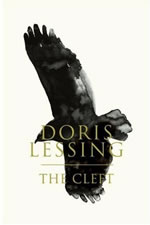
The above is how the plot begins in “The Cleft”. I don’t know how you all make decision in picking up a book to read. Here was what went through my mind chronically when I picked up “The Cleft”.
Cool title with a nice cover – 5% of importance
Nobel Price winner in literature sticker – 30%
Unusual plot of in the beginning, there were only female species – 40%
Under 300 pages – 10%
Writing style that is easy to read – 15%
In fact, “The Cleft” has all the right ingredients that I was so tempted to buy the book at first sight, at second sight. But these days, I want to see return from my own tax money. I borrow from the library instead.
To fully appreciate “The Cleft”, you really have to drop all that you know about the two sexes and start over. Presumptions will only frustrate you and you may probably miss what “The Cleft” is about: an evolution of human society from single sex sea creatures (in human form) that have no conception of the collective “we” and the individual “I” to the interdependency of the two sexes that realize “how few we are, how easily we die” (a direct quote). The journey from the primordial life form to the realization of moral righteousness, the importance of the continuation of the species, the never ending yearning of exploration, and the discovery of love is not an easy journey to cover in fewer than 300 pages.
And that is only half of what “The Cleft” is about. The main story – that only account for a tiny portion of the book – centers around an old Roman senator who was tasked to write a history on the first recorded human society. Seeing how history was written in “The Cleft” makes me reflect upon how our own history is written. Legends are passed onto generations orally in forms of memories, and stories. Somehow, the first half of the book – the early era of the clefts (female species are being referred as “the clefts” while the male species are referred as “the monsters” by the clefts and as “the squirts” amongst the men) – reminds me of the biblical story of Adam and Eve, equally mythical and ancient.
One day, a boy was born amongst the clefts and the clefts had decided to feed the “deformed” baby to the Great Eagles at the Killing Rock. Soon, more and more boys – or “monsters” in their jargon – were born and instead of killing the boys, the Great Eagles took them away from the caves of the clefts and into the valley. There, the monsters or rather the squirts – a preferred term amongst the male species – established themselves as a society relying on the Great Eagles to deliver them the babies. The early era of the clefts is definitely a great read on its own.
Superimpose onto this fable is the old Roman senator taking in a beautiful young wife who was sexually active amongst her own social circle. Back in the days of the Roman Empire, or even to the days of the Cleft when clefts and squirts participated in mass procreation exercise, what social norms were there to judge the orgies and gladiators? There was probably none. That is the hat you may wish to wear when you read “The Cleft”. And that is probably why Doris Lessing is a genius – shifting a rather simple fable from our modern day mindset into a perspective of an ancient Roman making the idea so original.
Over time, songs were written (like my favorite title: “how few we are, how easily we die”) and onto the second era, the clefts and the squirts further interacted, procreated, disagreed, and fought. The fundamental differences between the two sexes began to emerge. The harsh external environment made them realized how fragile life was, how precious babies were. The notion of love and leadership began to emerge too. This later era of the clefts may not be as magical as the one before making it a less interesting read. But I guess the rather beautiful and abrupt ending makes up for it. Till today, I am still trying to decipher what to make out of the ending. I was like so close to the Cleft civilization one moment in time and all of a sudden, I was thrown back to my own reality. The visualization of the Cleft civilization literally faded away in front of my own eyes.
On a side note, it is coincidental that the author of this book (88 years of age) and the author and director of “Persepolis” from my previous blog are both born in the same place – Persia or Iran, depending which year you are referring to. Doris Lessing’s parents were both British and she has won every single European literature award. I wish I could recommend a more renowned literature from her collection of 50 books but this rather controversial piece of artwork is all that I have read from her.
Related Entries:-
The Cleft By Doris Lessing – Drop All That You Know And Start Over
Avid readers may recall my good buddy KF the muscleman whom we … erm … did one time publicly admire each other’s bodies (pretty much like what girls do to each other I guess?) and did our little not-what-you-think kind of home videos. Cynthia granted me a last minute night visa so … Boys Night Out it was!
For reasons that will become apparent to you as you read on, the muscleman has agreed to meet me at Toa Payoh. My impression of that little old town of Singapore has always been … old and I was pleasantly surprised when I got off the train. This little old town looks so modern! KF proudly told me that his hometown, Toa Payoh, has everything one can think of, except a bowling alley. As I was ‘touring’ the bus terminal, KF proudly informed me that Toa Payoh has the Singapore’s first air-conditioned bus terminal and some of the design flaws it has as compare to the one at AMK such as the placement of shops and so on. I was nodding my head as though I have an idea of what a bus terminal is like (seriously I have yet to try one of those air-conditioned bus terminal). I felt like I was the PM touring the Bishan-Toa Payoh GRC. That was crazy, so much to absorb.
Another crazy thing was that I felt like I was walking around with a super hero. Gosh, those bulging muscles! I swear those aunties and young girls were all so checking my super hero friend out. Tsk tsk tsk … now I am so inspired to do some serious work out … ha ha ha …
The roasted meat was great, the dessert was great too! KF took me to a park where he often takes his kid to feed the fish … OK, that sounds wrong. I mean they both love to feed the fish with breadcrumbs. What a loving father he is! And there we were, two of us, seeing the sunset at the charming little town of Toa Payoh … hmmm … anyway, I quickly took out my phone and snapped a picture (see above) and headed to …
The main reason of my visit was to check out the flat panel TVs. KF has been in this mission of trying to help me to decide on a TV for years. As I was looking up and down and up and down on two of the major brands, I still could not make up my mind. And I gave up …
8.25pm and we both rushed into the Crystal Jade bread shop. KF wanted to get a particular bread that his son loves (again … what a loving father!). The night discount of 20%+ starts at 8.30pm every evening. I said to KF that we were still early. He replied, “We should start queuing up now. The whole community will be here soon!”
True enough, there were quite a number of people queuing up at the counter but not paying. It was actually quite a scene. The cashier looked elsewhere pretending that the customers were not around. The queuing customers looked elsewhere pretending that there was a virtual queue in front of them. When the clock struck 8.30pm, the cashier started to count the bread and the queuing customers snapped to life. Suddenly, the shop was so full of people grabbing all that they could see on the shelves.
I may not have decided on which TV to buy. But certainly tonight was an interesting night out.
Yet another voted as top 10 films of 2007 by the critics, I have got to drag my Movie Review Squad to check out this Oscar nominated animation from France featuring an Iranian young girl living through the Iranian Revolution (the film itself is in English). So much faith they have on me, I was kind of worried that it would be a let down once the 2D animation appeared on the big screen. TK did not even know what he was getting himself into! Neither was Cynthia I suspect. All I said was: trust me, trust me, this is good stuff. It was not a disappointment to them, phew! In fact, they seem to enjoy the film more than I do.
I am not a huge fan of 2D animation though I must say, the last two 2D animation films we have watched – The Simpsons Movie (America) and Paprika (Japan) – were pretty good. This film “Persepolis” is based on Marjane Satrapi’s autobiographical graphic novel of the same name and is co-directed by the author herself. I was not sure if “Persepolis” is indeed an autobiography therefore I watched the film thinking that it was fictional. In any case, the little details and mostly personal events of someone who has to live through the Iranian Revolution as portrayed in the film were convincing enough for me. You may laugh through some of the dark humors in the film, which helps to lighten up the mood, but overall, this film may have much impact to you emotionally. It is almost like a documentary film on what common people in Iran has to live through during the revolution and to face the long Iran-Iraqi war (1980-1988).
“Persepolis” is mostly cast in black-and-white or monotone color theme during flashbacks and in color during the rare present time storyline. The animation certainly retains much of the comic book feel and I personally in awe of the artwork. 2D graphics are simplistic. And to generate emotions from simple images, to me, seems hard. However, “Persepolis” has done a great job in communicating the underlying emotion from the way a character moves, the subtle change in shape of the eyes, the extension of the lips, to the mad heavy rock music and dance moves.
Good stuff or not, you decide. “Persepolis” is definitely not one of those films that are meant to purely entertain. You may possibly walk out of theatre feeling a bit more aware of what some of the Iranians have to go through in their daily lives. For a better understanding on the Islamic development and why Iran and Iraq is constantly in conflict, I would still recommend the book “Islam”. In case if you wonder what Persepolis is – like I do – Persepolis was an ancient Persian capital and is now in Iran. Persepolis is also a World Heritage Site as declared by the UNESCO.
I woke up this morning. The sky was grayish, the air was cool. Feeling a tad melancholy, I stared at my music collection like I do every working morning scanning for something appropriate for the day. Since I have been so Juno-overdosed (first the movie, then the Oscar), I picked “Belle & Sebastian” – something I have hardly listened to – all because two of their songs are featured in the soundtrack of “Juno”.
A much celebrated Indie band from Scotland loved by the critics and fans but only enjoys limited commercial success. I can certainly relate to that. It is not everyday I am in the mood of “Juno” or “Kill Bill” (both have great soundtracks). Today I am Juno’lized, so “Push Barman to Open Old Wounds” it is.
Fans hail “Push Barman to Open Old Wounds” as the best collection from “Belle & Sebastian” ever as well as the right place where new listeners should begin their journey from. This 2-CD collection with a total of 25 songs is a compilation of their out-of-print hard-to-find singles and EPs from 1997 to 2001 – a period some fans see the band at the pinnacle of emotion, naïve, and charm. I personally find the memorable oldie-feel melody and the genuine part-humor-part-ironic lyrics a remembrance of my youth (though I am not that old, I must say!). It brings me back to the time when I could just say-out-loud on my views of the current society (“there are people going hungry everyday, they’ve got nothing on their plates, and you’re filling your fat face with every kind of cake” – taken from “A Century of Fakers”). It brings me back to the time when love is still innocent and the essence of a heartache is still something new (“she was the one love of my life, she showed me the road, I loved her dog, her steady gaze, the chapter is closed … my anger turns to pity and to love, the season has arrived” – taken from “I’m Waking Up to Us”). As we get older, we simply accept the way of the world as what it is and stop to care in the most innocent way. We become pragmatic.
There is something about “Belle & Sebastian” that I simply can’t find elsewhere. It does fill up a hole in my emotional world that unfortunately – or fortunately – does not appear often. Below is a live video of the song “I’m Waking Up to Us”.
Drama is my favorite genre. This time, the talented young actress Ellen Page is not going to experiment with how to trap a pedophile and cut his balls like she did in “Hard Candy (2005)”. Instead, her character, a 16-year old Juno, has become pregnant and decided to find the perfect couple to adopt her baby. The winning formula of this critically acclaimed and box office success ($156 million gross from a $6.5 million film is pretty good) in my opinion is: a believable storyline, a lively script, great soundtrack of Indie music that goes so well with the movie’s theme, and the superb acting of Ellen Page. The script is so good that keep you smiling throughout the show. There are just way too many memorable scenes, from beginning to the very end. The storyline has enough opportunity for Ellen Page to shine. Amidst the rather unfortunate incident of teen pregnancy, the portrait of a Juno’s pro-life journey warms audience’s hearts. Juno is not the sweet young girl as you may imagine. She is more like a slightly grown up version of “Hard Candy” – sharp-tongued with attitude, without the balls cutting kind of angst – laterally – of course.
Voted by the critics as the top 10 film of the year 2007, “Juno” shouldn’t disappoint at all. It is worth checking out when you have time. Who knows? “Juno” could be the very first Blu-ray movie I own now that Blu-ray has won the format war.
Cynthia’s mother is leaving, my mother is arriving. I think I need a holiday.
We all do something stupid, in the past. I can’t explain why the paranoid. I mean, those are just computer files and pictures and seemingly useless stuffs now that I am looking at them. But back then, I put a protective password to every single file, every zip file that archived a bunch of protected files. That was madness, paranoid, and stupid. I am desperate to retrieve an old Excel file, all of a sudden.
Till now, I am still trying to crack my brain for that password. I know it is somewhere. I shall call a hypnotist for help.
And in this digital pile of junk, I have uncovered more than I could remember, more than I want to remember. Documents of (failed) business venture, diary, love letters, hate letters, letters that have never been sent, countless gaming programs I attempted to create including something as absurd as a Viking game (it is actually quite a good asymmetric game from York, UK, I think) – it was supposed to be a game of me against the machine, baby! Life of a geek in solitude, used to be.
I wonder. Where did I manage to find time to do all these?
My world was pure in the beginning. Before I left Hong Kong, I listened to classical music most of the time. The first English pop song I fell in love was Madonna’s “Like a Prayer”. The first pop cassette I owned was “Like a Prayer”. Before Cynthia came to my world, I hardly watched any TV programs. Now, I am a …
How I love to watch American Idol! Another new season, another something to look forward to, another something to cry upon. There are already some eye candies whom I really like. Even that boy with altitude … I mean … gosh, where did they find these people from? Monday, “Dirt”, Tuesday, “Heroes”, Wednesday, Thursday, Friday “American Idol”, any day, “E!”, “[V]”. To top up the list, there are always Oprah and America’s Top Something.
TV has taken control of my life!
OK, I am still cracking my brain for that password. Cynthia’s mother is leaving, my mother is arriving. I think I need more PJs.
I have read tens or perhaps hundreds of English books but none matches the sensation I derive from reading in my mother tongue. Like this particular book I am going to feature here, I was so deeply affected that my mind just wouldn’t allow me to do anything else right after I’ve finished reading the book. The plot was alive in my mind for days thereafter. I still cannot pinpoint why. All I could guess is that the reading pleasure may come in fourfold: the native understanding of the passages, the linkage to the culture and tradition, the construct of the phrases, and the depth and complexity of the development of human characters within.
People at times tease me on how much I suck in English spelling, which is true. Unlike English whereby words are constructed in alphabets that can be pronounced without knowing the underlying meanings, you can’t do the same for Chinese characters. You may be able to recognize the meaning of a character because characters are often assembled in components that represent the picture, sound, color, or the combined meaning. It is only fair to say that I am trained in recognizing and replicating words in the form of characters rather than memorizing the pronunciation of the words in alphabets. While I can quite easily find a Chinese book that I can recognize 99.99% of the words within, I can hardly say the same for English, by a far margin.
Recognition of words aside, it is often the context of a certain phrase derived from some literatures written in the old days that contributes to the art value of the modern day Chinese literature. If I was to soak myself into the work of Homer or Shakespeare or Dante or Woolf the same number of years I soaked myself in the Chinese poems and classic literature and history, I think I may be able to gain a similar level of appreciation from reading English literature. I knew that all those years of reciting old Chinese poems and literature does translate into something. There is just no easy way to do this except to invest time and effort. It is part of the culture and tradition that is imbued in me from young.
Another notable difference, especially in the genre of Wuxia (that I will explain later), is the excessive usage of dramatic and explicit expressions to describe situations that often lift up my soul just by reading those phrases at face value. For those who have the Chinese background, let’s see how many of the following phrases you can recognize. To describe a fearful looking man, we use “the horizontal growth of facial flesh” to paint a brutal picture of his face. To describe the break of dawn, we compare that scenic view to “the white belly of a fish”. Picture yourself in front of a half naked blacksmith creating a piece of metal weapon. As the hammer hits the red hot piece of steel, you can see the pulsation of this man’s muscles. We describe his muscles as “an infinite number of jumping mice”. When faced with a clamoring crowd, we describe the situation as “seven mouths and eight tongues”. Why is there an extra tongue? That is how noisy the crowd is. Finally, I will leave the last example, a four-character Chinese word, for you to decipher – “the howling of the devil, the rallying of the god”.
There is a certain parallelism between the Chinese genre Wuxia and the Western fantasy I believe. As I was once told, in the world of the Western fantasy, the good and evil is often well defined. It is the same for Wuxia though to add to the element of drama, there is often shades of good and evil. There are evil characters that may behave in an honorable way or good characters turn bad. The center philosophy of Wuxia is a blend of honor and martial arts. In the godless world of Wuxia, characters wield rare weapons, have gifted talents, able to perform martial arts, and some gain once-in-a-lifetime enlightenment to take them from heroes to legends. Center to the human character in the world of Wuxia is honor, love, hatred, deceit, revenge, betrayal, struggle, and sacrifice. It is hard to define any Wuxia piece of work as comedy or tragedy like a Western piece of work. Chinese authors seem to have no qualm in letting their most beloved characters assassinated, murdered, killed, mutilated, disfigured, or even raped at times by the very person these characters trust, by the most evil characters, or simply by the most insignificant characters. If there is any redemption to all these mishaps, the plot of a typical Wuxia story often resolves to the theme of: justice will prevail, honor will be restored. But at what cost? That is the beauty of this genre. The authors’ imagination is the limit.
Ni Kuang (倪匡) is a Chinese writer from Hong Kong who is famous for his science fictions. I cannot recall how many of his books I have read when I was a student. His venture into the Wuxia genre is new to me. In fact, this genre has been dominated by the legendary works of Jin Yong (金庸) that are usually lengthy and come in a volume of one, two, four, or five (another interesting observation is that some Western literature often comes in the form of trilogy instead). Ni Kuang has written a set of short Wuxia stories (each story roughly equals to 1/32 of a typical length of a story by Jin Yong) when he was young but the timing was not right for him to release his materials. It could be because short Wuxia stories were against the norm back then. Now that Ni Kuang is in his 70s and all of a sudden, he has decided to release all his Wuxia works in one go. Rejoice for fans like me of course. With such drastic reduction in length, Ni Kuang has stripped away the historical references to the main storyline like the typical Wuxia novelists do, the poems and the scenic descriptions that are so prominently demonstrated in Jin Yong’s work, as well as having a much limited character set. The result is a tight storyline, fast pace read with a high entertainment value.
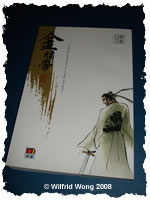
《金腰帶》 (loosely translates to “The Golden Belt”) as part of Ni Kuang’s medium length Wuxia story series contains two short stories, like the rest in the same series. The first story is about how a daughter of an evil lord gets involved with a young hero who is in love with a lady from a good lord. The second independent story is about how a daughter seeks revenge after her parents were murdered due to a treasure they stole and later on falls in love with the son of the very person she is seeking revenge upon. I have retold the story to Cynthia in English (with drawings, timeline, and flowcharts) and she was deeply moved. I guess, in a rather long fashion, I have illustrated the last attribute of the uniqueness of Chinese or especially Wuxia stories: the depth and complexity of the development of human character within.