Categories
Book Reviews Fiction

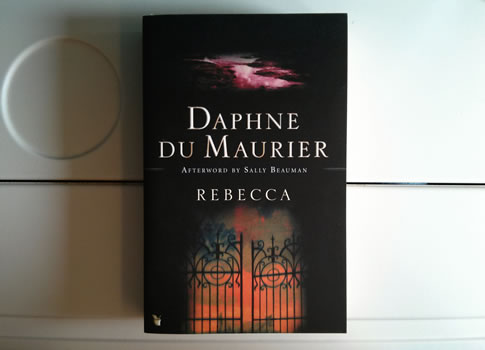
Rebecca By Daphne Du Maurier – An Exceptional Read

What an exceptional read.  Reading Rebecca is like reading My Cousin Rachel all over again.  Because I know Du Maurier’s writing style, that she was capable in destroying or even killing off main characters that readers grow to love, it was quite a nerve wrecking experience reading Rebecca.  On top of that, Du Maurier was gifted in writing suspense novels as well as breathing life to her characters.  This makes Rebecca a thrilling read, from start to finish.

I read Rebecca on our trip to Hong Kong

One year ago, after reading the library copy of My Cousin Rachel, I love the book so much that I bought a copy for my keeping.  While I was at it, I bought a copy of Rebecca too.  I have been wanting to read Rebecca for quite some time.  Haven’t got around to.  On our recent trip to Hong Kong, I brought it along as my reading companion.

Although Rebecca was first published in 1938, I found it as entertaining as some of the modern literature published today.  There are four major components in this book.  Manderley, which is an estate dominating the entire story, with a west wing facing the sea and an east wing facing a rose garden.  Max de Winter, who owns and lives in Manderley.  Rebecca – Max’s first wife and is dead.  The narrator – Max’s current wife and remains nameless throughout the book.

Rebecca is intriguing in a couple of ways.  Rebecca is dead, since the beginning of the book.  Yet, under the hands of Du Maurier, this character has come alive through the recollections of others, the metaphors that represent her, the legacy Rebecca has left behind, even the drama that still continues.  It is as though her presence and physical dominance is felt strongly throughout the book, as a dead character.  It is only fitting that the book is titled as such.

The narrator – also presence throughout the book – on the other hand, is very different from the Rebecca character.  She is shy and young.  Coming from a humble background, the narrator is socially awkward and unsophisticated.  She is the opposite of Rebecca, and without a name.  She is the living Mrs de Winter but with an identity slowly dissolved away, what good is her existence?  The dualism of Rebecca and the narrator is striking, best to be explained by Sally Beauman in her afterword.

Shy, and socially reclusive, [Daphne Du Maurier] detested the small talk and the endless receptions she was expected to attend and give, in her capacity of commanding officer’s wife [in Egypt].  This homesickness and her resentment of wifely duties, together with the guilty sense of her own ineptitude when performing them, were to surface in Rebecca: they cluster around the two famale antagonists of the novel, the living and obedient second wife, Mrs de Winter, and the dead, rebellious and indestructible first wife Rebecca.  Both women reflect aspects of du Maurier’s own complex personality: she divided herself between them, and the splitting, doubling, and mirroring devices she uses throughout the text destabilise it but give it resonance.  With Rebecca we enter a world of dreams and daydreams, but they always threaten to tip over into nightmare.

The way this story is narrated is worth a mention too.  It starts with a dream by the narrator, on the house Manderley.  It then transits to a present day narration that gives hints to what the ending of the story may be.  The narrator reading a story aloud to a nameless partner that brought her back in time years ago when she was the paid companion for a Mrs Van Hopper doing similar things.  What a full circle.  The flow in time is so smooth that it took me several repeated reading of those pages in order to fully appreciate it.  The story ends with a dream – the only two true dreams in Rebecca – that wraps it back to the beginning.  The ending is so abrupt that left me speechless.

I am torn between My Cousin Rachel and Rebecca.  Till now, I am still unable to decide which one is my favorite.

*     *     *     *     *

An excerpt below demonstrates how Du Maurier brings Rebecca to life literally through the narrator.

[Maxim] did not look at me, he went on reading his paper, contented, comfortable, having assumed his way of living, the master of his house.  And as I sat there, brooding, my chin in my hands, fondling the soft ears of one of the spaniels, it came to me that I was not the first one to lounge there in possession of the chair; someone had been before me, and surely left an imprint of her person on the cushions, and on the arm where her hand had rested.  Another one had poured the coffee from that same silver coffee pot, and placed the cup to her lips, had bent down to the dog, even as I was doing.

Unconsciously, I shivered as though someone had opened the door behind me and let a draught into the room.  I was sitting in Rebecca’s chair, I was leaning against Rebecca’s cushion, and the dog had come to me and laid his head upon my knee because that had been his custom, and he remembered, in the past, she had given sugar to him there.

And as in her previous book My Cousin Rachel, there is some interesting observations that may still ring truth today.

‘You have qualities that are just as important, far more so, in fact.  […]  … but I should say that kindness, and sincerity, and – if I may say so – modesty are worth far more to a man, to a husband, than all the wit and beauty in the world.’

Categories
Book Reviews Non-Fiction

Jerusalem: The Biography By Simon Sebag Montefiore

A biography on Jerusalem from 160 BC till modern day.

I did not think that I could finish reading Jerusalem: The Biography – a history book thick as a dictionary.  But I did.  All thanks to the author’s entertaining writing style in presenting the history of Jerusalem from 160 BC to present time.  For majority part of the book, it reads like George R. R. Martin’s A Game of Thrones.  History is so full of blood and gore, scandalous sex and money, politics and betrayal, and bribery of all sorts.  It is hard to imagine that within a tiny city called Jerusalem, so many times she has fallen to different rulers, her people have been massacred for so many centuries.  At times I wonder: What would God think of all these?  Religions can be such a torment to our human race.

I have always been intrigued by the history of the three monotheistic religions namely Judaism, Christianity, and Islam, as well as the history of Israel and her people.  I have read books written by Karen Armstrong.  My immense interest to this topic perhaps leads to my UK blogger friend Jo’s personal recommendation of this book to me.  Her review of Jerusalem: The Biography can be found in here.  As always, her write-up is not to be missed.

Reading Montefiore’s Jerusalem, in parts, very much like reading Armstrong’s Holy War.  In Karen Armstrong’s Holy War, she wrote about the crusades and their impact on today’s world.  It is a book with a history encompassing the three religions stretches from 1095 AD to present time.  From the historical viewpoint, these two books overlap.  Armstrong tackles the topic in a much greater depth and analysis while Montefiore’s ‘page-turner’ easy-to-read approach makes it more accessible to mortal readers like me.  Maybe that is the reason why I manage to finish reading Montefiore’s Jerusalem and not Armstrong’s Holy War.  Now that I have a better grasp of the history of Jerusalem, I may give Holy War another go.

Montefiore divides his book into nine parts, with a prologue and an epilogue.  On average, each chapter is no more than 10 pages in length.  There are page-turner worthy hooks built onto each chapter that lead the readers onto the following chapters.  The book starts with Judaism and Paganism that leads to Christianity and Islam – two-fifth of the book’s volume covering a time period of 160 BC to 1099.  Then the Crusade, Mamluk, Ottoman, and Empire – another two-fifth of the book until the year 1905.  The rest of the book is devoted to Zionism.

The challenge of reading a history book – to me – is that it is hard to relate to a character born and died so many years ago.  I may have a mental recollection of what Yasser Arafat or Ariel Sharon’s behavior like.  But not for most of the pivoted figures in the history of Jerusalem.  To that extend, Montefiore has done a meticulous job in supplying the readers a physical description of a character if possible – from paintings or literature – as well as juicy gossips from the past.  On top of that, the author often adds his share of opinions especially when he speculates that the written history or documentations may have been distorted or exaggerated.

Here lies the challenge.  Shall we – the readers – take in all that the author writes and accept this book as the biography of Jerusalem?  Should a biography be challenged, especially when it touches onto the materials from the Holy Books such as The Bible?

My background is only limited to Christianity.  The following excerpt intrigues me.

Pilate toyed with releasing one of these prisoners.  Some of the crowd called for Barabbas.  According to the Gospels, Barabbas was released.  The story sounds unlikely: the Romans usually executed murderous rebels.  Jesus was sentenced to crucifixion while, according to Matthew, Pilate ‘took water and washed his hands before the multitude, saying, I am innocent of the blood of this just person’.

‘His blood be upon us and our children,’ replied the crowd.

Far from being a mealy-mouthed vacillator, the violent and obstinate Pilate had never previously felt the need to wash his hands before his blood-letting.

I am unsure if my friends of the Islam faith would too find similar debates within the book.  Fortunately, I am pretty open-minded about my religion.  I read some of these debates as alternative views with only slight discomfort at times.  All in all, Montefiore has stayed out of many sensitive topics such as the resurrection of Jesus with a simple sentence: For those who do not share this faith, the facts are impossible to verify.

The last part of the book – Zionism – that takes up one-fifth of the book’s volume is pretty dry to read.  A similar dryness that prompted me to stop reading Karen Armstrong’s Holy War.  It appears to me that as we have more means to record history, history becomes less colorful.  Or perhaps, the way of life in the past is always intriguing to look at while modern day history is more like the current affair that we read everyday.

Entertainment value aside, Jerusalem has depicted a complex background that opens up my eyes.  I enjoy reading the epilogue’s This Morning the most.  It is a vivid recount of how each of the three monotheistic religions start the day in Jerusalem.  The rabbi and the Wall, Nusseibeh and the opening of the Church of the Holy Sepulchre, Ansari and the gates of the Haram, and Qazaz and al-Aqsa.  It is this complex heritage that shapes Jerusalem – and by and large the world – today.  If there is one thing that I have learned from the history of this Holy City, there will be no peace till the end of time and our religious beliefs will continue to fragment drawing out more conflicts as our civilization progresses. The fact that Jerusalem is a physical location with historical sites shared by the three monotheistic religions (as well as the sects fragmented within) forces us to come face-to-face with this seemingly impossible task of reconciliation.

It is now one hour before dawn on a day in Jerusalem.  The Dome of the Rock is open: Muslims are praying.  The Wall is always open: the Jews are praying.  The Church of the Holy Sepulchre is open: the Christians are praying in several languages.  The sun is rising over Jerusalem, its rays marking the light Herodian stones of the Wall almost snowy – just as Josephus described it two thousand years ago – and then catching the glorious gold of the Dome of the Rock that glints back at the sun.  The divine esplanade where Heaven and Earth meet, where God meets man, is still in a realm beyond human cartography.  Only the rays of the sun can do it and finally the light falls on the most exquisite and mysterious edifice in Jerusalem.  Bathing in glowing in the sunlight, it earns it auric name.  But The Gold Gate remains locked, until the coming of the Last Days.

Publisher: Vintage
ISBN-10: 0307280500
ISBN-13: 978-0307280503

*     *     *     *     *

The following excerpts have left a strong impression to me and I wish to share them with you here.  Maybe too much Shakespeare I have read in the past.  Also, these excerpts I hope can illustrate the writing style of the author.

The first excerpt is a colorful prelude of Antony and Cleopatra and the war for the world.

The Egyptian queen progressed home to Alexandria.  There Antony, in a spectacular ceremony, raised Cleopatra to ‘Queen of Kings’.  Caesarion, her son by Caesar, now thirteen years old, became her co-pharaoh, while her three children by Antony became kings of Armenia, Phoenicia and Cyrene.  In Rome, this Oriental posing appeared unRoman, unmanly and unwise.  Antony tried to justify his Eastern wassails by writing his only known work of literature titled ‘On His Drinking’ – and he wrote to Octavian, ‘Why have you changed?  Is it because I’m screwing the queen?  Does it really matter where or in whom you dip your wike?’  But it did matter.  Cleopatra was seen as fatale monstrum.  Octavian was becoming ever stronger as their partnership fell apart.  In 32 BC, the Senate revoked Antony’s imperium.  Next Octavian declared war on Cleopatra.  The two sides met in Greece: Antony and Cleopatra mustered his army and her Egyptian-Phoenician fleet.  It was a war for the world.

The second excerpt recounts the clever politics played by Herod and it has an artistic touch to Antony and Cleopatra’s demises.

Herod again prepared for death, leaving his brother Pheroras in charge and, just to be safe, having old Hyrcanus strangled.  He placed his mother and sister in Masada while Mariamme [his wife] and Alexandra [his wife’s mother] were kept in Alexandrium, another mountain fortress.  If anything happened to him, he again ordered that Mariamme was to die.  Then he sailed for the most important meeting of his life.

Octavian received him in Rhodes.  Herod handled the meeting shrewdly and frankly.  He humbly laid his diadem crown at Octavian’s feet.  Then instead of disowning Antony, he asked Octavian not to consider whose friend he had been but ‘what sort of friend I am’.  Octavian restored his crown.  Herod returned to Jerusalem in triumph, then followed Octavian down to Egypt, arriving in Alexandria just after Antony and Cleopatra had committed suicide, he by blade, she by asp.

The third excerpt Justinian and the Showgirl Empress introduces Theodora, queen to the last Latin-speaking emperor of the east.

[Justinian] did not come to power alone: his mistress Theodora was the daughter of the Blue chariot-racing team’s bear-trainer, raised among the sweaty charioteers, louche bathhouses and bloody bearpits of the Constantinople hippodrome.  Starting as a pre-pubescent burlesque showgirl, she was said to be a gymnastically gifted orgiast whose specialty was to offer all three orifices to her clients simultaneously.  Her nympho-maniacal party piece was to spread-eagle herself on stage while geese pecked grains of barley from ‘the calyx of this passion flower’.  The sexual details were no doubt exaggerated by their court historian, who must secretly have resented the sycophancy of his day job.  Whatever the truth, Justinian found her life-force irresistible and changed the law so that he could marry her.

The last excerpt illustrates one of the many bloody conflicts we have seen in the history of time.  Key words are ‘lamb stew’ and ‘hot dry air’.

Abu al-Abbas declared himself caliph and invited the Umayyads to a banquet to declare his peaceful intentions.  In the midst of the feast, the waiters drew out clubs and swords and butchered the entire family, tossing the bodies into the lamb stew.  The Slaughterer himself died soon afterwards but his brother Mansur, the Victorious, systematically murdered the Alid family and then liquidated the overmighty Abu Muslim too.  His perfumier, Jamra, later told how Mansur kept the keys of a secret storeroom which was to be open only on his death.  There his son later found a vaulted chamber filled with the bodies, each meticulously labelled, of the family of Ali from old men to infants, whom Mansur had killed, all preserved in the hot dry air.
Categories
Book Reviews Fiction

Carry The One By Carol Anshaw

Having read a beautifully written review by one of my blogger friends, I had been keeping a look out at my local libraries to see when a copy would be available.  I was in joy when I finally borrowed Carry the One by Carol Anshaw, from a library outlet that I had not visited before, saved a buck or so of reservation fee while I was at it.

I took a picture of the book right outside the library.

The plot is tantalizing.  It was the wedding night of Carmen the bride who was pregnant with Matt’s child.  Carmen’s sister Jean was a musician, who was blindly in love with Tom the married man – also a musician.  Nick was Carmen’s brother.  A smart graduate with one bad habit – drug usage.  Nick has a girlfriend called Olivia who worked in a mail room and like Nick, Olivia too was into drug.  Alice – sister of Carmen, Jean, and Nick – was a gifted painter, as well as a lesbian.  She fell in love with Matt’s sister Maude who studied nursing while doing part-time job as a model.

The night was getting late so Matt and Carmen sent the last of their guests to the road.  Jean and Tom, Alice and Maude got into one car with Nick in the front and Olivia at the driver’s seat.  Both Nick and Olivia were high in drug.  The car had no light, saved for the fog light.  In such wee hours, who would have thought a little girl would cross the road?  It was almost an instant death.  The girl had no chance to survive.  Carry the One documents those who have to live through this painful memory for the next decade and more, how their lives were impacted by this incident.

Each blames himself or herself on what could have been, should have been.  Carmen should have asked the guests to stay, because it was getting real late.  Alice should have volunteered to drive, but she was so into Maude and wanted to get into the backseat with Maude.  Maude should have paid more attention to her nursery course.  At least she might have a better chance to save the little girl.  Olivia was at the driver seat, clearly the guilty one.  But it was Nick who saw the little girl, thinking that she was magical, surreal.  Nick could move the wheel and the little girl would not have died.

As what I have expected, Carry the One is about forgiveness and atonement.  Each character finds his or her own way to atone to the mistake.  Some are constructive.  Others are more destructive.  Through jail time, divorce, heartbreak, career breakthroughs, facing hope and despair, death and more death, Carol Anshaw draws me into her haunted story of what makes flaw characters so attractive to read: realism.  These are real life dramas come alive.  People with real emotions, likes and dislikes, strengths and weaknesses.  It is one successful story that makes you fall in love with all the main characters, despite how flawed they are.

While reading this book, I could not help but to hope that Carry the One would tackle the question of: Why do bad things happen to innocent people?  Indeed, the plot does seem to head to that direction when Nick was trying to solve where this ‘equation’ led.  Through the routines that the characters lived and breath, I too was looking for the answer.  Unsatisfied as it may sound, God works in a mysterious way.  Whether or not there is an answer, the characters bounded by this accident would have to carry the little girl with them.  In a way, the deceased still lived through them decades down the road.

“Here’s what I hate.  I hate that it doesn’t matter if we see each other.  There’s still this connection, between me and him because we were both in the car.  Like in arithmetic.  Because of the accident, we’re not just separate numbers.  When you add us up, you always have to carry the one.”

“I think we altered what was supposed to happen.  And we can’t go back and make it happen right.  So we’re stuck in some kind of endless loop, trying to improve the past.  Which, as you might notice, is resistant to revision.”

Engaging plot aside, Carol Anshaw has an unique way of telling a story.  It does not read linear.  Timeline may jump ahead.  Crucial part of the plot may be casually revealed through one person’s conversation, or one simple sentence.  The emotional distance between the characters can be easily felt.  It always put a smile to my face when I read how two siblings love each other while putting up with one another’s nuisances.  When it comes to romance, the wordings are intense.  Below is one of my favorite parts that so vividly describes the disappointment and frustration of searching for love.

Whatever element causes romance to flare was simply not present in the air between [Alice and Charlotte].  This was a huge relief to Alice.  Romance no longer looked like so much fun, more like a repetitive stress injury – beginning with Maude, but by now including all the failed and pathetic attempts to replicate that constellation of emotion with someone else.  She could measure this past effort in all the underwear she had left behind in apartments, all the bottles of pricey wine she had brought to dinner, all the recitations of bad childhoods and adult disappointments she had earnestly listened to.  The first list was, of course, all the women she had by now slept with.  Taken individually, they seemed, at their various times, to hold the possibility of lasting love.  As opposed to now, so far down the line, when they could only be looked at in accumulation, as one then another fool’s errand.  An offshoot list to this was the figure for how far she had gone for sex.  (Thirteen hours on a flight from Chicago to Tokyo then back to Chicago the next day has held the top spot for quite a while; she might never better this.)  Books she had to read to get into somebody or other’s bed.  (The Four-Gated City.  The Fountainhead.  Linda Goodman’s Sun Signs.  Women Who Run With the Wolves.)  Terrible music she had listened to because it was someone’s idea of a mood enhancer.  (Hall & Oates.  Holly Near.  George Winston.  The Carpenters.  Celine Dion.)  Topics in which she had feigned an interest during the short term. (Juice fasts.  Rugby.  Celtic dancing.  Bikram yoga.)  The longest list was the kinds of tea she had drunk in moments structured around the pretense that tea drinking was the reason for being in this or that café (Pergolesi.  Kopi.  Café Boost) or kitchen, or side by side on this or that futon sofa or daybed, sipping.  (Earl Grey.  Lapsang Suchoung.  Gunpowder.  Rooibos.  Sleepytime.  Morning Thunder.  Seren-i-tea.  Every possible peppermint and berry.  Plain Lipton.)  There was a stretch of time when tea became fetishized for her being so linked with sex and romance, so reliable a harbinger of one or the other.

Different readers interpret a story differently.  Here may come as a major spoiler.  The centerpiece of Carry the One appears to be the little girl who was killed in a road accident.  Rightly so that is an obvious theme.  To me, a hidden centerpiece could be Nick the drug addict instead.  Throughout the story, Nick’s condition was deteriorating.  Olivia – his wife – left him the moment Nick returned to his old habit.  His sister Jean was never close to him.  Carmen – the sister who was organized and strict – in the end gave up on him.  Only Alice, his lesbian sister, still made an effort to take care of him when he crashed, but did not seem to do enough to get him off the drug.  Like the little girl’s accident decades ago, these character could have done something to avert Nike’s eventual and premature death.  Ironically, while Nick has played a major role in causing the little girl’s death at the beginning of the book, it could be the little girl’s mother who played a major role in causing Nick’s death two decades later.

Forgiven, but not forgotten.

Not only did Nick need to carry the little girl in his memory, but also the very physical clothes that the little girl wore that night, handed by her dying mother to him more than twenty years later: I couldn’t part with these.  Couldn’t even wash them, so it’s all still there, the blood and dirt.  Anyway I want you to have them.  I just wanted you to know how much it’s meant to me.  That you never forgot.

“You’re high as a kite, aren’t you?” [said Shanna Redman, the little girl’s mother.]

“Sorry.” [said Nick]

“No, it’s all right.  I know you’re a junkie.  And I know you’ve lied to me, so we could keep talking, so I wouldn’t blame you.  But the thing is, I’ve moved beyond blaming anyone.  And she’s beyond it too.  I got that from her.  What happened that night was what was going to happen.  It’s done.  You’re forgiven.  She’s forgiven all of us.  She’s let us go.”

Categories
Book Reviews Non-Fiction

A Day With A Perfect Stranger By David Gregory

Chancing upon this book is a story as extraordinary as the book itself.  Allow me to elaborate.

Sunday late morning, my mother-in-law, my wife, and I drove to our neighborhood Church.  The car parks both inside and outside the Church were full.  So I dropped them off hoping to find a parking lot somewhere further down the road.  It is better to have at least some of us attending the Mass, rather than all three of us returned home empty handed (without receiving the sermon and the communion that is).  I could not find a lot so I headed to the library nearby and returned the books as planned.

I had no intention to borrow any book from the library.  Since I have time to kill, I scanned through the shelves and randomly picked one.  It was A Day with a Perfect Stranger.  I do not know what prompted me to choose this book.  Perhaps it is tiny and I was looking for some bite size reading.  Onto page one, I was hooked.

I never thought I’d become the kind of woman who would be glad to leave her family.  Not that I wanted to abandon them, exactly.  I was just glad to get away for a few days.  Or longer, in case of one of them.

Maybe I should have celebrating instead of escaping.  That’s what you do with big news, isn’t it?  And we had plenty.

A few week earlier my husband, Nick, told me that he had met Jesus.  Not the usual “getting saved” kind of meeting Jesus.  I mean, met Jesus.  Literally.  At a local Italian restaurant.

I was intrigued.  It was as though God was speaking to me, “OK, I know you’ve missed Mass.  But here’s a book you can read and make up to it.”

I sat down, slowly reading one chapter by one chapter.  Unable to finish the book within half an hour, I borrowed it before heading back to the Church to pick up Cynthia and her mother.

This book may be tiny, but it is loaded with inspiration for the soul.  For those who have a religious background, may or maybe not practicing the faith at this very moment, this book calls for a self-reflection.  For those who are open-minded, there may be much to gain.  If I were the author, I would probably give this book a Paulo Coelho approach.  Take away the Christianity reference and make it more universal.  Then again, I can see that the message would not be as powerful.  Because at the bottom of it, the author wants to convey the message that Jesus is among us.  Human do not need religion to have a relationship with God.

Back to the story, Mattie was shocked that her husband has met Jesus, in a restaurant.  She could not believe it.  In fact, she wanted to run away from it.  Mattie did not believe God and she disagreed with the notion of religion.  Interestingly, this book is not about religion.  It goes directly to the crust of what religion is about: God.  On the plane, Mattie has met a perfect stranger.  Through dialogues, Mattie began to do some soul searching.  Works of art are a reflection of the creators.  Parents love their children, no matter what.  We reach out to those whom we love, and vice versa.  From the beautiful scenery of the nature, to the beautiful smiles between parents and children, are we not seeing and hearing something more profound than just a scenery or just a smile?

In summary, A Day with a Perfect Stranger is a simple yet inspirational book especially for the Christians, lapsed or not.  Soup for the soul.

Categories
Book Reviews Fiction

The Merde Factor By Stephen Clarke: Missed Opportunity

I used to enjoy reading Stephen Clarke‘s Merde series.  It is funny and light.  A great read when you are on a holiday.  The Merde series is men’s answer to chick-lit.  These books don’t really have much depth.  But surprisingly, I can still remember the plot of the James Bond inspired novel Dial M for Merde when the main character Paul West has to worked with a beautiful blonde female agent M to uncover a caviar counterfeiting operation.  Or the love story Merde Happens when Paul and his girlfriend French girlfriend Alexa took a road trip to US.  Being such a big Stephen Clarke fan, I am somewhat disappointed with his latest novel The Merde Factor.  Even Merde Actually is much better than this.

The Merde Factor, I suppose, takes reference to The X-Factor.  Instead of a music competition, The Merde Factor is a poetry competition.  If you recall, Paul the Brit has a friend called Jake who is so entrenched with the French culture so much so that Jake cannot speak a sentence of English without mixing it with French words.  And he writes terribly obscene poems, probably motivated by his obscure obsession to bed women from different nationalities.

Meanwhile, Paul’s French business partner Jean-Marie is thinking of taking over the My Tea Is Rich cafe and converting it into an American dinner.  Paul, poor as always, settles for a job working with the Ministry of Culture in Paris.  At the romance front, Alexa is now his ex.  He is dating a New Zealander Marsha and is intrigued by Jean-Marie’s new intern Amandine.

The problem with The Merde Factor is, life in an office is boring.  Not even Paul’s bizarre observation of the French way of life can make such an boring work life any more interesting.  There is a severe lacking in the romance department too.  Paul’s love with Marsha is more like a given, rather then a pursuit.  His brushes with his ex are not even close to a tease.  And the romance with his new love interest comes too little, too late.  The so-called crisis at My Tea Is Rich is lacking in drama.  And the entire poetry competition – the main theme of this book – is likely to be the only material that stands out as mildly entertaining.  Good effort though, I must say.  Clever too.

If I was the author, I would cut down bulk of the first half of the book and beef up the bizarre love triangle of Paul, his ex (and love of his life), and the intern.  That that love story to the climatic ending.  I would make it even harder to save My Team Is Rich and would definitely give a more in-depth insight on the intern’s sacrifice and the ex’s heroism.  Overall, a missed opportunity to what could have been a fantastic follow up to a well loved franchise.

Categories
Book Reviews Fiction

Jaina Proudmoore: Tides of War By Christie Golden

In recent days, books published by Blizzard Entertainment are more in line with the pace of the popular online game World of Warcraft‘s lore development.  At the end of Cataclysm, the age of the Dragons has passed.  Now, we are onto the age of the Mortals.  The so-called lesser races have proven themselves that they can and they will rise up and guard this world.  Dragons – the previous guardians since the age of the Titans – have lost their immortality in the battle against Deathwing who was corrupted by the Old God.  They have stepped down from the guardian role.  Slowly but surely, Blue Dragons have lost the notion of a dragonflight and now seek the concept of individuality.  Nexus – home to the blue dragonflight – is turning into a ghost town.  The world is indeed changing.

Human and Orc have been at war with each other for years.  Over time, Human has gathered other races namely Dwarf, Night Elf, Gnome, Draenei, and Worgen and formed the Alliance.  As for the Orc, Horde is formed with Troll, Undead, Tauren, Blood Elf, and Goblin.  The Horde and Alliance are technically at war with each other.  But they have briefly joined force with the Aspects of the dragonflights in the battle against Deathwing who threatened to destroy the world.

Now that Deathwing is vanquished and the world is on the path of healing, Horde is in a much stronger position compares to where they were years before.  No longer the orcs are enslaved by the humans like they have in the past.  Led by Thrall – the ex-Warchief – the peoples of the Horde have left Eastern Kingdoms and settled in the opposite continent, Kalimdor.  Due to Cataclysm, Thrall has answered his calling, dropped his mantle as a Warchief, and has become a shaman who has a key role to play in saving the world.  Before his departure, Thrall has named Garrosh Hellscream – son of Grom Hellscream who once succumbed to the demonic power but died a heroic death – as the new Warchief.

In the Universe of Warcraft, while good and evil is as clear as black and white, it has nothing to do with the races’ appearances.  Horde are as honorable as the Alliance.  They have bad seeds, just like the Alliance do.  During the Cataclysm era, there are disgruntle voices within our online community: Do Blizzard flavor Horde?  Thrall has turned into a savior while his counter part King Varian seems to have been sidelined.  Horde appear to have gained ground against the Alliance across the world.  Supporters of the Alliance have made a long list in justifying their claim that Blizzard has indeed flavored the Horde.

I am concerned, of course.  Because it seems to me that Blizzard is making a U-turn in order to please and retain the fans.  In the online game, we know that the fall of Theramore once ruled by Lady Proudmoore is the trigger of a new war between the Horde and the Alliance.  We also know that at the end of this new Mists of Pandaria expansion, the Horde capital Orgrimmar will be raided and Hellscream will be defeated – by Alliance and Horde alike.  As a keen observer of the lore, this a very bold plot development.  Blizzard is going to upset a lot of people.  This is a big gamble.  But, if played right, this plot twist may well bring the entire franchise back to its very root.

War.

As a fan of this franchise – be it as a Horde or Alliance supporter – I welcome this twist.  Let’s put war back to Warcraft.  In order to fully appreciate this wind of change, Christie Golden has written an excellent book called Jaina Proudmoore: Tides of War.  I have read quite a number of her novels.  This book again moves me to tears.  The scale of war is nothing like what I have read before (within this franchise that is).  Garrosh Hellscream has a plan.  He is not agreeable to the ex-Warchief’s vision of peace.  Garrosh wants to bring glory to the Horde.  More specifically, he wants to be the leader who finishes off what Thrall – in his eyes – has failed to do.  Readers of Christie Golden would immediately recognize that while Garrosh is hotheaded, he is one great tactician when it comes to warfare.  He would sacrifice all that he has in order to achieve a goal.  But he would also retreat if the tactical advantage is no longer viable.  He does not listen.  But he values loyalty and he does not hesitate in exerting authority over his people and other Horde races.  Horde leaders such as Baine and Vol’jin do not agree with Garrosh’s thirst for war.  Both have secretly negotiated peace with the Alliance in the past through diplomacy means.  But for their peoples’ survival’s sake, they answer to Garrosh’s call for arm because Horde units, even when it is fragmented within.  Such is the political difference between the two factions.

Jaina Proudmoore’s Theramore is of a strategic military importance to the Alliance.  The city is located by the sea, in Kalimdor, south of Orc Capital Orgrimmar, and has a key route to Night Elf’s home land up north.  Garrosh’s vision is clear.  Destroying Theramore is only the first step.  His military plan is to barraade Kalimdor from Alliance’s reinforcement, and ultimately drive out or exterminate the night elves in the north.  Both the Undead and the Blood Elf are uneasy about Garrosh’s plan.  Because their capitals lie in Eastern Kingdoms.  Alliance will retaliate and they will be the first to suffer.  But like Tauren and Troll, it is either follow Orc’s command or face isolation.  That leaves them little options.

While Garrosh vision is sound, the execution can be less than honorable.  Slowly, we can see how power corrupts Garrosh and turns him into a tyrant, a dictator who will stop at nothing unless his goal is attained.  This time, there is no demonic corruption to be blamed.  Nor the Old Gods.  It is pure greed and ambition of the mortals, which is something new in the lore.

The center figure of this new book is of course Jaina Proudmoore.  I have been following Jaina’s story for years, mainly because in the early days of this online game, I enjoyed role playing as a human.  Jaina is one of the – if not the – most powerful living human mage.  If you roll a mage class like I do, she is the role model to look upon.

Due to her heritage, she rules Theramore and was romantically linked to the then-human prince Arthas who turned into Lich King.  While her family was slaughtered by the Horde, she believes that most Horde are as honorable as the Alliance and that diplomacy is the key to peace.

Imagine her emotional shock when Garrosh has launched an assault to Theramore.  As an attempt to halt the assault, she has to plead for help from the neutral organization Kirin Tor residing in the magical city of Dalaran, from her new friend Kalecgos the ex-Aspect of Blue Dragonflight, and from King Varian the leader of Alliance.  This is one spectacular battle when we get to see first hand the transformation of Jaina as well as King Varian stepping up as a war strategist.  This war does not end when the book does.  It is going to be escalated as more stories unfold in the World of Warcraft.

Jaina Proudmoore: Tides of War is a must read for the fans and the lore lovers.

Categories
Book Reviews Fiction

Of Blood and Honor by Chris Metzen

Chronologically speaking, Of Blood and Honor is the last book of the Warcraft: Archive series.  This book is written by the esteemed Chris Metzen, generally regarded as the father (or one of the fathers) of Warcraft.  It is of an honor to finally read his work.

Of Blood and Honor, on the surface, is a rather short story.  Lord Tirion Fordring, a human paladin and a follower of Light, one day finds an old orc in his province.  In his days, every orc is a monster and must be eliminated.  Tirion fights the old orc and is being defeated.  As the tower collapses threatened to kill the unconscious Tirion within, the old orc saves his life, binds him onto his horse, and sends him back to his Keep.

Deeply affected by how the situation turns out, Tirion has decided to return to abandoned tower and confront the old orc once again.  Why would a monster save its enemy’s life?  To his surprise, this old orc speaks his language and has a name.  Eitrigg further enlightens Tirion on how some orcs have decided to leave their ranks because they do not wish to be corrupted by the demonic power and lose their way of life.  Do orcs have honor?  This one seems to have, so thinks Tirion.  In return to Eitrigg’s saving his life, Tirion has vowed to leave Eitrigg in peace and never seek him out.

Unfortunately, words are out and people now know that there are orcs in the area (although there is only one).  Is Tirion willing to risk losing everything he has in order to uphold his honor and his vow with an enemy?  To those of us who have been playing World of Warcraft since the beginning, the interaction between Tirion and Eitrigg marks a pivoting moment in the history of Warcraft – Horde and Alliance can collaborate.  They can fight side by side if a situation calls for.  This is exactly what we do today, when we face the worse adversity the world has yet to face.

Of Blood and Honor may not be rich in complexity.  However, without a doubt, it is a book that is rich in honor and sacrifice.  The path to heroism is not easy.  Especially when most don’t see that you are one.

Categories
Book Reviews Fiction

The Last Guardian By Jeff Grubb

For those who have played Warcraft 3, the real time strategy game released decades ago, you may recall a black raven that transformed into a human prophet at will speaking to both the Horde and Alliance.  It was the prophet’s plan to bring both sides’ attention to the looming danger of the demonic invasion – The Burning Legion.  The game ends with the glorious battle of all races of Azeroth against the demons’ final assault to the World Tree.

Perhaps the name Medivh means something to you.  The Last Guardian tells the story of Medivh, the most powerful mage known in Azeroth, before he has become the raven that some of us are familiar with in Warcraft 3.

To my best knowledge, The Last Guardian is the only Warcraft novel written by Jeff Grubb.  I do not know why he no longer writes for the Warcraft series.  I happen to enjoy his writing style – slower pace no doubt, but with a certain mysterious underlying to the overarching story.  The Last Guardian almost reads like a detective story.  Magic is explained in the finest technical detail.  The entire book is written in such finest detail.  I feel as though I am living inside the tower of Karazhan, together with the visions within and all.

Medivh is an enigmatic character.  His tower of Karazhan holds many secrets of the past and the future.  To tell the story, Jeff Grubb relies on the young Khadgar – a human mage highly recommended by Kirim Tor (an organization of mages residing in Dalaran) to be the apprentice of Medivh.  Khadgar has an inquisition mind and his undying curiosity makes him a perfect spy to learn the secret of the tower.  Medivh knows of Kirim Tor’s intend but is confident that by building trust, Khadgar may one day stand by his side.

The stories told within Karazhan are epic.  It goes all the way when Medivh’s 800 years old mother Aegwynn battled the evil Titan Sargeras.  Throughout my interaction with the Warcraft franchise – be it as in-game or the bits and pieces of lore scattered in books and at Blizzard’s website – it is the closest moment I have read about the Titans.  There are plenty of visions that explain what the past was, and what the future is to be.  The stories further explain Medivh’s background and why the most powerful mage in Azerorth is going insane.

After reading The Last Guardian, there are still many questions in my mind.  If Medivh is the Guardian of Order of Tirisfal, how does he relate to the Aspects of the five dragon flights – who are also named as the Guardians of Azeroth?  If the Aspects are empowered by Titans, what empowered the Guardian of Order of Tirisfal?  Sargeras appears to be one tough Titan to defeat – though it does not seem impossible – would this Titan be the ultimate villain in the online game World of Warcraft?  If so, when would that be?

The Last Guardian is the third book coming from the Warcraft Archive series.  It reads differently from others.  A worthwhile read nonetheless.

Categories
Book Reviews Non-Fiction

Evangelizing Google+ And What The Plus! By Guy Kawasaki

It has been more than a year since I have joined the social network Google+.  Prior to that, I was pretty active in Facebook.  The decision to leave Facebook was not easy.  Because I have plenty of friends over there whom we interacted by the minute.  On top of that, I have a Twitter account.  I was used to tap onto the news of the world as often as I checked and updated the Facebook status.  When I got to try out Google+, thanks to a beta invite, immediately I have recognized something special about the then-new social network.  Something I could not pinpoint.  I have dropped Facebook almost completely except the couple of minutes I spend every other day.  And have gradually dropped Twitter.  I value my social networks.  But I do not have the time to commit to all of them out there.  There is no lukewarm commitment when it comes to building a new network.  You either in, or out.  At least for some of us who have a full time job and that social networking has no apparent benefits to our work.

So it was a clean start, with Google+.  I have struggled for half a year, trying to find my way and get more from it.  I am a persistence type, so I hang on, momentarily enjoyed the quietness due to a sudden drop of digital interaction.  Many friends whom I managed to convince did not stay in Google+ for long.  Because they could not find what they were looking for.  Fair enough.  Then something happened, that totally changed what Google+ means to me.  I began to actively interact with strangers who have similar hobbies and interests, a good sense of humor and maturity.  In return, they interact with me.  I approached Google+ with the Facebook mindset.  That did not work at all.  Google+ is a tool for you to circle interesting people, interact with strangers and develop relationship.  The growth of your network could be exponential.  It is less of a tool to add real life friends onto your existing network, which is what Facebook is for.  It is more of a tool to find new people from all over the world, beyond your real life social circles.

Guy Kawasaki – the author of What the Plus! – has accurately described what some of the major social networks are for.  That pinpoints the reason why I embrace Google+.  That is passions.

Twitter = Perceptions.

Facebook = People.

Pinterest = Pictures.

Google+ = Passions.

To further describe Google+, Kawasaki wrote:

Google+ enables you to pursue your passions with people you don’t know.  You 200 friends and family on Facebook may not share your passion for photography, but on Google+ you can have a blast with a community of photograpers.  In short, Google+ is for passions.

Do you want to enhance and expand the number of people who share your passions and interact with them via posts and comments?  If you do, focus on Google+.  If you don’t, stick with Facebook, Twitter, and LinkedIn until Google+ reaches critical mass.  If you just want to have fun posting pictures of cool stuff, use Pinterest.

Or, you may decide you need multiple services […]  That’s OK too.

As I have mentioned, I have struggled for quite a bit during my initial journey with Google+.  I wish I had a chance to read What the Plus!  The process of getting into and getting the most out of the network could have been quickened.  Guy Kawasaki was one of the first stranger I have added into my circle.  I did not know who he is.  But he appears to consistently share interesting stuffs in his stream.  And he appears to be popular in Google+.  In fact, as of today, he has close to 3 million followers.  When McGraw-Hill the book publisher approached me for the review of this book, my first reaction was: Kawasaki writes books?  Besides having published 11 books, Kawasaki is also the former Chief Evangelist of Apple.  He acts as a curator in Google+, sharing interesting stories to the community.

For those who are new to Google+, What the Plus! has tons of relevant tips.  It shows you the basic of how circle works and it quickly gets you started by populating your personal stream with relevant stories of your passions.  Many feedback I have with friends who tried out Google+ points to the observation that in their streams, they only see posts from the few persons day in and day out – like my posts.  Because I seem to be their only friend active in Google+.  It does not have to be that way.  There are tons of people in Google+ who are way more interesting than I am, with passions more relevant to you.  All you need to do is search them out by keywords or hash tags.  Find out who are consistently churning out quality posts and circle them.  Here are a few I have randomly dreamed of as illustrations.

What the Plus! also talks about how to create an enchanting profile.  Circling new people out there is one thing.  Getting others to circle you back is another.  Without these serendipity interactions, Google+ would at best be a Twitter to you.  Or at worst, a ghost town.  I agree with Kawasaki that a well written profile – very much your social resume – is important.  I seldom circle anyone in Google+ who does not invest time in doing up a profile or do not have a good history of public posts.  Because establishing trust in Google+ is the first step in building a relationship.  I cannot circle you if you have nothing interesting to say about yourself or anything in life.

Most who are used to Facebook culture would be reluctant to post in public when they first visit Google+.  It took me a while to convince my wife Cynthia that Google+ works in a completely different way.  Her comment after a few months of using Google+?  It surprises her much that even as she posts in public, she feels that her privacy is better respected in Google+.  All her interactions do not get broadcast in a ticker form, like Facebook does.  No one has a complete picture on what she does in Google+.  Not even I.  She may have commented on some posts about learning Spanish outside my radar.  Or with someone who is not in my circle.  In Google+, it is very clear who can see what, down to the individual comment and post.

Because Google+ works differently from other social networks, to thrive and get the most out from it, eloquence in everything you do is essential.  What the Plus! gets you covered, from how to post and comment, share posts and photos, to how to respond to comments and Hangout (a video chat with up to 10 people).  As someone who has already been using Google+ for quite some time, I find the tips useful.  I have learned a few things from this book too.  What the Plus! also contains tons of resources in getting help as well as enhancing your Google+ experience.  Kawasaki publishes the links in the form of QR codes.  There is also a chapter written by guest author Lynette Young specifically targeted to the women users.

I endorse 99.9% of What the Plus!  I have one discomfort though.  Kawasaki mentioned in multiple times that we should share posts from 10 a.m. Pacific to 10 p.m. Pacific […] when the spammers in Asia are asleep (page 83).  And on post scheduling, he is willing to sacrifice the aesthetics of a post in order to avoid the spammy and insipid comments that occur when Southeast Asia is awake (page 190).

Ouch.  I am from Asia, in particularly Southeast Asia.  Hence my spirit of evangelizing this book is slightly dampened.  I suppose when you have 3 million followers, spamming could be a valid concern.  I run a website that is bombarded by hundreds and thousands of spam comments a day.  I install an add-on to deal with them.  It sounds like Guy Kawasaki is frustrated with Google’s inability to completely stem the spammers.  I sincerely hope that the situation will improve for him, and that he may recognize that Google+ has a global reach beyond the US time zones.

In summary, What the Plus! provides a good introduction to those who are serious or curious about Google+.  It is less likely that you will gain 3 million followers like Kawasaki does by reading this book.  However, reading What the Plus! will help you potentially skipping months of frustration and get you active in possibly one of the best social networks we have today – my opinion of course.

Categories
Book Reviews Non-Fiction

Confessions Of A Microfinance Heretic By Hugh Sinclair

The idea is beautiful.  By giving small, low-cost loans to the poor, entrepreneurial potential may be unleashed.  Profitable local businesses can lead to prosperity to the poor and to the community.  World poverty can be ended.  There are inspiring stories and photographs on how a mere $100 loan can change the life of a poor.  Royalty and celebrity alike lends support to this good course.  Money in the form of institutional and personal investment as well as donation pours into the microfinance industry.  Marketing campaigns target on our good human nature, letting us to see how poverty can be rid of one family at a time.  Would you want to help ending poverty?  And at the same time receive a return on your investment?

Nobel Prize winner Muhammad Yunus also known as the father of microfinance once said in an interview (2011 New York Times), “I have never imagined that one day microcredit would give rise to its own breed of loan sharks.  But it has.”

Hugh Sinclair – author of this book – who has worked in the microfinance industry from ground up gives a very different account on what this industry really looks like from the inside.  He has worked at a microfinance institution that distributes loans to the poor in South America and Africa.  He has seen how high the interest rate could be (in excess of 100%).  How in real life, many of the loans go into consumption (like buying a TV).  That because the investment comes from foreign countries, the money eventually gets out of the community leaving the poor poorer.  And how operationally inefficient these institutions can be with high salaries and overheads, commercial contracts going to relatives and friends.  He has seen the misalignment between the reality and the vision and mission statements like the one illustrated below.

To help the women in […] to relieve their poverty via self-employment, providing microfinance and technical assistance, while respecting their culture and human condition.

To be a self-sufficient microfinance institution with the principal objectives of poverty alleviation and the comprehensive development of the region.

Sinclair then moved up and worked in a Dutch microcredit fund management firm.  He has seen first hand how fund coming from the investors is channeled to the microfinance institutions with little due diligence.  At times, even when the fund managers know something is wrong with the microfinance institutions, so long as there is a good profit potential, they turn a blind eyes to the issues on the ground.  What about ending poverty?  Does it really matter when the investors are getting a return?

Sinclair tried to expose these irregularities, with the help of the rating agencies, even directly to the investors.  To his surprise, not even the investors want to listen to or action when the facts are laid clear on the table.  Meanwhile, with his passion of genuinely wanting to help the poor, again and again he was fired from his jobs.  The latest resulted in a Dutch court case.

That fortnight was tense.  I hardly slept.  Should I never have embarked on this battle in the first place?  A 99 percent chance of success is also a 1 percent chance of failure.  Taking on the beast is a noble idea, but had David missed Goliath with that fateful catapult shot, the story would probably not have made it into the Bible.  Professionally the situation could also be quite unpleasant.  How would I explain this to a future employer?

With all the evidence he has gathered throughout the years, he has turned into an activist.  He has become the ‘heretic’ voice on the microfinance industry that is seemingly corrupted from the investors to the major financial institutions, from the fund managers to the microfinance institutions.  There is a clear lack of regulation.  Self regulation is oxymoron.  Sinclair’s final breakthrough is getting Times‘s attention.  An article on this very topic was published revealing the ugly side of the sector to the public.

So, what is the problem with microfinance?

The problem is neither that the entire microfinance sector is evil, nor that the basic model is fatally flawed.  It is that greed, lack of oversight, recklessness in investing other people’s money, and ill-aligned incentives have allowed large parts of the sector to ignore the actual impact they are having on actual poverty reduction.

There are a few enlightened MFIs and funds that do actually benefit the poor […] Ethical funds do exist – they’re just hard to find.  The model does work.

I enjoy reading Confessions of a Microfinance Heretic.  Part of the book reads like a diary of Sinclair’s adventure to the developing countries.  Part of the book reads like a detective story as the author gathers evidence against the entire sector.  Although majority of the book talks about what does not work in this sector, there are some heartwarming stories whereby they show that when done right, microfinance does help the poor.

Sinclair’s approach is thorough.  From the investors and the intermediaries to the poor, looking at the operational,  political, and social angles, working through the legal system, the journalists, and eventually as an activist – I truly admire the author’s courage to speak up and telling the world that something is not right about the current state of microfinance.

This book may open up your eyes, like it does to mine.

Visit the author’s microfinance site here:  http://www.microfinancetransparency.com/

Publisher: Berrett-Koehler Publishers (July 9, 2012)
ISBN-10: 1609945182
ISBN-13: 978-1609945183