Categories
Fantasy & Sci-fi Movie Reviews

G.I. Joe: The Rise of Cobra – Loved It Or Hated It?

GI Joe

Ah ha!  I so didn’t choose this movie to watch.  Apparently, the ban is still on.  Because I chose that Thai film that nobody seems to enjoy watching.  OK, I shall leave the decision making process to the rest of the Movie Review Squad.  We all know that the critics have beaten this one bad.  But it’s a genre we love to watch.  We went into the theatre with open minds, with little expectation.

I can understand why some hated “G.I. Joe” the movie.  Most highlighted that the storyline is ‘stupid’, the script is weak, and the effect is too ‘over-the-top’.  Some even compare this to the Transformer franchise (which I am pretty sure it works for some).  To be fair, like our friend TK has pointed out to me, “G.I. Joe” started off as action figures sold by a toy company.  It evolves into comics and cartoons and surprise, surprise, video games in the late eighties, early nineties.  To me, the entire movie felt exactly like watching a video game on a very big screen.  Maybe that’s why “G.I. Joe” is breathtaking to me in its own way.  Yes, audio checked, video checked.  What I found lacking – strange to say and no fault of the filmmakers – is the kinetic interaction like what we gamers derived in computer gaming.  Throughout the show, I felt like grabbing my invisible mouse and keyboard and get involved in the storyline, the hack and slash, or the massive explosions.  What you see on the big screen is only half of what gamers are experiencing, minus the interaction bits.  Back to the movie, when I first saw the underwater fortress and the mad scientist, that is so BioShock.  The military suit?  Crysis has it with the “nano suit” doing quite similar things that the Joes are doing on screen.  And I had flashbacks on Mass Effect. It must be those military command ships and characters in costumes.

I have no idea why Cynthia and TK enjoy “G.I. Joe” (I reckon she likes the actor Channing Tatum).  For me, I couldn’t help but chuckle (in a good way) whenever something unbelievable happen.  It helps when I don’t question some of the logics (seasoned computer gamer I am, just enjoy the ride).  Some asked why do they need to ”˜weaponize’ a weapon by charging the nano warhead at a particle accelerator only to be fired off by human hands?  Well, if the story says so, it is so.

I like the car racing scene in Paris.  I like the lady in black hair more then the red head.  Seeing the Korean actor Lee Byung-hun on big screen is cool.  Classic movie it is not.  But I may consider watching the sequels.

Categories
Book Reviews Fiction

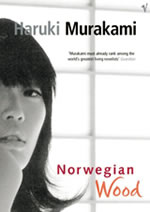
Norwegian Wood by Haruki Murakami – A Structured Love Story So Dark, So Beautiful

A noval by H. Murakami

“Norwegian Wood” is the second book I have randomly picked up from Kinokuniya prior to my holiday in June.  Substantially thicker than “South of the Border, West of the Sun” – considering how thin that book is – the two stories are strikingly similar.  Read almost like another one of his ‘autobiographical fictions’, which the translator Jay Rubin insisted in his note that it is not.  “Norwegian Wood” is a myriad of love and friendship through the eyes of Watanabe, from his age of 18 to 37.  A story that anchors between this first love Naoko and another girl Midori.  One that ends with a choice of the past and the future Watanabe has to make.

“Norwegian Wood” is one of Murakami’s earlier works.  Hence, less surreal than “South of the Border”, almost read like a straightforward love story.  By no means make “Norwegian Wood” a lesser work but rather, a different kind of work.  The most striking feature that stands out from the rest of his novels is the structure within.  I notice that each sub-plot involves three persons.  Something would happen to one party, change the entire dynamic, and the sub-plot dissolves, replaced by another sub-plot of three persons.  It is read like a continuation of one sub-plot riding onto the next one.  All the way till the end of the novel, the same structure is maintained.  I personally find this way of story writing original.

A lot of details have gone into the texture of the story.  Hence, I wouldn’t be surprised that some readers have identified “Norwegian Wood” as an autobiographical fiction.  Beyond the detail description of the school compound down to how the buildings are laid out, the characters are distinctly alive.  Down to the tone each character uses, and to the change in tone as the same character face different characters of varied personalities.  It is this level of details I appreciate deeply as I read this book during my holiday.

This book was released in 1987.  I believe it was the same book that elevated Murakami to an International status with the readership grown to millions that year.  Hence, in a way, “Norwegian Wood” could well be one of his most accessible work.  Even as a die hard fan who is in love with Murakami’s special surreal treatment to his stories, “Norwegian Wood” having little of that surrealism still ranks high in my book.  For a simple love story though can be dark, can still be beautiful.

After my holiday, I have visited Kinokuniya again and have randomly picked another two of Murakami’s books.  So, stay tuned for more book summaries.

Categories
Book Reviews Non-Fiction

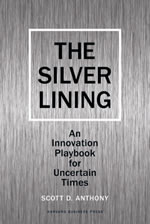
The Silver Lining by Scott D. Anthony – Now It’s the Time to Innovate

The Silver Lining

“The Silver Lining” is a timely read.  Great Disruption is here, today.  Just about half a year or so ago, companies were further revising down their targets, cutting cost, and have stayed cautious for the uncertain times.  The economic downturn affects both the multinational corporations and the local companies.  I have had a chat with some of the local business owners and all of them have experienced some level of hardship with their business, have made or at the verge of making some difficult decisions.  As for myself, an employee of a MNC, I too am frustrated with the disruption to the funding that is much needed to continue fueling some of the key initiatives.

The bad news is: resource has become scarce.  The good news is: constraint is the enabler of innovation as pointed out by the author of “Silver Lining”.  It is the time to transform and leave the old market.  Because for many, not to transform is the way to extinction.  Scott Anthony uses case studies from Cisco, Google, Nintendo, Wal-Mart, McDonald’s, Procter & Gamble, and more to illustrate what they have done differently from others, in making them successful through the challenging times.

What strikes me as the most interesting idea from this book is that innovation is not necessarily a random encounter.  Instead, it is a discipline that can be structured for success.  In his book, Scott Anthony shares with us a toolkit to audit the organization’s innovation capabilities.  He takes us through the pruning and diversification of the innovation portfolio, how we can ‘refeature’ our offerings in order to cut cost, and how we can effectively innovate.

Some of you may ask: how exactly can we innovate besides gathering a group of people with diverse disciplines and hope for some big ideas to spark off?  The organization and the internal processes have to be structured in a way to make innovation repeatable, hence increases the innovation productivity.  We have to be creative to experiment and test our key assumptions.  Sharing the innovation load can be an option too if we need to lower the expenses and risk.  And in uncertainty times, we may need to look into the ‘low end’ and see what customers value.  All the details can be found inside the book.  “Silver Lining” ends with one chapter on how you can strengthen your personal innovation muscle (which I find it useful) and another one – which is my favorite – on the 10 disruptive developments to watch today according to Scott Anthony.

Excess is a root cause of many innovation struggle.  There are already organizations out there that look at the current time of uncertainty as their silver lining.  New innovation is brewing in the horizon ready to change the game.  The question is: will your organization emerge as a winner?

Hardcover: 145 pages
Publisher: Harvard Business Press (June 1, 2009)
ISBN-10: 1422139018
ISBN-13: 978-1422139011

You may wish to get this from Amazon.com.

Official Site: The Silver Lining Playbook.

Categories
Foreign Movie Reviews Romance

Threads of Destiny – OK, I Wonder What Part 2 Would Be Like

Threads of Destiny

So I had a movie ‘date’ with a … guy.  Because Cynthia has an social gathering with other girls and she doesn’t like to watch sappy Japanese movies.  Sure, give me some of those tragic tears.  I mean that’s what you would expect when you watch a Japanese teenage romance, especially one that is from the cell-phone novel genre right (remember “Sky of Love”)?

Orchard Road was jam packed with heavy traffic.  It took me a long time to arrive at Cineleisure.  It was a long queue at the ticket office too.  When it was our turn, the trainee said to me, “Threads of Destiny!  You would love it.  It’s such a great movie!”.  She said it with such level of admiration, and conviction.  And here we are, two dudes watching a Japanese teenage romance with an added age exceeds this young box office trainee’s by a good multiple of times.  Something is wrong with the picture.

I just had to run to Far East and install a protective film for my new Nokia N97 (you will hear more later, for sure!).  “Wilf, we won’t have enough time,” my ‘date’ lamented.  I looked at the clock, 30 minutes before the show starts.  And you know Cathay cinemas, they start movies on time.  But my desire to put on some protection was too hard to deny.  So I said to him, with determine, “Don’t worry, I will be back, before the show starts.”

So I ran.  Really ran.  Along the jam packed Orchard Road with human traffic, reached the shop before the next customer (who has 3 Blackberry phones and we had such a good chat on Nokia phones), have my protection on, and ran all the way back.  My friend got me the popcorn and drink (so sweet, thanks!) and we arrived at the theatre just in time.  Not a second early, not a second late.  Oh, I managed to say hi to my blogger friends who were participating at the Tangs 24 hours Blogathon when I was running to and fro along Orchard Road.  I am green with envy!

From what I gathered, “Threads of Destiny” is a Japanese cell-phone novel (that I will probably read), a TV drama series, and now a movie adaptation.  From what I gathered, this movie version is not quite like the original story that is more violent, filled with physical intimacy and drug abuse.  I am not sure why the change but watching “Threads of Destiny” as a movie, it has all the classic Japanese drama elements of teenage romance and friendship.  Probably a bit overdosed with tragedies.  In Singapore, the movie is edited to a PG rating.  I wonder what has been edited out.  Perhaps the scene on drug usage (or sexual intimacy!).

Mei and Atsushi (played by Nao Minamisawa and Junpei Mizobata) share the same birthday, Feb 29 and Fate is supposed to string them together even though there are so many driving forces that keep them apart.  One moment, the story is filled with happiness.  Another moment, something bad happens.  I swear some of the [female] audience was gasping as the tragedy happened.  No, there are no tears jerking moments and I did struggle with the lack of logic on some of these tragic moments.  Personally, I think Nao looks pretty darn cute when she is sad and she has this outlook of nothing-bad-can-ruin-her-day, which I think it’s perfect for this role.  Such a sad role to be in, if you think about it.

I read that some viewers are not too happy with the ending.  It is not much of an ending per se as there is a part two for this movie.  There are many lose ends and strange to say, I like the ending as it is.

By the way, there is this one conversation in the movie that I think it is memorable in a bizarre way.  Mei asked, “Will we meet again”.  And Atsushi’s answer is so out-of-the-world that you either hate it (I suspect most do) or amazed by it.  I mean, who would have answered such a simple question that way right?!

Categories
Country Folk & Jazz Music Reviews

Lisa Ekdahl – Give Me That Slow Knowing Smile – It’s Simply Heavenly Beautiful

Lisa Ekdahl

I would love to give her that slow knowing smile and make her say hey, hey, hey, hey.  And we would say oh, oh, oh, oh, oh.  Just like her song.  From the whistling in the beginning of “Give Me That Slow Knowing Smile”, the simple repetitive chords of an acoustic guitar and the harmonizing bass line, the gentle entrance of Lisa Ekdahl’s feather like voice, to the subtle drums and electric guitar strumming and solo that is not overpowering yet making the song interesting, you know “Give Me That Slow Knowing Smile” will haunt you for a long time, in a good way.  The new album from the Swedish singer and songwriter Lisa Ekdahl has this element of dreaminess and simplicity that works well with her unique child-like vocals.  To be honest, I could not get into her previous Swedish release “Pärlor Av Glas (Pearls of Glass)”.  The style of that album is too different from the Lisa Ekdahl I have come to know.

I enjoy listening to her old album “Sings Salvadore Poe” of jazz and bossa nova written by her husband.  I think “When Did You Leave Heaven” and “Heaven Earth & Beyond” are two of my all time favorite records of hers.  Some may critize the suitability of Lisa’s child-like voice for the jazz genre.  But just take a listen to her rendition of “Cry Me A River”, “The Color Of You”, and “When Did You Leave Heaven”, you would simply want more.  But more doesn’t seem to arrive, yet.

This new album I would classify under pop-folk.  Entirely written by Lisa Ekdahl, the lyrics are as heavenly light as the music delivery.  The opening line in the form of chorus for “The World Keeps Turning” is captivating: The world keeps turning we can’t change its course.  What I can’t hold by love, I won’t hold by force.  The world keeps turning beyond our control.  What I can’t hold by love, I won’t hold at all.  It turns out to be a dreamy love story, strengthen by the symbolic images of a running lover invoked by the lyrics.  Another song of my faovrite is “One Life” when she sings, “All of us came in through the same door … all of us will very soon be leaving.  We were brought here soon we will depart.”  And the one face that she keeps referring to turns out to be the face of God.  Simply beautiful, in a heavenly way.

A short album of 36 minutes and below is a live video clip of the opening track “Give Me That Slow Knowing Smile”.  For those who purchase the CD, it comes with Opendisc technology that allows you to access to her commentaries, interviews, and videos online.

Categories
Fantasy & Sci-fi Foreign Movie Reviews

20th Century Boys 2 – This Trilogy Is Growing On Me

20th Century Boys 2

October 2008, the Movie Review Squad has watched the first installment of this trilogy, of this perhaps the most expensive Japanese film ever made.  I wonder why there is a 6 months delay before part 2 arrives in [a tiny theater in] Singapore (compare to a 2 months gap for part 1).  And I look forward to a part 3 that will be released this August in Singapore.  So it says on the big screen at the end of the trailer, at the end of the 142 minutes movie.

142 minute?!

Part 2 is just as lengthy as part 1.  To recap, “20th Century Boys” is our friend TK’s baby.  He got us into this.  Friend!  And surprisingly, Cynthia loves the part 1 too.  I found the first part a bit lengthy, a bit confusing, and kind of lacking in the eye candy factor.  Men!  I know.

Comes part 2, titled “The Last Hope”.  Although it is still a bit lengthy, because the plot doesn’t go back and forth in time that often like part 1, it is much easier to follow.  The story is still as confusing as ever partly because I am – or we are – overwhelmed by the sheer number of key characters with names in Japanese (of course).  And honestly speaking, our recollection of the plot thus far was very minimal.  If you recall, part 1 is about this Book of Prophesy, whereby the future plays out exactly as what was ‘predicted’.  Part 2 is about this New Book of Prophesy, that is even more absurdly bizarre.  I said it many times, Japanese imagination knows no bound.  The entire story of “20th Century Boys” and the concept created is just, strange.  But I am liking it.

The year is 2015 and the heroine Kanna has grown up.  I am not 100% sure if the 24 years old actress Airi Taira can act that well.  But she is one eye candy for sure.  I love her hairstyle in the show (shallow I so am!).  Deep inside, I was – or we were – hoping that Kanna would play a much bigger role in the overall plot.  But I was mildly disappointed.  Perhaps part 2 has this mid episode syndrome and is sandwiched between two episodes with a scale of total world destruction, Kanna can only do what Kanna has done.

I have absolutely no idea how the part 3 is going to play out of course.  Maybe Kanna will save the world.  Maybe somebody else does (the title does imply that the heroes belong to the male species though).  Or maybe the world will be destroyed for good.  Personally I enjoy part 2 more than part 1.  The filmmakers have done a great job in delivering us a powerful ending for “The Last Hope”.  And I find myself cracking into laughter here and there amazed by the super dramatized acting and over the top production.  In preparing ourselves for the finale, I think the Movie Review Squad needs to spend some time and watch the first two installments again in order to get a better grasp on what the story is about.  I may even need to dig up some “20th Century Boys” manga online!

Categories
Book Reviews Fiction

South of the Border, West of the Sun by Haruki Murakami – A Simple, Surreal, and Genuine Romance Like No Other

South of the Border, West of the Sun

Everytime when I travel, I bring along books to read and a notepad to write.  For I don’t stop reading or writing, especially not during my holiday.  I had almost finished reading the new book by Paulo Coelho before I boarded the plane so I reckon, I probably needed at least three books to last the two weeks trip.

One thing I really enjoy writing a book summary is the occasion comments I read – both here and in Facebook – from other passionate readers who may or may not see the book the way I do.  And we exchange thoughts.  Prior to my holiday trip, I have read Haruki Murakami’s new non-fiction book.  As always, I shared my thoughts online.  That sparked off an online dialogue with another fan of Murakami which in turn inspired me to pick two random books of his from Kinokuniya.  “South of the Border, West of the Sun” is the fourth Murakami book I have read.  And I enjoy every single page of it – 187 in total.

“South” in essence is a story of romance told from the perspective of a man, from his relationship with his childhood sweetheart, the in-between love affairs, to his marriage.  A typical story that almost all men who have fallen in love can relate.  An ordinary love template.  The details – both physical and emotional – are so vivid that I was brought back in time as a young boy, to the beginning of my fascination to the opposite sex, to the silly things I did driven by my then raging hormone.  However simple the idea is, a story told by Haruki Murakami is never going to be a typical story.  “South” is original; it is genuine; it touches my heart.  I reflect upon my own love relationship, from my mid-teen (I mature late) till today.  It is one book that I would read again.  That’s why I bought the Spanish version during our holiday in Spain.  And I am looking forward to reading both versions side-by-side.

I am probably slightly ahead of time to compare “South” with another earlier work of his “Norwegian Wood” – as that will be my upcoming book summary.  Both novels are of a similar topic, with a center character that strongly resembles the author himself (I make that observation based on his semi-autobiography “Running”).  His later works certainly get more and more surreal and abstract.  A good example is his recent work “After Work”.  On that note, “South” to me, has a subtle surreal after taste.  It makes me ponder upon what is real, and what is not.

Below is a short quote of what I feel as a beautiful way to put forth something so close to reality, something that appears so real to me today.

“No one will weave dreams for me – it is my turn to weave dreams for others.  That’s what I have to do.  Such dreams may have no power, but if my own life is to have any meaning at all, that is what I have to do.” – South of the Border, West of the Sun by Haruki Murakami (translated by Philip Gabriel)

Categories
Book Reviews Fiction

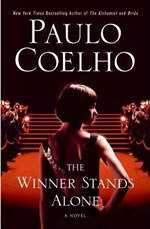
The Winner Stands Alone by Paulo Coelho – A Dark Piece Of Work That Inspires, Not Entertains

Paulo Coelho's New Novel

I have read almost all of Paulo Coelho‘s English translated novels (except “Like the Flowing River”).  “Winner”, to me, is by far his darkest piece of work.  Still inspirational, like all his previous works.  But it delivers blow after blow to the readers and make us think: What have we been doing to our lives?

The story centers around a Russian millionaire who believes in killing is acceptable if for a good course, his ex-wife, and her current husband who is a fashion magnate.  Upfront, at the preface, Paulo Coelho has already warned the readers that “this is not a thriller, but a stark portrait of where we are now.”  To read “Winner” as a thriller is certainly not the right way.  This novel – more so than others – has a concocted tone of sharing facts and insights mixed with his personal opinions (which can at times be eye-opening), long dialogues from one character or multiple characters that sound like coming from the same person (which is least of my favorite although they can be inspirational), parables and inspirational quotes (which I love), and story development.  I admit that at times, the tone is not as cohesive as I wish to be.  However, if indeed not reading “Winner” as a thriller, there are tons of inspirational messages and truth to chew onto.

Paulo Coelho, in his new book, shares details of the fashion and filming industries and the associated celebrity businesses.  Some are rather repulsive to read, especially when he illustrates how much we are into vanity these days.  Such as “A diamond is the supreme manifestation of human vanity” accompanied with pages of write-up on the diamond industry – from the violence it causes to a piece of jewelery we wear.  Most observations are not new to us.  Just that we don’t often articulate them that way.  Like film scripts to him are mostly man loves woman, man loses woman, and man gets woman back.  If the script is anything but, make sure there is enough violence or special effect to make up for it.  And his list of 46 random items on what ‘being normal’ means also got me thinking on how we accept the our environment or behavior as normal, in which if you think deeper, you may question why.  Such as criticizing anyone who tries to be different, swearing in heavy traffic, or studying at an university for years only finds that you’re unemployable at the end of it, and more.

These are just warm up items.  There are harder messages he delivers.  In the old days, we make pilgrimages to be close to something spiritual that is unattainable and mysterious that can bring blessings.   These days, people visit pop concerts more than religious meetings and we worship celebrities in different ways.  He also talks about the celebrity syndrome some may have – abandoning what we believe in for fame, ego, and money.  We are suffocated by lies, encouraged to put our faith in science instead of spiritual values, and we feed our souls with what society tells us are important.  As a result, we are unable to give up all these for true happiness – that is family, nature, and love.

You really could feel a bit depressed by self-reflecting on what he says.  Fortunately, there are interesting observations he shares as well as what we could do better.  For example, the author mentioned that there are four forces that guide us to purify our souls: love, death, power, and time.  In short, we must love because we are loved by God while conscious of death, struggle to grow but not trapped by the power gained.   And our soul is bounded by the web of time with all opportunities as well as limitations.  On our current environmental crisis, he highlights that we are not saving the planet, but rather, saving ourselves from not being destroyed by the planet.  Because the planet is stronger than us.  He also raises my doubt on our “fittest survives” mentality in our day-to-day life when we, human beings, need care and protection especially from young as compared to other species (and hence, I gather, we shall continue to do so in our daily life).

The author also touches onto the topic of workaholic that I enjoy reading as I am a firm believer of the need of work life balance.  First he says all workaholics think they are happy doing what they are doing.  And it is not something society wants to fix because it helps human progression in the expense of the obvious.  Total power – as you advance in career – means total slavery.  You find it harder to let go as you gain power and you can’t even do the simple things in life.  To combat it, use work as a source of happiness but not compulsion.  I guess what he says (and what I practice) is by all means, be happy with work but know when to let go and enjoy the simple things in life.  Seek for true happiness in family, nature, and love – something work does not provide you with.

There is one parable that I very much enjoy reading, got me into thinking.  This is what I have internalized: One day a sea gull saw a mouse on the ground.  Not able to communicate as they spoke in different languages, the sea gull took pity on the creature that has lost its wings.  So the sea gull took the mouse onto its back, took flight to the sky thinking that the mouse must have been missing what it was like flying in the air.  The mouse had a time of its life and when it was brought back to the ground, as it saw the sea gull took off and disappeared, the mouse began to feel sad, not to be able to experienced that form of freedom again.  As days went by, the mouse looked into this miracle thinking that it was just a dream instead.

I think, we often fail to acknowledge the little miracles in life.  I can relate to that parable.

To round up this book summary without giving out the plot, there is one constant theme that appears as I read the book.  It is the voice of the Devil.  In our daily lives, we have encountered many decision points.  And at each juncture, there is a little voice in our head to help us decide.  Is that the voice of the Angel?  Or indeed the voice of the Devil that conditions us in believing that all that we do is for the better even if it comes with a price, knowing something is wrong but yet we create justifications, and failing to see through the obvious or normalcy when everyone is doing it.

You won’t like it when you read “The Winner Stands Alone”.  But you will certainly benefit from it and may become or wanting to become a better person.  That’s what an inspiration book, not a thriller, is for – for “Winner” does not entertain.  Be warned.

PS. Finished this book on a plane heading to Barcelona.

Categories
Comedy Movie Reviews

I Love You, Man – I Cringed As I Laughed Out Loud

I Love You, Man

OK.  If you do intend to watch this movie, try to stay just a little bit longer when the credits start to roll.  There is a kind of funny clip that you would have missed.  The thing is, I am intrigued that Singaporeans, or Asians in general, are so eager to rush out of the theatre the moment the film is over.  In Europe, at least back in my schooling days, most viewers stayed till the very end of the show, after the rolling of credits.  Personally I enjoy the unwinding process, the music, to get a bit of insight on what’s behind the scene, and to pay a small tribute to those who have worked hard for the project.

My buddy TK and I often keep our text messages short.  That’s what SMS is meant to be.  This morning, knowing that he was waiting for me to confirm the movie title for tonight, I wanted to text “I love you man”.  But it sounded wrong.  So I appended, “I love you man, ok?”  It still sounded wrong so I reminded him that it’s a movie title.  Just in case.

When men hang out, we may do weird stuffs, say weird stuffs, and it is a very strange feeling to see how men bond on a big screen.  That’s why I cringed when I watched “I Love You, Man”.

I love chick flicks, as I find it intriguing to watch how women bond.  And I am not sure if it is the same level of enjoyment to Cynthia when she watched this movie.  Gosh, she likes it so much.  Honestly speaking, I am kind of a bit embarrassed.  I mean, these are meant to be behind-the-scene silly things that men say, or do.

There is a certain level of honesty, a lively script performed by Jason Segel (of Forgetting Sarah Marshall) and Paul Rudd whom I later on remembered him as the lover of Phoebe in the TV series Friends – thanks to Cynthia.  The storyline is mostly predictable though it’s a quality piece of comedy.

This film caused me to self-reflect.  What would I do if I have to make some new guy friends (as my best man) right now?  I don’t golf and I don’t drink anymore; I don’t party and I don’t watch football.  How stressful it would be!  And how about those silly things men do?  Part of me tells me that we are all grown-ups and we behave as proper adults.  Then I remember those days not too long ago when our band jammed at my home, my guitarist and I were going all crazy – screaming and making rock gestures – rehearsing our song “Unleash The Beast” in front of his then girlfriend – thank God they still end up married – that was worse than what you see in the movie.

Though I personally find the film a bit embarrassing to watch, I do like the repeated ‘community message’ targeted at the female audience.  Yes, in bed, we men love to …

Categories
Fantasy & Sci-fi Movie Reviews

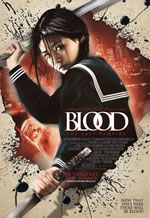
Blood The Last Vampire – My Beloved Sassy Girl Turns Into A Demon Slayer

Blood: The Last Vampire

What more could I ask for?  My favorite Korean actress Jun Ji-hyun from my favorite movie “My Sassy Girl” is going to the heroine killing off waves after waves of demons slash vampires slash unholy creatures and save the … OK, I don’t quite know what she is saving for.  It’s Jun Ji-hyun.  Who cares about the story?

Apparently, TK from our Movie Review Squad cares.  He shook his head in dismay as the end credit rolled and said, “I don’t like it”.  Cynthia and I love the Buffy kind of one girl against all.  So we love “Blood The Last Vampire”.

I suspect the original Japanese Anime may be of a higher value in originality, from what I’ve read.  Some scenes of “Blood” reminds me of the movie “Underworld”.  It’s not one of those typical vampire series.  Saya – the main character played by Jun – looks 100% human except her eyes turn red when I suppose she is getting a power booster?  The absence of romance makes “Blood” unique from other vampire series.  And instead, the deepening of friendship between the 400 years old half human half vampire Saya and another girl is kind of … hot.

I wish “Blood” was shot entirely in Japanese with a Japanese casting.  A filming team from what appears as China and Argentina making a Western movie leaves much room to desire for.  Having said that, Jun Ji-hyun’s (or Gianna Jun as her new screen name) English is pretty convincing.  Venturing into a relatively hardcore action role – knowing how tough it must have been – is an amiable effort.  The ending may seem strange to some.  To someone who loves Wuxia type of Chinese novels, this type of heroine saving the … whatever worth fighting for is certainly my cup of tea.

Yes, “Blood” is a rather bloody film to watch.  It is because in the original story, those self-healing demons – Chiroptera – can only be killed by causing them to lose a large amount of blood with one attack.  There you go.  The lore of “Blood” in a nutshell.