
Recently, I bought an Oura Ring 4. I’ll share more about my experience with the ring in another post. But today, I decided to run a little hiking experiment—putting my new ring up against my trusty old Garmin Venu. One activity, two devices!
Why the Comparison?
Depending on which device you trust more, the stats can vary. My goal wasn’t to find the “winner,” but to see:
- How much I can trust Oura’s tracking compared to the king of outdoor sport trackers.
- What kind of insights I’d be missing out on if I relied solely on the ring.
Setting the Scene
I arrived at Bukit Timah Nature Reserve before noon. After a quick warm-up (i.e., visiting the only bathroom I know of at the visitor centre), I began my hike.
Oura Ring’s auto activity detection is hit-or-miss, so I opted to manually record my heart rate and tag the activity as hiking. I also enabled full GPS access from my phone to help with location accuracy.
As for the Garmin Venu—its GPS is painfully slow. I had enabled location tracking well before arrival, but when it was go-time, the watch still hadn’t locked onto GPS. I wasn’t about to stand in the sun watching monkeys steal hikers’ snacks from plastic bags high up in the trees. So I just started hiking.
The result? Garmin thought I began my hike 2 km away from the actual starting point. Which means… yep, the distance it tracked was way off.
Oura: 1 — Garmin: 0
Mapping the Route
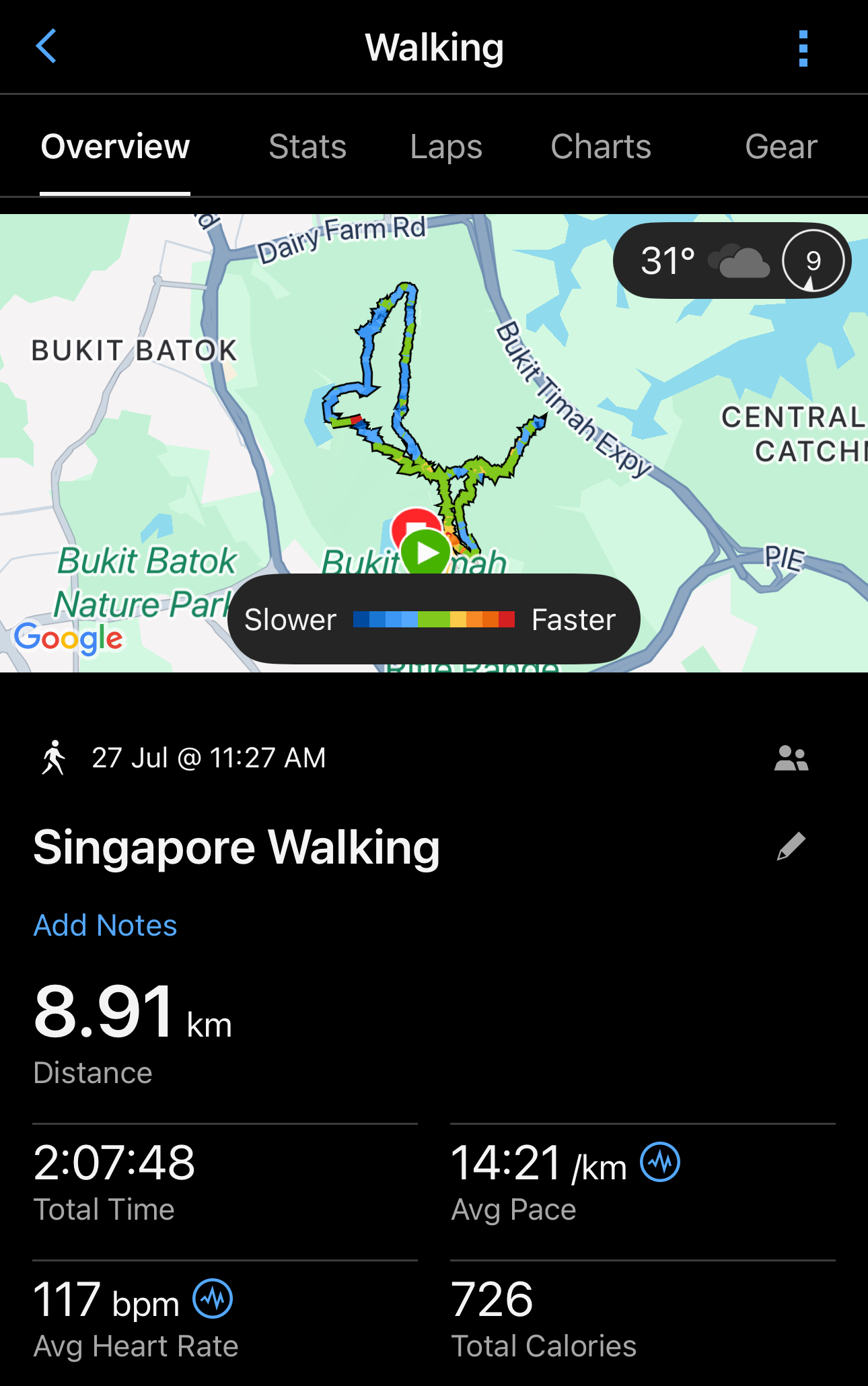
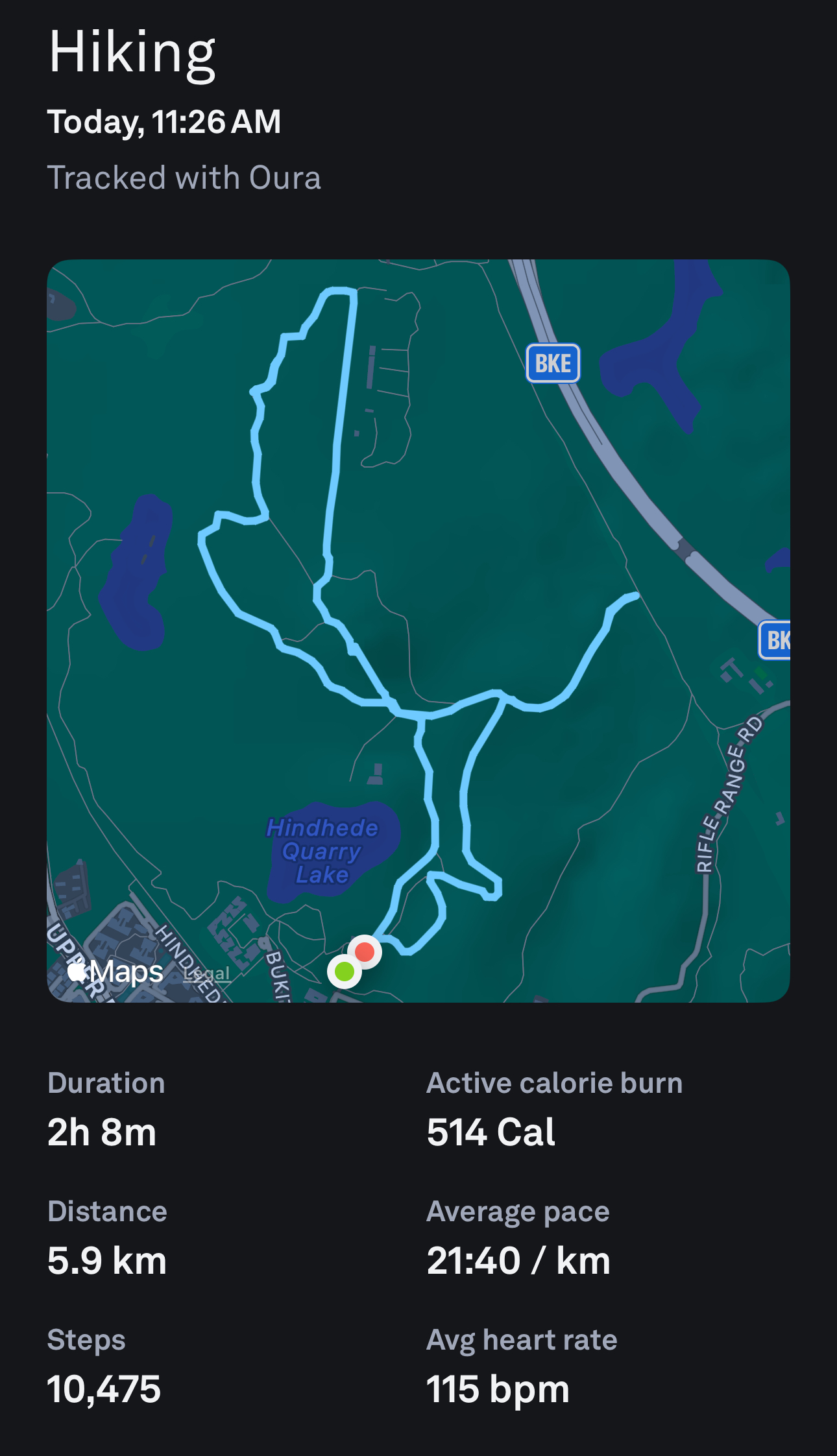
Both apps tracked my route. Garmin on the left and Oura on the right.
- Oura takes a minimalist approach—clean, simple.
- Garmin overlays your map with details like pace and elevation. On a hilly route like this one, that kind of visualisation is nice, especially at sections like the “monster steps”—a steep series of big steps.
Is it fun to look at? Yes.
Is it useful for this hike? Not really.
Calories and Step Count
One notable difference:
- Garmin includes resting calories in its total.
- Oura only reports active calories.
Interestingly, Apple Health ignores the resting calories from Garmin. It took me a while to realise that this is why Garmin always shows higher calorie burn for the same activity.
Step count also differs—Garmin reports 7% more steps than Oura. Based on what I’ve read online, I was expecting the reverse. Garmin also reports about 11% more active calories.
Which one is more accurate? Honestly, no idea. But the variance is within my personal tolerance.
Heart Rate and Other Stats
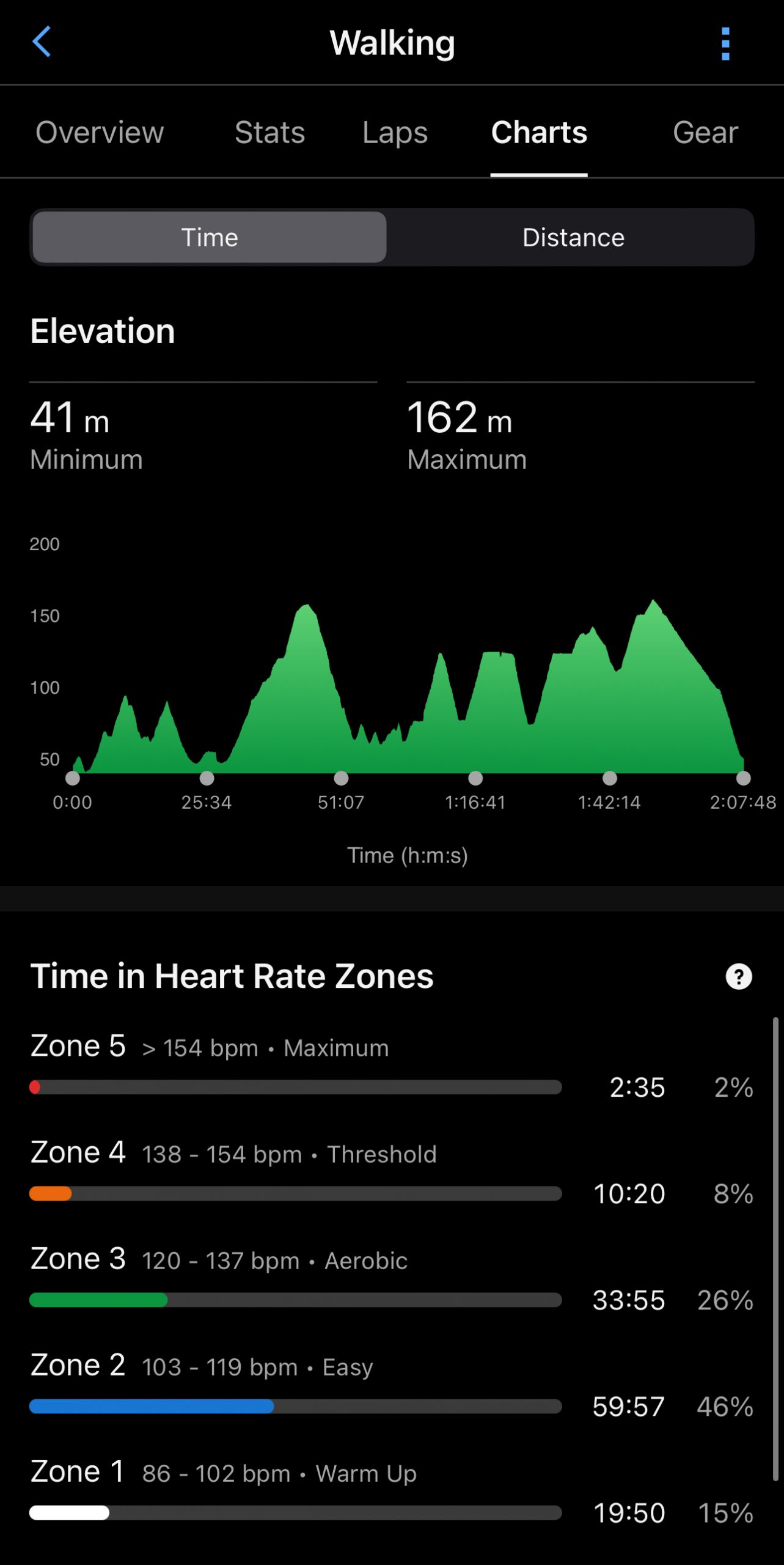
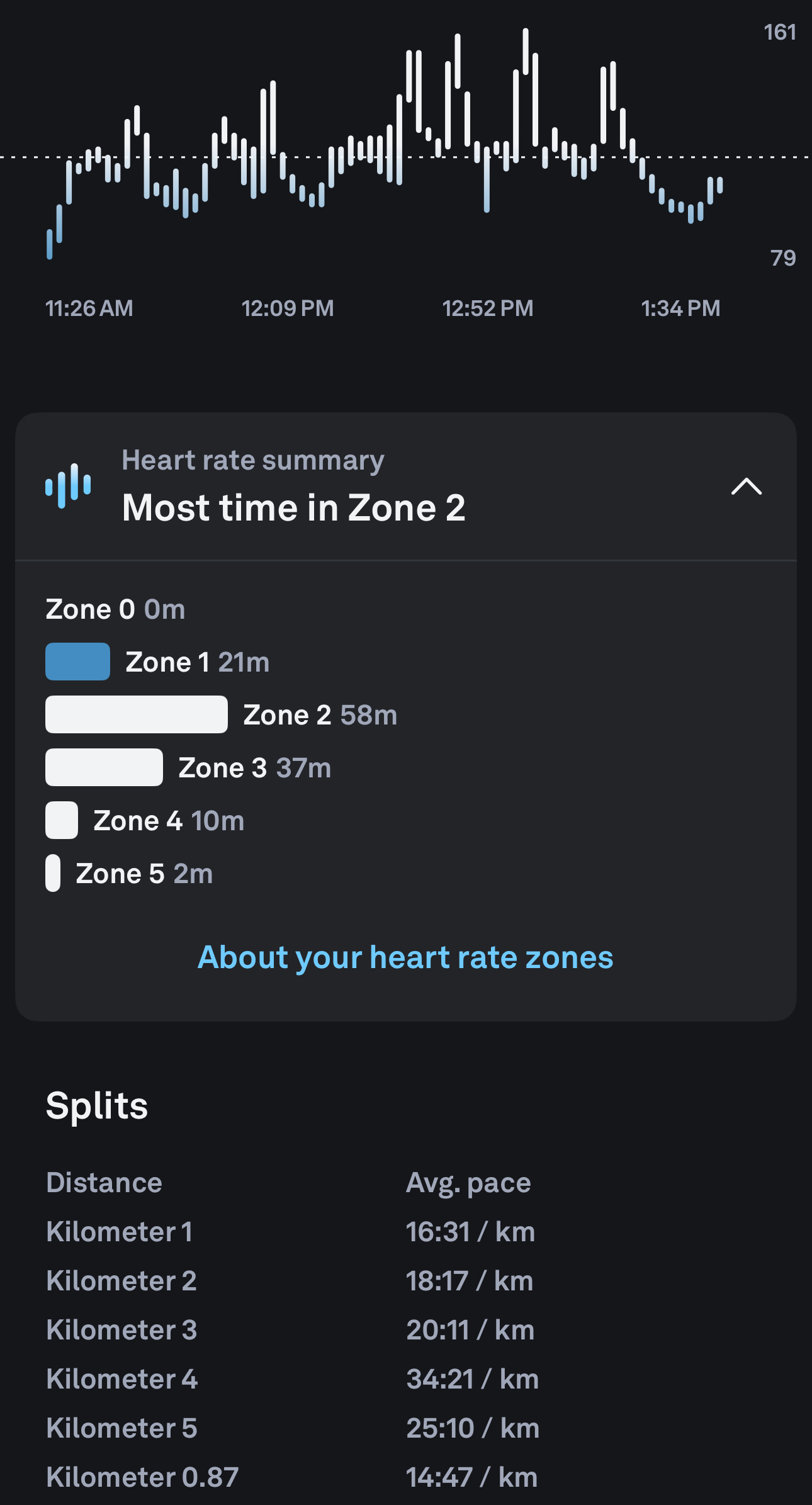
Heart rate zone differences are mostly due to how each platform defines the ranges (Garmin left and Oura right). Again, not a dealbreaker for me.
Garmin does offer more data—like cadence and elevation. Since my hike brought me back to the starting point, elevation change should be 0%. Garmin reported just a 1.5% variance, which I’ll gladly accept.
Cadence would be more useful if I were jogging. Real-time heart rate from Garmin is also handy for pacing myself: when to rest, when to push, and by how much.
Final Thoughts
For casual hiking and outdoor walking, the Oura Ring is good enough.
But if I’m training or want deeper insight, Garmin wins with more comprehensive stats. Will I upgrade my Garmin anytime soon? Probably not—especially if GPS lock remains slow even on newer models (prove me wrong!).
Will I carry both devices for training?
Why not? Best of both worlds.